Category: orcas
Posted on
Mobula Season 2026 Recap: La Ventana Never Disappoints
BY: Valentina / 0 COMMENTS / CATEGORIES: mobulas, orcas, Sea Lions, Sin categoría, Snorkeling, whales, wildlife
Every year, when mobula season wraps up, I sit down and try to put into words what just happened. And every year, I realize words aren’t quite enough. But I’ll try anyway, because what we witnessed this season in La Ventana deserves to be told.
This year, people joined us from every single continent on Earth: all brought together by the ocean. That alone says something pretty special about this place.

First things first — the species list
One of the things that makes La Ventana so extraordinary is the sheer variety of life. Scientists call it a biodiversity hotspot, and after this season, I understand why more than ever.
Rays & Mantas
Munk’s pygmy devil ray, spinetail devil ray, oceanic manta ray, bentfin devil ray
Dolphins
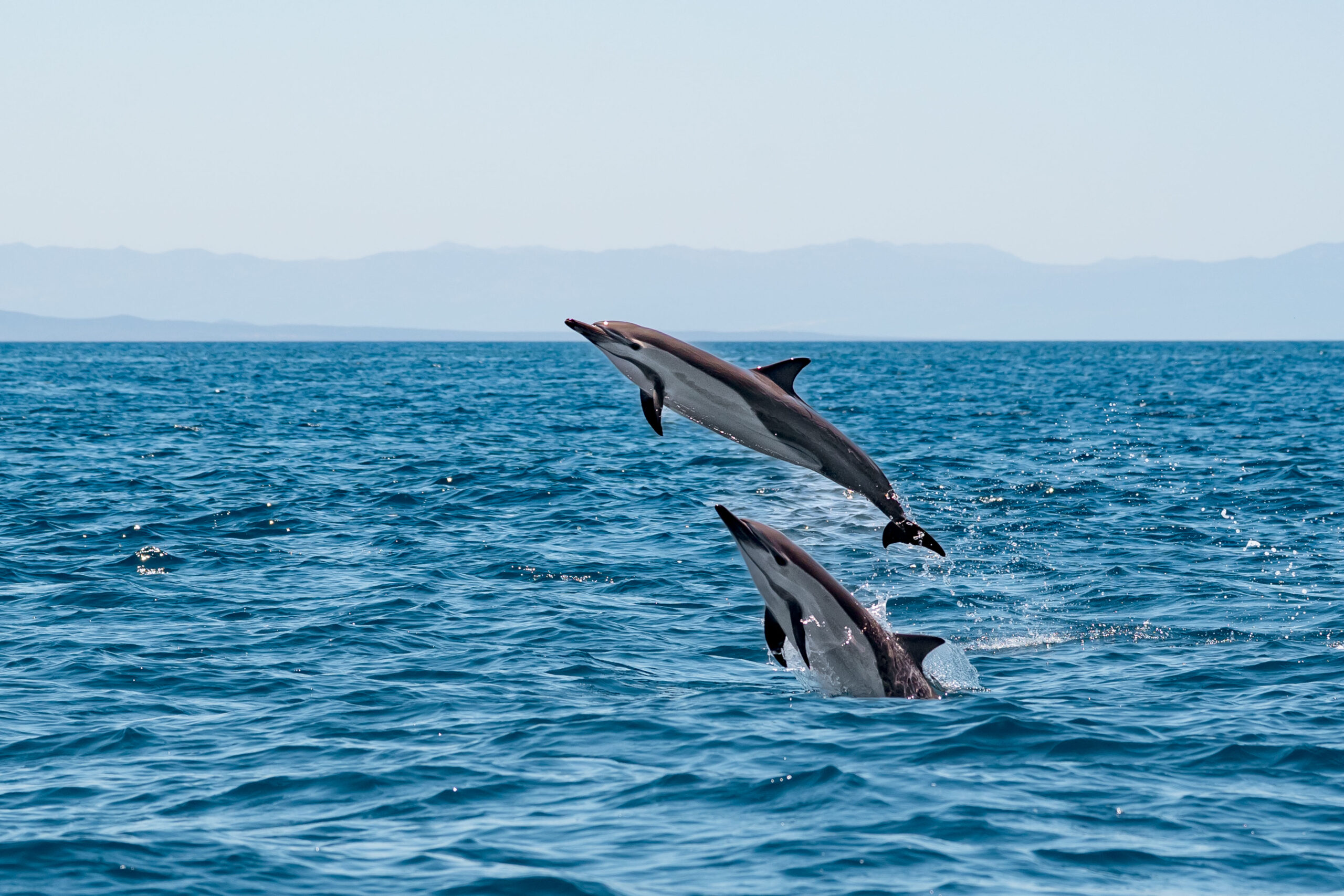
Bottlenose, pantropical spotted, common, spinner, Risso’s, rough-toothed
The Big Ones
Pilot whales, orcas, false orcas
Whales
Humpback, sperm, Bryde’s, fin
Sea Turtles
Olive Ridley, green, hawksbill
And Everything Else
Whale sharks, sea lions, cormorants, porcupine fish, marlin, octopus, mako shark, silky shark, tuna, sardines, hammerhead sharks
Not every animal shows up every day — or even every week. But the fact that all of this lives in one place? That’s La Ventana.
What made this season different
1. Warmer water: a mixed blessing
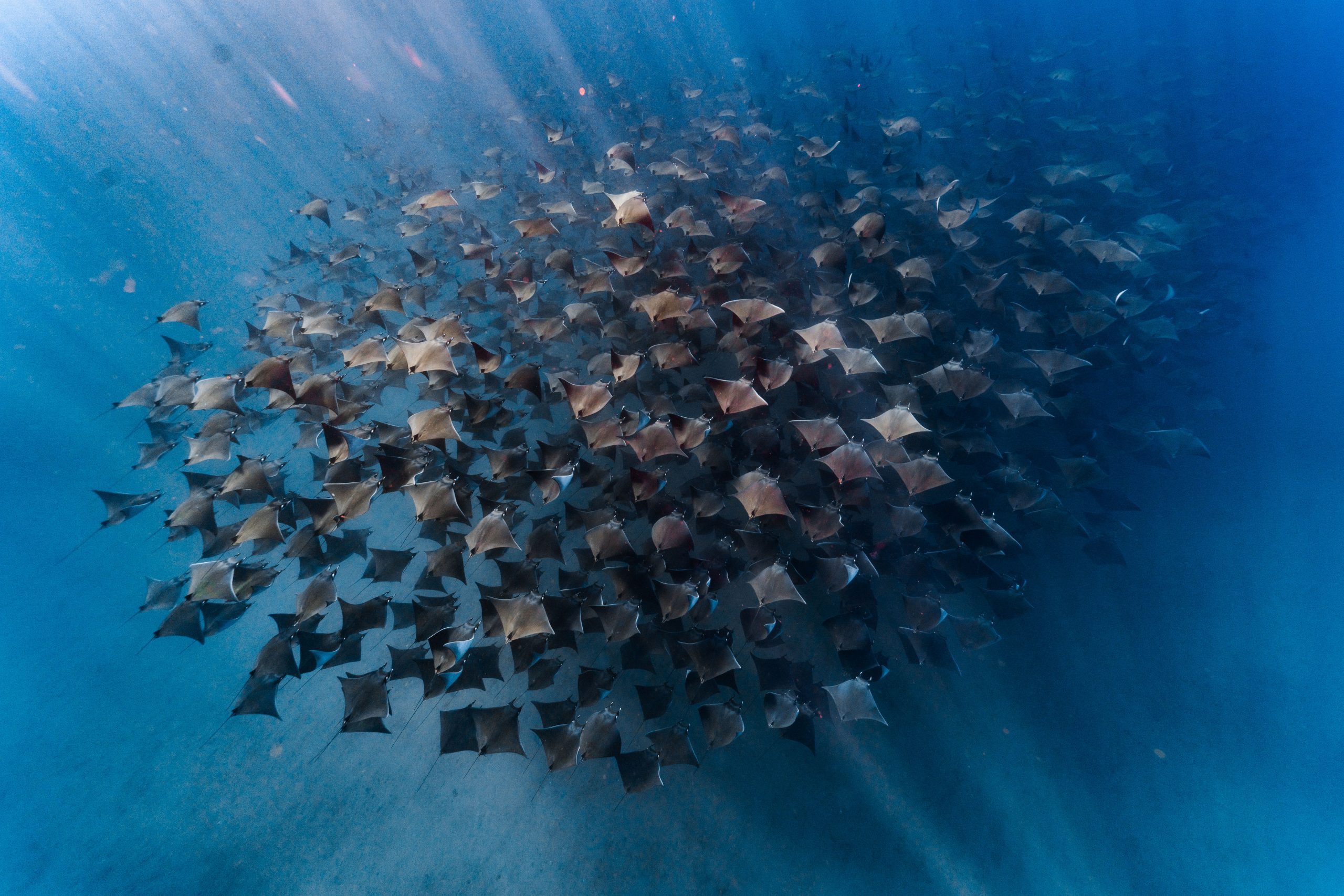
The water was warmer than usual this year, which brought something beautiful: incredible visibility early in the season. Crystal clear, blue, gorgeous. But here’s the thing about mobulas: they follow the plankton. And plankton blooms in cooler, murkier water. So while the visibility was stunning, the mobulas were harder to find than in a typical season. Fewer numbers, and often deeper. We still had solid encounters.
But if you came expecting massive surface aggregations, this year taught us an important lesson: the ocean always has its own plans.
2. The most Mobula mobular we’ve ever seen
Mobula mobular — the larger, rarer cousin of the pygmy devil ray — showed up in numbers we’ve never seen before. If you’ve ever watched one glide past you underwater, you know: there’s something almost otherworldly about them. Slow and elegant.
My favorite encounter of the entire season happened on a day when we were far offshore, just our small group, all by ourselves. We dropped into the water and found a fever of 12 Mobula mobular in the middle of courtship. The males were chasing the female in slow, graceful circles, spiraling upward, then deeper, then back again. They circled all around us. They didn’t leave. We didn’t leave. We stayed in the water with them for over an hour.
(My action camera had no battery that day. Of course. 😂 Thankfully a guest had their camera rolling so I have proof it happened, I promise.)
“Encounters with this species usually last seconds to minutes. An hour is something I’ll never forget.”

3. The squid arrival — and everything it brought with it
By late June, our captains started noticing something: fishermen were pulling up squid. More than usual. A lot more. Anyone who knows the ocean knows what squid means: the predators follow. Within days, pilot whales arrived. And they stayed.
Weeks into July, we were seeing them every single week! Pods of 50 to 300 individuals, cruising slowly at the surface like they owned the place (they do). Their rounded heads bobbing, calves swimming close to curious snorkelers completely relaxed.
Pilot whales are my favorites. I’ll say it plainly. There’s something about their calm, social energy that feels like being welcomed. I could watch them for hours.

4. Sperm whales: the giants arrived
Squid also attracted sperm whales, the largest toothed whale on Earth. May brought mostly solitary individuals, just one or two at a time. But by June they were coming in groups, and by late June and early July we had two days that I still can’t fully believe happened: pods of more than 50 to 100 sperm whales!
In Mexico we can’t swim with them, so we watched from the surface — these massive, prehistoric-looking animals logging at the surface, breathing, socializing. It’s the kind of thing that makes you feel very small in the best possible way.

5. Cormorants (yes, really)
Okay, I know. Some people hear “cormorants” and think: boring. Wrong. While most enjoy the sea lions near the colony, I get completely absorbed watching the cormorants hunt on the reef. Birds that dive are basically feathered freedivers. I kept trying to follow them underwater and match their breath-hold. Sometimes I managed it. Sometimes they absolutely smoked me. Fast, funny, underrated. Come for the whales, stay for the cormorants.
6. Porcupine fish bay
Every season, without fail, someone visits the porcupine fish bay and completely loses their mind with joy. These round, spiky, wide-eyed little fish have absolutely no business being that cute, and yet here we are. If you come to La Ventana and skip the porcupine fish bay, did you really go to La Ventana?
7. Orcas and the July pattern
Orcas are the animal people ask about most. They’re elusive, unpredictable, and when you find them, nothing else compares. This season we saw them in May and June, but not in the numbers we hoped for. And then July happened.
Orcas. Every single week. Sometimes multiple days in a row. Cruising, hunting, socializing… in some of the bluest water ever. The best orca encounters of the entire season happened in July, in conditions that felt almost unfair in their beauty.
“Here’s what’s interesting: last year was the same. July was exceptional. Is this a pattern?”
Maybe. Orcas are notoriously hard to predict, and two or three good years in July doesn’t mean next year will be the same. But it’s an observation worth paying attention to. We’ll be watching closely.

A note before you book
If you’re thinking about joining us next season, here’s the most important thing I can tell you: Come with an open heart and an open mind. La Ventana is not a zoo. We can’t promise you’ll see every animal on that list. Some days the ocean gives you everything. Some days it gives you something quieter, smaller, and just as beautiful if you’re paying attention.
What I can promise is this: every single day on the water is worth it. You are incredibly lucky to be in the presence of wild animals — and that feeling never gets old, no matter how many seasons I’ve done this.

Thank you — really
None of this happens without the people who show up. Every single guest who joined us this season, whether for one day on the water or a full expedition, brought their own curiosity, their own energy, and their own love for the ocean. And that makes every encounter richer.
Thank you for trusting us with your time, your adventure, and your love for the sea. We don’t take that lightly. See you next season.

Ready to join us?
If you’re coming for a day and want to experience the magic of La Ventana, the Ocean Safari is your starting point. If you want to maximize your time in the water and have more variety of interactions, the Mobula Expedition is for you.
See you underwater. — Valentina, Freefall Academy







Posted on
Swimming with Orcas in Mexico is Now Legal in La Ventana, Baja: Here’s All You Need to Know
BY: Valentina / 0 COMMENTS / CATEGORIES: Baja, orcas, wildlife
Swimming with Orcas in Mexico is Now Legal in La Ventana, Baja: Here’s All You Need to Know
Introduction: Context of Swimming with Orcas in Mexico
For the first time in history, swimming with orcas in Mexico is officially legal — but only under very specific conditions.
In July 2025, the Mexican government released the Plan de Manejo Temporal para la Interacción Responsable con Orcas en La Ventana, Baja California Sur. This new regulation finally defines how humans can safely and ethically enter the water with orcas.
Until now, encounters existed in a legal gray area. There were no rules — only improvisation. Some captains approached responsibly, others didn’t. Without clear limits, harassment became common: boats surrounded pods, engines roared too close, and orcas were often chased for the perfect shot.
This new law will hopefully change that. It’s the first real attempt to manage orca encounters in a way that protects both the animals and the people in the water. It’s not perfect — in fact, it’s a one-year trial period meant to test and adjust the system — but it’s a crucial first step toward a future where ocean tourism and conservation can truly coexist.
Our captains now have the first official permits to swim with orcas in La Ventana, and we see this moment as more than just exciting — it’s a responsibility.

What the New Law Says (and Why It Matters)
After years of operating in a legal gray area, Mexico has finally established its first official management plan for swimming with and observing orcas — a one-year pilot program (August 2025 to July 2026) in La Ventana, Baja California Sur.
This plan sets strict conditions for who can enter the water, when, and how. Here are the most important rules:
- Boats: Only small boats under 10 meters (≈ 32 ft) are allowed. Each operator can use just one permitted boat.
- Daily limit: Only 24 boats per day, divided into 8 time slots (3 boats per slot, between 7:00 AM and 6:00 PM).
- Distances:
- Active observation: minimum 20 meters between boat and orcas.
- Waiting boats: 60–100 meters away.
- People in the water: Maximum 5 people, including the guide.
- Time: Each encounter can last up to 30 minutes, plus 15 minutes for approach and exit.
- When swimming is not allowed:
- If orcas are hunting, resting, or feeding on large prey (>2 m) such as dolphins or whales.
- Only permitted when orcas show calm, social, or cooperative behavior with small prey like fish, mobulas, or turtles.
- Authorized area: Activities are restricted to a designated polygon near La Ventana, from Playa Central to Ensenada de Muertos.
- Other restrictions:
- No drones, feeding, or touching.
- Boats must never block the orcas’ path.
- Captains stay aboard; only one guide — wearing a red marker for visibility — may accompany swimmers.
These measures are designed to protect both orcas and people, reduce stress on the animals, and allow authorities to collect data for long-term management.
This is a trial year — a test to see how responsible operators, like us, can coexist with these apex predators in harmony. Some of the new rules are confusing and will probably need adjustments. But for the first time, there’s structure and accountability. It’s a step forward — imperfect but necessary.

Why This Matters — and What We Hope Will Change
For years, orca encounters in Mexico happened in a kind of wild west of marine tourism — no rules, no limits, no real oversight. Every operator did things differently. Some were respectful, keeping their distance and letting the orcas lead. Others weren’t. Engines chased. Pods were surrounded by boats. People jumped in too close, too fast.
And while many had good intentions, the truth is — without regulation, even excitement can become harassment.
That’s why this new law matters. It marks the first real effort to manage human behavior around orcas before it’s too late. It’s not about taking the thrill away — it’s about making sure that thrill doesn’t come at the expense of the orcas.
For us at Freefall Academy, it’s also about accountability. We’ve always believed encounters should happen on their terms — calm, quiet, natural. The new permit system finally rewards that approach.
Still, this is only a beginning. The plan is valid for one year — a pilot season to gather data and evaluate what works. What we hope is that this new framework becomes the seed of something bigger: a permanent, well-designed system that protects orcas, supports local captains, and gives travelers the chance to experience something profoundly moving — without harming what makes it so powerful.
What This Means for You (and What to Expect on an Ocean Safari)
Joining one of our Ocean Safaris means becoming part of something historic. Here’s what to expect:
- Real encounters, never guarantees. Orcas are wild and constantly on the move. Some days, the ocean offers a breathtaking encounter. Other days, they’re hundreds of miles away. That uncertainty is part of the magic.
- Come for the ocean, not just the orcas. Our safaris are about much more than one species — mobula rays, dolphins, turtles, pilot whales. Every day is different. That’s why we recommend joining for multiple days, to increase your chances and experience the true diversity of Baja’s marine life.
- Best time to come. Orcas can appear any month, but spring and summer (April–July) tend to offer the best chances.
- April to June: Mobula Safari or Mobula Expedition
- July to December: Ocean Safari
- December to March: we focus on other locations due to difficult weather conditions in La Ventana during those months.
- Intimate groups, quiet connection. A maximum of 5 people in the water — small enough to hear your heartbeat and the soft clicks of the ocean.
- Expert guidance, ethical to the core. Led by marine biologists, with the official Mexican guide certification NOM09. We read the ocean’s moods and let animals lead the encounter — never the other way around.
- Learning woven in. Each trip includes educational briefings on animal biology, behavior, communication, and conservation.
This isn’t about chasing the ocean’s biggest headline — it’s about showing up for whatever the sea wants to share that day. And when an orca does appear, when it chooses to approach you in its own rhythm and time, you understand why patience is part of the adventure.
The Future of Orca Encounters: What Comes Next
This new law is a beginning — not a finish line. 2025 is a trial year, a test to see if humans can share the water with orcas responsibly. It’s far from perfect, but that’s how change begins — with small, imperfect steps toward something better.
Our hope is that this management plan evolves into a long-term system that works for everyone: the orcas, the captains, and the travelers who come from all over the world to meet Baja’s marine life with open hearts.
At Freefall Academy, we’re proud to help lead that movement. Every safari we run, every briefing we give, every respectful encounter we share is a statement of what ocean tourism can be when done with intention.
So if you’ve ever dreamed of meeting orcas in the wild — not in a tank, not on a screen, but face to face, on their terms — this is your moment. Join us in Baja.
📅 Best season: April to August
🌎 Location: La Ventana, Baja California Sur
💙 Experience: Ocean Safari with Freefall Academy
 English
  Español de México