Posted on

Swim With Orcas in Baja? The Honest Truth About Orca Encounters in La Ventana

BY: Valentina / 0 COMMENTS / CATEGORIES: Baja, mobulas, wildlife

Is It Your Dream to Swim With Orcas in the Wild?

The Honest Truth About Swimming With Orcas in La Ventana, Baja

Have you seen countless Instagram reels of people claiming they swam with orcas in La Ventana, Baja, Mexico — and now dream of experiencing that moment for yourself?

You’re not alone.

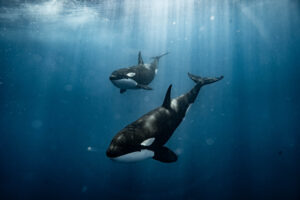
Orcas are powerful, intelligent, emotional animals. Seeing them in the wild — let alone swimming near them — can be deeply moving and unforgettable.

But before you book a trip with the sole goal of swimming with orcas, there’s something important you need to understand.

This article isn’t here to sell you a fantasy.
It’s here to share the truth — so your expectations can meet reality, and you can decide whether coming to Baja with the goal of swimming with orcas is truly the right choice for you.


A Bit of Context: Swimming With Orcas Was Never the Norm

Just a few years ago, ocean safaris and orca-focused tourism barely existed in Baja California.

Operators would occasionally see orcas while traveling to fishing grounds or dive sites — a few sightings per year, if lucky. Some operators using spotter planes increased their chances of seeing them, but even then, encounters were rare and unpredictable.

Back then, swimming with orcas was never something you planned for.
It was something that happened by chance.


How Ocean Safaris Changed Orca Encounters

As ocean safaris grew in popularity, more boats began heading offshore specifically searching for wildlife.

With more boats looking, there were more sightings — including more encounters with orcas.

And with that, something shifted.

Visibility increased — not predictability.

Orcas didn’t suddenly become more common.
There were simply more boats actively searching for them.

At the same time, social media exploded with images and videos of people swimming with orcas, creating the impression that these encounters were frequent, repeatable, and almost guaranteed.

They are not.


When It Became Too Much

At some point, the desire to swim with orcas crossed an ethical line.

For many operators, content creation and ego — “I swam with an orca” — became more important than the animals’ wellbeing.

What we started seeing more often:

  • Boats chasing orcas for hours
  • Cutting across their path
  • Separating family members
  • Dropping people into the water while orcas were actively hunting
  • 10, 20, sometimes 30+ boats pursuing the same pod

These behaviors disrupt natural hunting, social bonds, and movement patterns.

This is not curiosity.
This is pressure.


The Truth Behind Instagram Videos of Swimming With Orcas

Let’s talk honestly about Instagram and the idea of swimming with orcas.

Yes — orca content sells. A lot.

But what Instagram rarely tells you:

  • Orcas are not seen frequently year-round
  • Many “swim with orcas” tours are marketed dishonestly
  • Orcas travel vast distances daily and cannot be scheduled
  • Some viral videos are slowed down, making evasive behavior look calm or curious

Ask yourself:
How would you feel if 20 boats chased you and your family all day, cutting you off and dropping people in front of you?

That is not a natural interaction — and it is not ethical wildlife tourism.

Selling guaranteed opportunities to swim with orcas in the wild is simply not honest.


It’s Not All Bad: Ethical Orca Encounters Do Exist

Not every orca encounter is harmful.

When pressure is low.
When boats are respectful.
When animals are relaxed.

Orcas can be curious, calm, and even playful.

And when swimming with orcas happens under those conditions — on their terms — it can be one of the most profound wildlife experiences on Earth.

These encounters still exist.
But they require patience, restraint, and respect.


A Step in the Right Direction: Orca Regulations in Mexico

In response to increasing pressure on orcas, the Mexican government introduced the first management plan for swimming with orcas in 2025.

This plan regulates how orca encounters should be handled in La Ventana.

It is still new.
It will continue evolving.
And it will require enforcement.

But it is a necessary step toward protecting orcas in the wild.


How We Approach Swimming With Orcas at Freefall Academy

At Freefall Academy, we don’t sell “swim with orcas” tours or expeditions.

We stand firmly by ethical wildlife encounters.

That means:

  • If we arrive at an orca sighting and see heavy boat pressure, we leave
  • We do not chase or crowd animals
  • We do not force interactions
  • Sometimes we enter the water — sometimes we don’t

This can be difficult for guests when their dream of swimming with orcas feels so close.

But these are wild animals.
Families.
Mothers with calves.
Animals with culture, communication, and memory.

If they are being harassed, we choose not to participate.

Our approach is simple:
we search for wildlife independently and let encounters happen naturally.

Most days, we don’t find orcas.
But most days, we find something extraordinary.


A Necessary Shift in Mentality

Coming to Baja should not be about ticking “swim with orcas” off a bucket list.

While swimming with orcas is possible, it should always be the cherry on top, never the expectation.

If your only goal is swimming with orcas, Baja — and especially Freefall Academy — may not be the right fit.

However, if you want:

  • Long days at sea
  • One of the most biodiverse places on Earth for large marine animals
  • Experiences guided by a marine biologist
  • Ethical encounters rooted in respect, not pressure
  • And the openness to be surprised by what the ocean decides to give

Then you’re exactly who this experience is for.


How to Increase Your Chances of Seeing Orcas (Honestly)

There are no guarantees when it comes to orcas — but there are meaningful differences between our Ocean Safaris and our Mobula Ray Expeditions when it comes to search effort and time at sea.

Ocean Safaris

Ocean Safaris are single-day trips, usually around 6 hours on the water.

They are exploratory and dynamic, and between April and August this is when we most often encounter orcas on a day-trip basis. These trips are ideal if:

  • You have limited time in Baja
  • You want an incredible wildlife experience in one day
  • You’re open to whatever the ocean offers

Orcas are a possibility — never an expectation.


Mobula Ray Expeditions

Mobula Ray Expeditions are multi-day expeditions designed around searching.

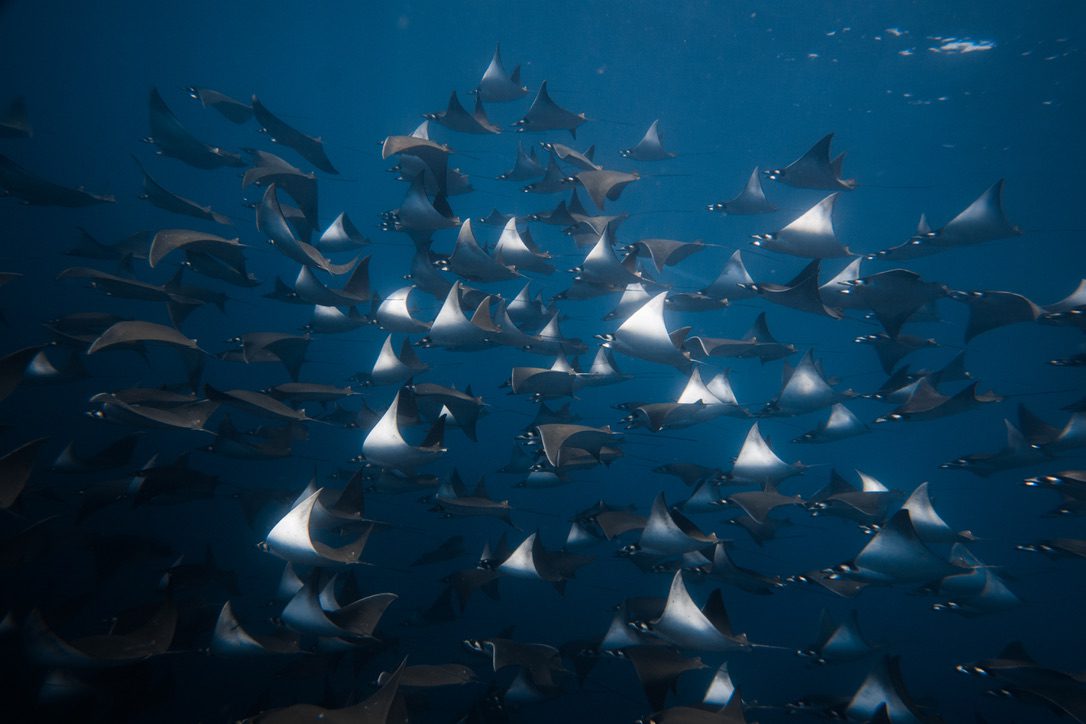
During April to June, massive mobula ray aggregations form in this region. These aggregations sometimes attract apex predators, including orcas.

What makes expeditions different:

  • Multiple consecutive days at sea
  • Longer days on the water — typically 8 to 10+ hours
  • Time to adapt, read conditions, and recognize patterns
  • Far more flexibility to follow the ocean, not a fixed schedule

Simply put:
more days + more hours + more searching = higher chances.

If seeing orcas is important to you — and you’re comfortable with uncertainty, long days, and no guarantees — a Mobula Ray Expedition offers your best shot.


The Bottom Line

Ocean Safaris are an incredible way to explore Baja’s wildlife in a single day.

But if your goal is to maximize your chances of encountering orcas in the wild, expeditions — especially during mobula season — provide the most search time, the most flexibility, and the highest realistic odds.

Still, orcas remain rare.
And that rarity is exactly what makes the encounter meaningful.


A Final Reminder

Come with an open mind.
Release expectations.
Trust the process.

When you stop chasing the idea of swimming with orcas, the ocean often gives you something far more meaningful.

Read More
Posted on

Mobula Season 2025 Highlights: Unforgettable Encounters

BY: Valentina / 0 COMMENTS / CATEGORIES: Baja, Conservation, mobulas, Sea Lions, whales, wildlife

Mobula Season 2025 Highlights: Unforgettable Encounters

The Sea of Cortez is a theater of marine life, and this mobula season was nothing short of spectacular. From breathtaking vortexes of rays to unexpected encounters with apex predators, the ocean rewarded patience, respect, and a sense of adventure.

This isn’t just a trip—it’s an Ocean Safari. Some days, the sea gifts us thousands of mobulas, playful dolphins, and curious sea lions. Other days, we spend hours offshore, searching… waiting… But when the magic happens—it’s worth every second.

This Season’s Greatest Hits

The stars of the show: Mobulas

We witnessed their full repertoire:

  • Sunrise/Sunset leapers – entire schools jumping

  • Vortex feeders – hundreds spiraling like living tornadoes

  • Mating rituals – males chasing females in a beautiful courtship we call mating train

Yet the real show started when we slipped beneath the surface. Picture this: you’re finning through blue nothingness when suddenly the water darkens. A shadow rises from the depths – then another, and another – until you’re surrounded by a fever of mobulas. They are all around you, close enough to see the scars on their backs.

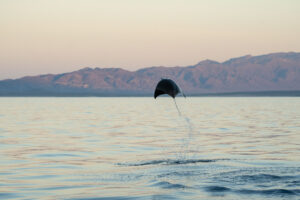
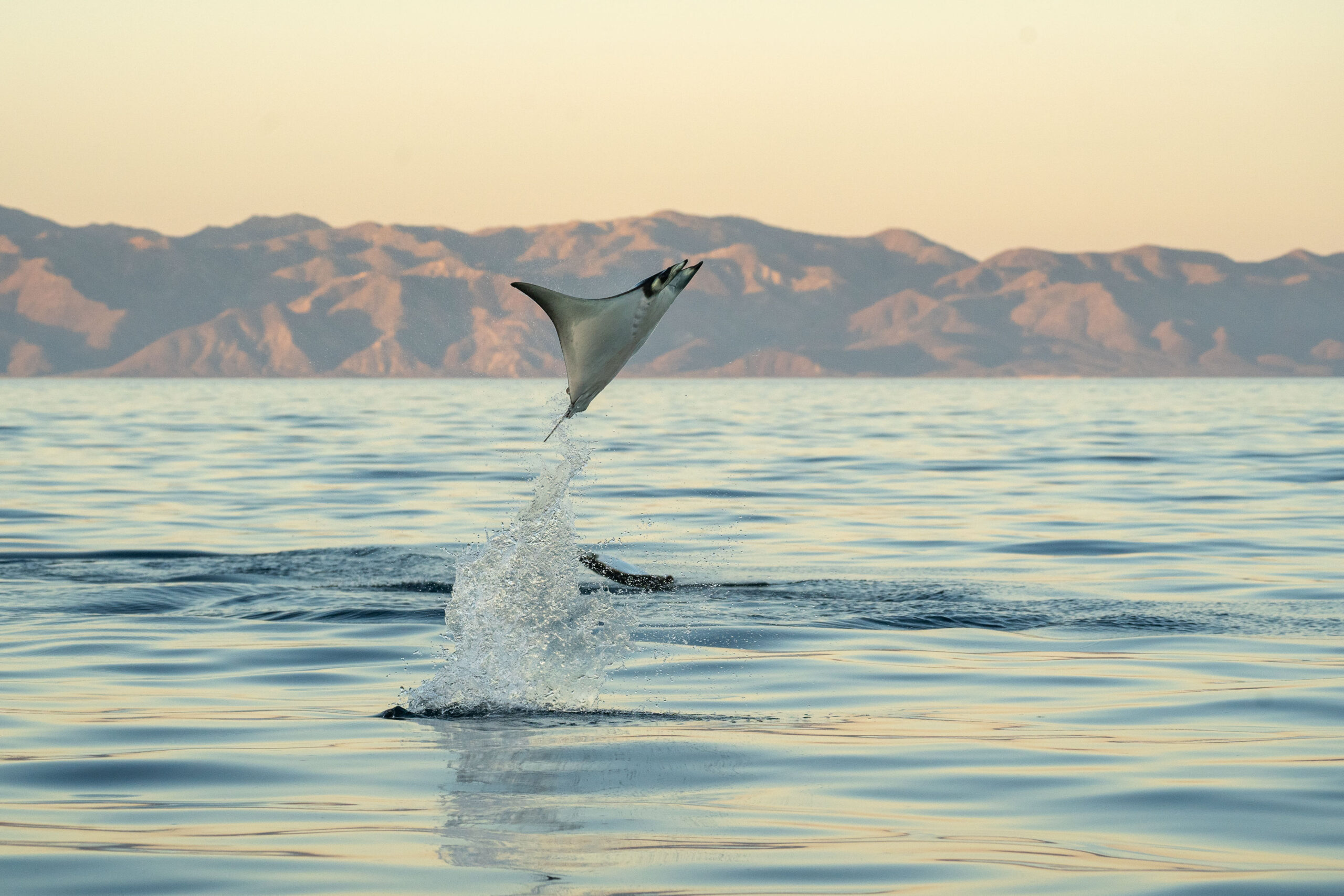
Mobula Ray jumping at sunset during a Mobula Expedition

Dolphin Dreams

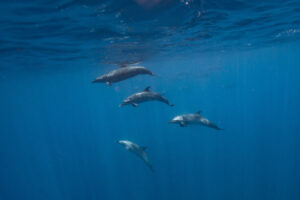
Resident bottlenose dolphins greeted us almost daily—sometimes in small pods of 10, other times in hundreds. They bow-rode our boat, locked eyes with us underwater, and left us grinning every time. We also encountered playful pantropical spotted dolphins, spinner dolphins, common dolphins and risso’s dolphin!

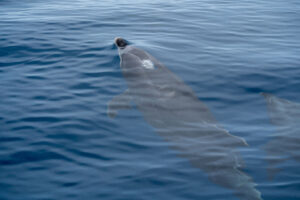
Bottlenose dolphin on the surface

The Big Five & Beyond

This season, we checked off marine megafauna royalty:

Sperm whales (the largest toothed whales on Earth)

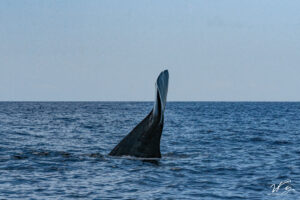
Sperm Whale going down

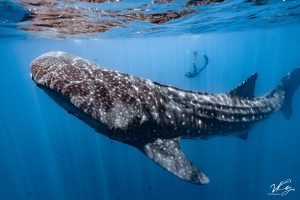
Whale sharks (the largest fish in the world)

Whale shark in baja Mexico with freefall academy during ocean safari

Orcas (the largest dolphin in the world)

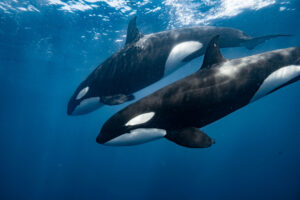
Orcas in a ocean safari in La Ventana during Mobula Season

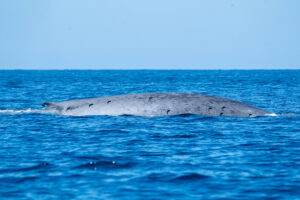
Blue whales (the biggest animals to ever exist)

Blue Whale in La Ventana during an ocean safari with Freefall Academy Mobula Season

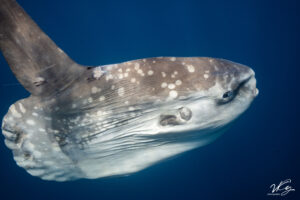
Mola molas (the heaviest bony fish in the world)

Mola mola during ocean safari in La Ventana with Freefall Academy

Plus, silky sharks, pilot whales (100+ strong!),  olive ridley turtles mating mid-ocean, and much more!

Citizen Science

If you’ve been reading us, you know that we’re all about citizen science: on every trip we record data that we share the scientists to help better understand animals. This was our top contribution this season:

Tecpatl the Orca

We photographed a massive male orca—later, comparing the dorsal for ID’s, I found a match! E221 was first documented in 2006 near Mathemathitian Seamounts in the Eastern Tropical Pacific. Since then, he’s been spotted in Costa Rica (2021, 2023, 2024)—and now, Baja (2025)! We shared this information with Marea, an NGO that names the Orcas of Baja as a community project. We suggested the name Tecpatl, which means obsidian knife in nahuatl, and we won! Nos E221 has a name, and thanks to photo ID we can write the story of Tecpatl and many other orcas to better understand their movements, the pod structure, their diet and much more!

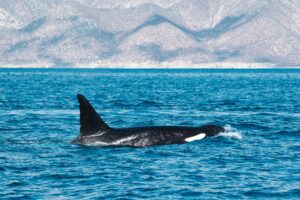
Orca in La Ventana during an ocean safari mobula expedition
Tecpatl the Orca

Stories worth telling

When the Orcas came to us

It was Day 6 of the expedition – the last water day. After yesterday’s disappointment (very crowded orca pod being harassed all day long, we left to be one less boat with them), we decided to start early at the sea lion colony, hoping for some quiet time before the tourist boats arrived. The morning light was golden as we slipped into the water, where we swam and freedove with sea lions.

I was taking photos of Rae (a participant on the expedition) when I heard the captain screaming: “ORCAS! ORCAS!”. First I thought that he was seeing them far away, then I saw the unmistakable dorsal find right next to the boat! My brain short-circuited – they were coming straight for us. We put our heads in the water and saw them gliding past us about 5m away from us!!

What happened next was pure magic.

For three hours, we had the pod all to ourselves (only after an hour 2 then 3 boats showed up). As if rewarding our patience from yesterday, we’re getting close underwater and doing eye contact. After several jumps, we decided to watch them from the boat again and suddenly they started bow riding! Guests were crying, laughing… After a few minutes bow riding, they went under and disappeared for the day, it was like they said goodbye! That is why is why we endure the long days. Check out some photos here.

Orcas in La Ventana during an ocean safari on a Mobula Expedition

The Dolphin Superpod That Stole Our Hearts

It started as one of those “let’s just check this last spot” moments. We’d already had a spectacular morning with mobulas and sea lions, but the afternoon stretched ahead with no reports of activity. The crew decided to go northeast.

Forty minutes later, we were in the middle of nowhere – just endless blue and our own wake. Then Pablo, our eagle-eyed captain, suddenly cut the engine. He saw something.

At first it looked like whitecaps on the horizon. Then the water began to boil.

As we crept closer, the scale became clear – at least 1,500 pantropical spotted dolphins, spread across miles of ocean. Not just traveling, but celebrating. Groups of 20-30 would break off to ride our bow, spinning mid-air before crashing back down.

When we slipped into the water, the real show began.

Dolphins came from every direction – some so close I could hear their high-pitched squeals reverberating through my body. A curious subgroup of about 30 formed a loose circle around us, tilting their heads to maintain eye contact as they passed. Pure magic, watch an instagram reel of the experience here.

That’s the thing about the Sea of Cortez – you never know what you’re going to find, and when you find it it’s mind blowing!

pan tropical spotted dolphins on an ocean safari in la ventana with freefall academy

Expedition vs. Day Trip: What’s Best for You?

  • Day Trips (about 6h): Perfect for everyone — if you are coming to La Paz and only have a day or two, this is for you! You’ll have an awesome experience with wildlife encounters.

  • Expeditions (8-10h): More offshore time = more wildlife encounters. If you want to see more variety of animals, get a better shot, have a better chance to find more exotic animals… this is for you. More time in the water and more days, our expeditions are 5-7 days.


Ready for Next Season?

Spaces for next season are limited. Will you join us for the adventure?

👉 Book Your Mobula Expedition Now

👉 Book Mobula Safari Your Day Trip Now

Read More
Posted on

Mobula Rays, the oceans’ aerialists

BY: Valentina / 0 COMMENTS / CATEGORIES: mobulas, wildlife

Mobula rays, the oceans’ aerialists

Did you know that the largest migration of any ray in the World occurs every year in Baja, Mexico? It is one of our favorite events of the year. Who are they? The correct common name is Munk’s Pigmy Devil Ray (Mobula munkiana). In this blog post we will talk about its biology, conservation and some fun facts of Mobula Rays!


I always like to start with the basics, what are Mobulas? (if this is too nerdy for you, skip this paragraph, sorry I can’t help it, I’m a marine biologist). They are vertebrate animals that belong to the class Chondrichthyes, which are fishes whose skeleton is made out of cartilage, unlike humans’ which is made out of bone. This group includes sharks, rays and chimaeras. The rays, also called Batoidea, differentiates from sharks and rays because they have particular characteristics that are unique to them, such as having a flat body and gills positioned under the pectoral fins. There are 10 species of Mobulas (genus Mobula), here we will explore the smallest of all, Mobula munkiana.

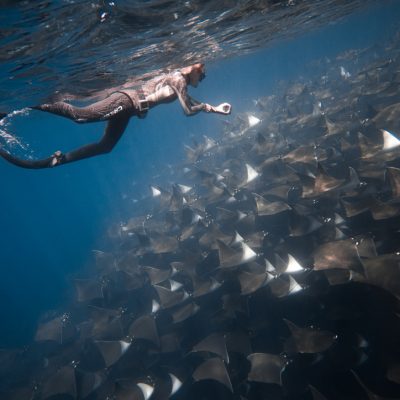
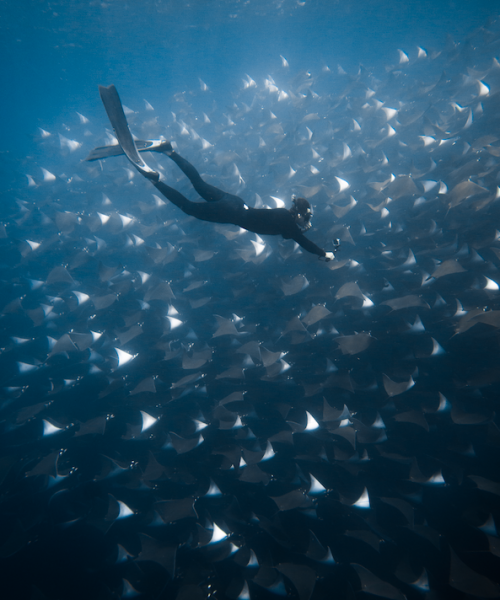
Freediver Swimming with mobula rays in la ventana baja mexico with freefall academy
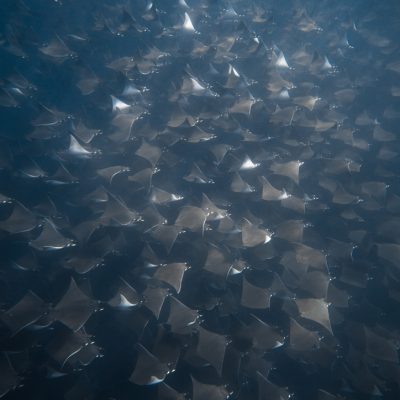
mobula ray fever in la ventana baja mexico with freefall academy

What are they doing in Baja anyways?

This is a question that local scientists have been trying to answer. Mobula Conservation has found some interesting information. We know that they aggregate in hundreds or thousands and migrate to the Sea of Cortez during the spring months. We have also seen them do courtship behavior and lots of jumping in the air. But it wasn’t until 2021 when a very complete study was published where they suggest that they are coming here to mate and give birth! This is huge!


Apparently the mating and pupping season begins in April, when the water is warmer. This allows the neonates and juveniles to use shallow bays where there is food available and protection from open ocean predators. These bays are nursery areas, where the young Mobulas will spend their first months of life until they are big and strong enough to start aggregating and joining the Mobula migration.

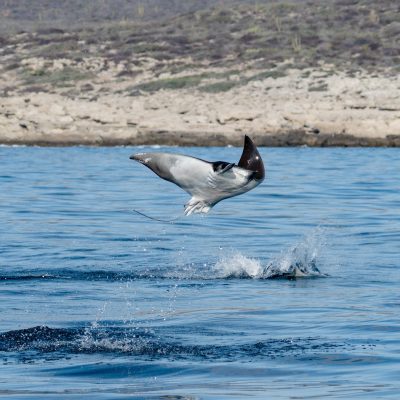
Mobula ray jumping in la ventana with freefall academy

Why do Mobula Rays jump?

They can jump up to 3 m in the air! Some of the hypothesis scientists have made include: mating behavior, to remove parasites, as a form of communication and for fun. I personally believe that they really want to fly and won’t give up.

Hundreds can jump at the same time, which is super fun to watch.  It sounds like popping popcorn, quite the spectacle! They not only jump but do backflips, 360s, flips, flops, turns… that’s why people call them the oceans’ aerialists.

What do Mobulas feed on?

Mobulas are filter feeders, so don’t worry they won’t try to eat you! They feed on tiny animals floating on the water column called zooplankton. In Mexico they have been found to feed mostly on planktonic crustaceans like Euphausiids and Copepods.

Mobula Mating behavior

Mobulas have a complex mate choice system. Their courtship can last several days where females are chased by different males. The male winner bites the pectoral fin of the female to be able to copulate.

Main threats for Mobulas, and Conservation efforts

Mobulas are threatened by many different factors. They are particularly vulnerable because they have only one pup per litter possibly every 3-5 years. They start reproducing probably at around 5-6 years of age and have a lifespan of around 20 years. So do the math, they are not having a lot of offspring in their lifetime. Add to the equation the fact that they migrate in up to thousands of individuals and they become particularly vulnerable to overexploitation, specifically fishing and bycatch. They are often found as bycatch in tropical tuna purse seines and longlines (the most common ways to fish tuna), so next time you eat sushi think twice! Climate change, pollution, illegal fishing and bad tourism practices are also some of the threats that Mobulas go through.


However it is not all bad! Luckily in Mexico they have been protected since 2004  against capture (fishing), trade and consumption. This is regulated by the law NOM-029-PESCA-2004. To conserve an animal you need to know them first. Mobula Conservation has a citizen science program, where you can help get data about them during our tours!

Freediver Ivan diving among thousands of mobula rays with freefall academy!

See them for yourself!

Mobulas are fascinating, so why not enjoy watching them in their natural environment? We run daily trips from Thursday to Sunday in May and June. Come join us and watch these pancakes shoot up to the sky, swim with them, watch them engage in mating behaviors and maybe even predation.


We have small groups of usually 4 but up to 6 people per day. Our guides are trained to show you the best way you can interact with them to have a respectful behavior towards them which will make them stay with us longer! If you want to swim with these incredible creatures, let us know!

Read More
en_USEnglish
1
Scan the code