Tag: ocean safari
Posted on
Mobula Season 2026 Recap: La Ventana Never Disappoints
BY: Valentina / 0 COMMENTS / CATEGORIES: mobulas, orcas, Sea Lions, Sin categoría, Snorkeling, whales, wildlife
Every year, when mobula season wraps up, I sit down and try to put into words what just happened. And every year, I realize words aren’t quite enough. But I’ll try anyway, because what we witnessed this season in La Ventana deserves to be told.
This year, people joined us from every single continent on Earth: all brought together by the ocean. That alone says something pretty special about this place.

First things first — the species list
One of the things that makes La Ventana so extraordinary is the sheer variety of life. Scientists call it a biodiversity hotspot, and after this season, I understand why more than ever.
Rays & Mantas
Munk’s pygmy devil ray, spinetail devil ray, oceanic manta ray, bentfin devil ray
Dolphins
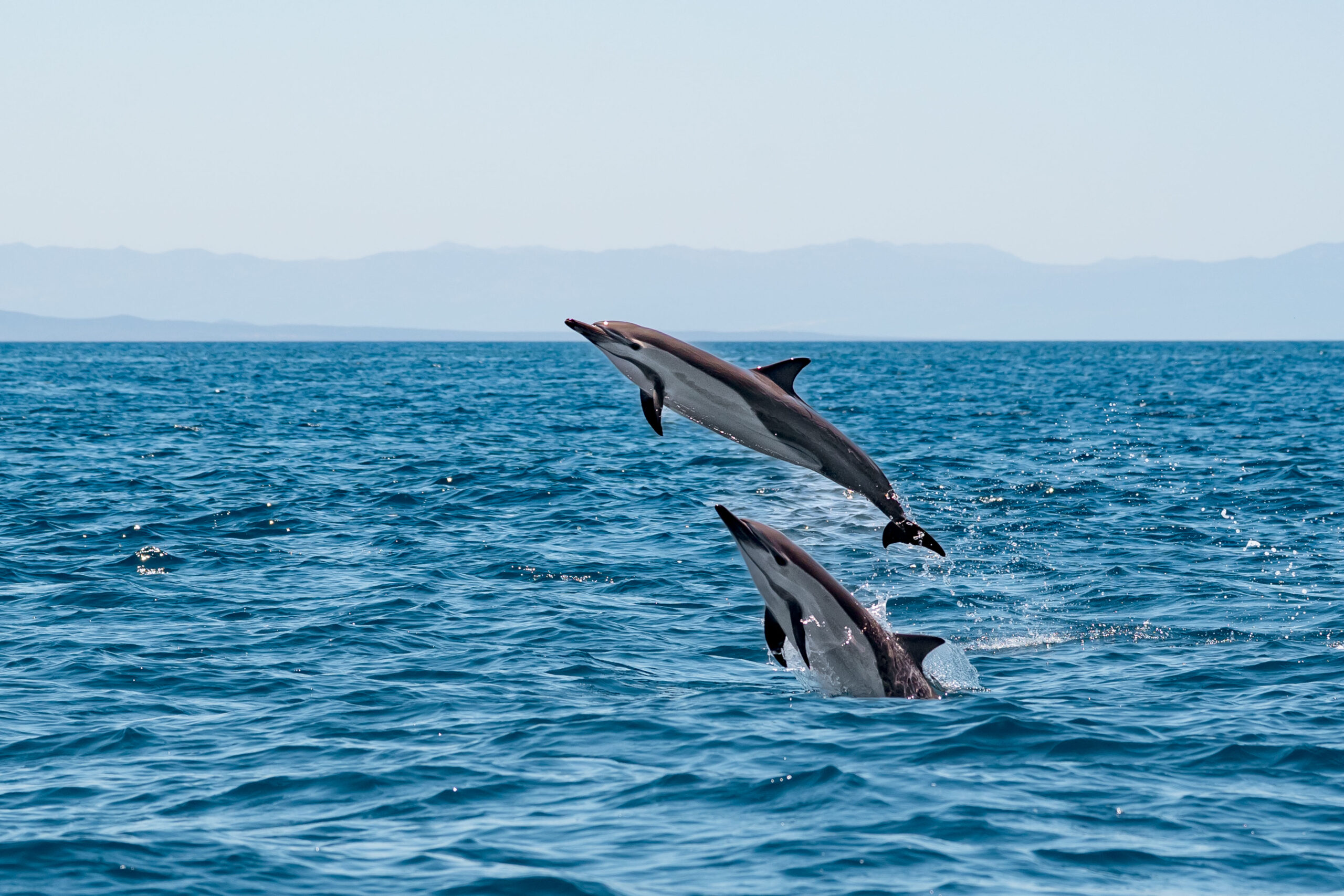
Bottlenose, pantropical spotted, common, spinner, Risso’s, rough-toothed
The Big Ones
Pilot whales, orcas, false orcas
Whales
Humpback, sperm, Bryde’s, fin
Sea Turtles
Olive Ridley, green, hawksbill
And Everything Else
Whale sharks, sea lions, cormorants, porcupine fish, marlin, octopus, mako shark, silky shark, tuna, sardines, hammerhead sharks
Not every animal shows up every day — or even every week. But the fact that all of this lives in one place? That’s La Ventana.
What made this season different
1. Warmer water: a mixed blessing
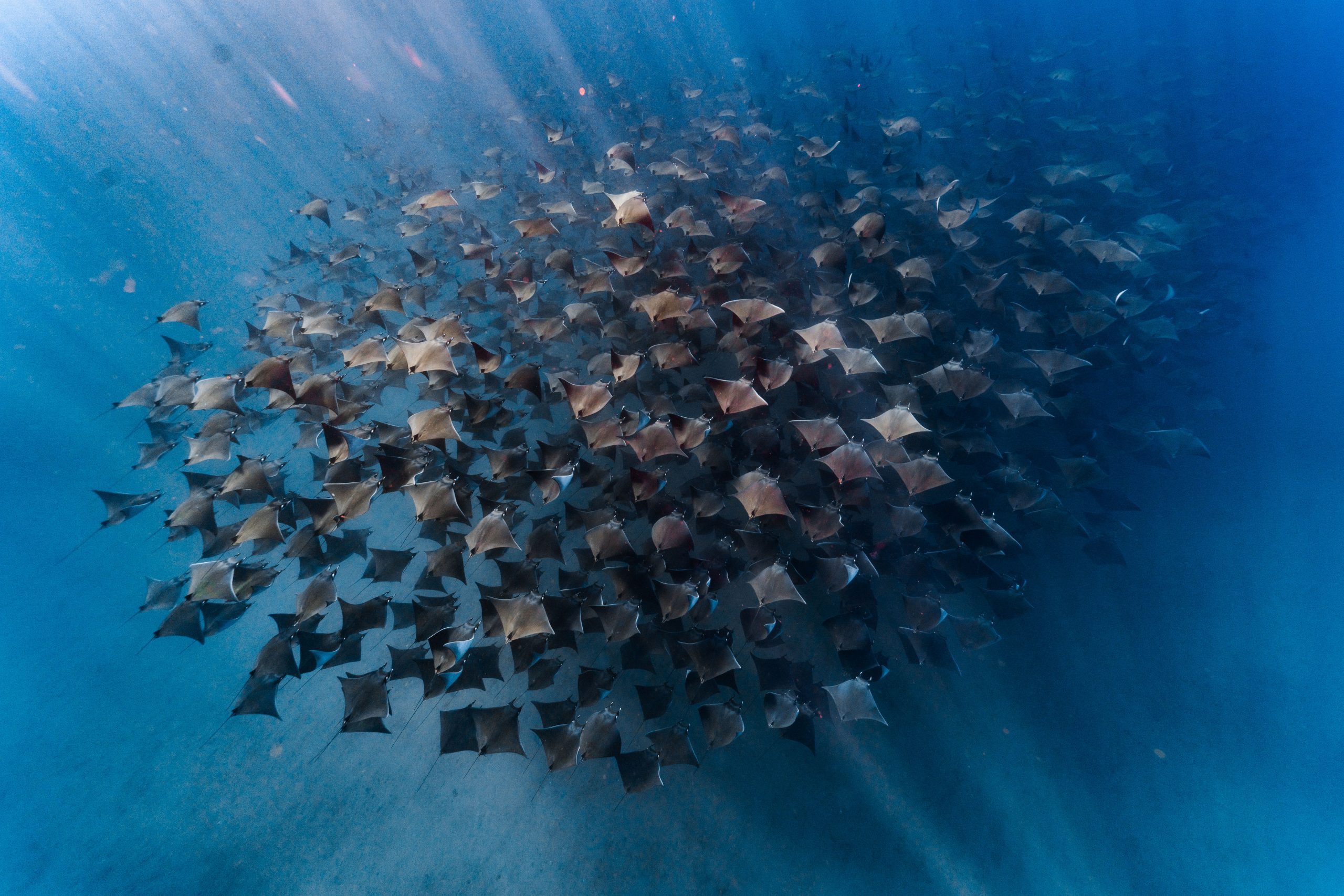
The water was warmer than usual this year, which brought something beautiful: incredible visibility early in the season. Crystal clear, blue, gorgeous. But here’s the thing about mobulas: they follow the plankton. And plankton blooms in cooler, murkier water. So while the visibility was stunning, the mobulas were harder to find than in a typical season. Fewer numbers, and often deeper. We still had solid encounters.
But if you came expecting massive surface aggregations, this year taught us an important lesson: the ocean always has its own plans.
2. The most Mobula mobular we’ve ever seen
Mobula mobular — the larger, rarer cousin of the pygmy devil ray — showed up in numbers we’ve never seen before. If you’ve ever watched one glide past you underwater, you know: there’s something almost otherworldly about them. Slow and elegant.
My favorite encounter of the entire season happened on a day when we were far offshore, just our small group, all by ourselves. We dropped into the water and found a fever of 12 Mobula mobular in the middle of courtship. The males were chasing the female in slow, graceful circles, spiraling upward, then deeper, then back again. They circled all around us. They didn’t leave. We didn’t leave. We stayed in the water with them for over an hour.
(My action camera had no battery that day. Of course. 😂 Thankfully a guest had their camera rolling so I have proof it happened, I promise.)
“Encounters with this species usually last seconds to minutes. An hour is something I’ll never forget.”

3. The squid arrival — and everything it brought with it
By late June, our captains started noticing something: fishermen were pulling up squid. More than usual. A lot more. Anyone who knows the ocean knows what squid means: the predators follow. Within days, pilot whales arrived. And they stayed.
Weeks into July, we were seeing them every single week! Pods of 50 to 300 individuals, cruising slowly at the surface like they owned the place (they do). Their rounded heads bobbing, calves swimming close to curious snorkelers completely relaxed.
Pilot whales are my favorites. I’ll say it plainly. There’s something about their calm, social energy that feels like being welcomed. I could watch them for hours.

4. Sperm whales: the giants arrived
Squid also attracted sperm whales, the largest toothed whale on Earth. May brought mostly solitary individuals, just one or two at a time. But by June they were coming in groups, and by late June and early July we had two days that I still can’t fully believe happened: pods of more than 50 to 100 sperm whales!
In Mexico we can’t swim with them, so we watched from the surface — these massive, prehistoric-looking animals logging at the surface, breathing, socializing. It’s the kind of thing that makes you feel very small in the best possible way.

5. Cormorants (yes, really)
Okay, I know. Some people hear “cormorants” and think: boring. Wrong. While most enjoy the sea lions near the colony, I get completely absorbed watching the cormorants hunt on the reef. Birds that dive are basically feathered freedivers. I kept trying to follow them underwater and match their breath-hold. Sometimes I managed it. Sometimes they absolutely smoked me. Fast, funny, underrated. Come for the whales, stay for the cormorants.
6. Porcupine fish bay
Every season, without fail, someone visits the porcupine fish bay and completely loses their mind with joy. These round, spiky, wide-eyed little fish have absolutely no business being that cute, and yet here we are. If you come to La Ventana and skip the porcupine fish bay, did you really go to La Ventana?
7. Orcas and the July pattern
Orcas are the animal people ask about most. They’re elusive, unpredictable, and when you find them, nothing else compares. This season we saw them in May and June, but not in the numbers we hoped for. And then July happened.
Orcas. Every single week. Sometimes multiple days in a row. Cruising, hunting, socializing… in some of the bluest water ever. The best orca encounters of the entire season happened in July, in conditions that felt almost unfair in their beauty.
“Here’s what’s interesting: last year was the same. July was exceptional. Is this a pattern?”
Maybe. Orcas are notoriously hard to predict, and two or three good years in July doesn’t mean next year will be the same. But it’s an observation worth paying attention to. We’ll be watching closely.

A note before you book
If you’re thinking about joining us next season, here’s the most important thing I can tell you: Come with an open heart and an open mind. La Ventana is not a zoo. We can’t promise you’ll see every animal on that list. Some days the ocean gives you everything. Some days it gives you something quieter, smaller, and just as beautiful if you’re paying attention.
What I can promise is this: every single day on the water is worth it. You are incredibly lucky to be in the presence of wild animals — and that feeling never gets old, no matter how many seasons I’ve done this.

Thank you — really
None of this happens without the people who show up. Every single guest who joined us this season, whether for one day on the water or a full expedition, brought their own curiosity, their own energy, and their own love for the ocean. And that makes every encounter richer.
Thank you for trusting us with your time, your adventure, and your love for the sea. We don’t take that lightly. See you next season.

Ready to join us?
If you’re coming for a day and want to experience the magic of La Ventana, the Ocean Safari is your starting point. If you want to maximize your time in the water and have more variety of interactions, the Mobula Expedition is for you.
See you underwater. — Valentina, Freefall Academy







Posted on
Swim With Orcas in Baja? The Honest Truth About Orca Encounters in La Ventana
BY: Valentina / 0 COMMENTS / CATEGORIES: Baja, mobulas, wildlife
Is It Your Dream to Swim With Orcas in the Wild?
The Honest Truth About Swimming With Orcas in La Ventana, Baja
Have you seen countless Instagram reels of people claiming they swam with orcas in La Ventana, Baja, Mexico — and now dream of experiencing that moment for yourself?
You’re not alone. Orcas are powerful, intelligent, emotional animals. Seeing them in the wild — let alone swimming near them — can be deeply moving and unforgettable.
But before you book a trip with the sole goal of swimming with orcas, there’s something important you need to understand. This article isn’t here to sell you a fantasy. It’s here to share the truth — so your expectations can meet reality, and you can decide whether coming to Baja with the goal of swimming with orcas is truly the right choice for you.
A Bit of Context: Swimming With Orcas Was Never the Norm
Just a few years ago, ocean safaris and orca-focused tourism barely existed in Baja California. Operators would occasionally see orcas while traveling to fishing grounds or dive sites — a few sightings per year, if lucky. Even then, encounters were rare and unpredictable.
Back then, swimming with orcas was never something you planned for. It was something that happened by chance.
How Ocean Safaris Changed Orca Encounters
As ocean safaris grew in popularity, more boats began heading offshore specifically searching for wildlife. With more boats looking, there were more sightings — including more encounters with orcas. And with that, something shifted.
Visibility increased — not predictability. Orcas didn’t suddenly become more common. There were simply more boats actively searching for them. At the same time, social media exploded with images and videos of people swimming with orcas, creating the impression that these encounters were frequent, repeatable, and almost guaranteed. They are not.
When It Became Too Much
At some point, the desire to swim with orcas crossed an ethical line. For many operators, content creation and ego — “I swam with an orca” — became more important than the animals’ wellbeing. What we started seeing more often:
- Boats chasing orcas for hours
- Cutting across their path
- Separating family members
- Dropping people into the water while orcas were actively hunting
- 10, 20, sometimes 30+ boats pursuing the same pod
These behaviors disrupt natural hunting, social bonds, and movement patterns. This is not curiosity. This is pressure.
The Truth Behind Instagram Videos of Swimming With Orcas
Yes — orca content sells. A lot. But what Instagram rarely tells you:
- Orcas are not seen frequently year-round
- Many “swim with orcas” tours are marketed dishonestly
- Orcas travel vast distances daily and cannot be scheduled
- Some viral videos are slowed down, making evasive behavior look calm or curious
Ask yourself: How would you feel if 20 boats chased you and your family all day, cutting you off and dropping people in front of you? That is not a natural interaction — and it is not ethical wildlife tourism. Selling guaranteed opportunities to swim with orcas in the wild is simply not honest.
It’s Not All Bad: Ethical Orca Encounters Do Exist
Not every orca encounter is harmful. When pressure is low, when boats are respectful, when animals are relaxed — orcas can be curious, calm, and even playful. And when swimming with orcas happens under those conditions — on their terms — it can be one of the most profound wildlife experiences on Earth. These encounters still exist. But they require patience, restraint, and respect.
A Step in the Right Direction: Orca Regulations in Mexico
In response to increasing pressure on orcas, the Mexican government introduced the first management plan for swimming with orcas in 2025. This plan regulates how orca encounters should be handled in La Ventana. It is still new. It will continue evolving. And it will require enforcement. But it is a necessary step toward protecting orcas in the wild.

How We Approach Swimming With Orcas at Freefall Academy
At Freefall Academy, we don’t sell “swim with orcas” tours or expeditions. We stand firmly by ethical wildlife encounters. That means:
- If we arrive at an orca sighting and see heavy boat pressure, we leave
- We do not chase or crowd animals
- We do not force interactions
- Sometimes we enter the water — sometimes we don’t
This can be difficult for guests when their dream of swimming with orcas feels so close. But these are wild animals. Families. Mothers with calves. Animals with culture, communication, and memory. If they are being harassed, we choose not to participate.
Our approach is simple: we search for wildlife independently and let encounters happen naturally. Most days, we don’t find orcas. But most days, we find something extraordinary.
A Necessary Shift in Mentality
Coming to Baja should not be about ticking “swim with orcas” off a bucket list. While swimming with orcas is possible, it should always be the cherry on top, never the expectation. If your only goal is swimming with orcas, Baja — and especially Freefall Academy — may not be the right fit.
However, if you want:
- Long days at sea
- One of the most biodiverse places on Earth for large marine animals
- Experiences guided by a marine biologist
- Ethical encounters rooted in respect, not pressure
- And the openness to be surprised by what the ocean decides to give
Then you’re exactly who this experience is for.
How to Increase Your Chances of Seeing Orcas (Honestly)
There are no guarantees when it comes to orcas — but there are meaningful differences between our Ocean Safaris and our Mobula Ray Expeditions when it comes to search effort and time at sea.
Ocean Safaris
Ocean Safaris are single-day trips, usually around 6 hours on the water. They are exploratory and dynamic, and between April and August this is when we most often encounter orcas on a day-trip basis. These trips are ideal if:
- You have limited time in Baja
- You want an incredible wildlife experience in one day
- You’re open to whatever the ocean offers
Orcas are a possibility, never an expectation. That said, in recent seasons we’ve noticed more frequent sightings from late June through July. We can’t promise that pattern will repeat, but it’s useful data if you’re planning your timing.
Mobula Ray Expeditions
Mobula Ray Expeditions are multi-day expeditions designed around searching. During April to June, massive mobula ray aggregations form in this region. These aggregations sometimes attract apex predators, including orcas. What makes expeditions different:
- Multiple consecutive days at sea
- Longer days on the water — typically 8 to 10+ hours
- Time to adapt, read conditions, and recognize patterns
- Far more flexibility to follow the ocean, not a fixed schedule
Simply put: more days + more hours + more searching = higher chances. If seeing orcas is important to you — and you’re comfortable with uncertainty, long days, and no guarantees — a Mobula Ray Expedition offers your best shot.
The Bottom Line
Ocean Safaris are an incredible way to explore Baja’s wildlife in a single day. But if your goal is to maximize your chances of encountering orcas in the wild, expeditions — especially during mobula season — provide the most search time, the most flexibility, and the highest realistic odds. Still, orcas remain rare. And that rarity is exactly what makes the encounter meaningful.
A Final Reminder
Come with an open mind. Release expectations. Trust the process.
When you stop chasing the idea of swimming with orcas, the ocean often gives you something far more meaningful.
 English
  Español de México