Posted on

Swim With Orcas in Baja? The Honest Truth About Orca Encounters in La Ventana

BY: Valentina / 0 COMMENTS / CATEGORIES: Baja, mobulas, wildlife

Is It Your Dream to Swim With Orcas in the Wild?

The Honest Truth About Swimming With Orcas in La Ventana, Baja

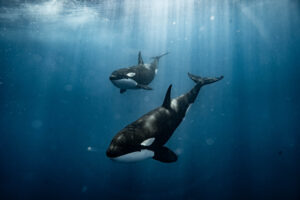
Have you seen countless Instagram reels of people claiming they swam with orcas in La Ventana, Baja, Mexico — and now dream of experiencing that moment for yourself?

You’re not alone.

Orcas are powerful, intelligent, emotional animals. Seeing them in the wild — let alone swimming near them — can be deeply moving and unforgettable.

But before you book a trip with the sole goal of swimming with orcas, there’s something important you need to understand.

This article isn’t here to sell you a fantasy.
It’s here to share the truth — so your expectations can meet reality, and you can decide whether coming to Baja with the goal of swimming with orcas is truly the right choice for you.


A Bit of Context: Swimming With Orcas Was Never the Norm

Just a few years ago, ocean safaris and orca-focused tourism barely existed in Baja California.

Operators would occasionally see orcas while traveling to fishing grounds or dive sites — a few sightings per year, if lucky. Some operators using spotter planes increased their chances of seeing them, but even then, encounters were rare and unpredictable.

Back then, swimming with orcas was never something you planned for.
It was something that happened by chance.


How Ocean Safaris Changed Orca Encounters

As ocean safaris grew in popularity, more boats began heading offshore specifically searching for wildlife.

With more boats looking, there were more sightings — including more encounters with orcas.

And with that, something shifted.

Visibility increased — not predictability.

Orcas didn’t suddenly become more common.
There were simply more boats actively searching for them.

At the same time, social media exploded with images and videos of people swimming with orcas, creating the impression that these encounters were frequent, repeatable, and almost guaranteed.

They are not.


When It Became Too Much

At some point, the desire to swim with orcas crossed an ethical line.

For many operators, content creation and ego — “I swam with an orca” — became more important than the animals’ wellbeing.

What we started seeing more often:

  • Boats chasing orcas for hours
  • Cutting across their path
  • Separating family members
  • Dropping people into the water while orcas were actively hunting
  • 10, 20, sometimes 30+ boats pursuing the same pod

These behaviors disrupt natural hunting, social bonds, and movement patterns.

This is not curiosity.
This is pressure.


The Truth Behind Instagram Videos of Swimming With Orcas

Let’s talk honestly about Instagram and the idea of swimming with orcas.

Yes — orca content sells. A lot.

But what Instagram rarely tells you:

  • Orcas are not seen frequently year-round
  • Many “swim with orcas” tours are marketed dishonestly
  • Orcas travel vast distances daily and cannot be scheduled
  • Some viral videos are slowed down, making evasive behavior look calm or curious

Ask yourself:
How would you feel if 20 boats chased you and your family all day, cutting you off and dropping people in front of you?

That is not a natural interaction — and it is not ethical wildlife tourism.

Selling guaranteed opportunities to swim with orcas in the wild is simply not honest.


It’s Not All Bad: Ethical Orca Encounters Do Exist

Not every orca encounter is harmful.

When pressure is low.
When boats are respectful.
When animals are relaxed.

Orcas can be curious, calm, and even playful.

And when swimming with orcas happens under those conditions — on their terms — it can be one of the most profound wildlife experiences on Earth.

These encounters still exist.
But they require patience, restraint, and respect.


A Step in the Right Direction: Orca Regulations in Mexico

In response to increasing pressure on orcas, the Mexican government introduced the first management plan for swimming with orcas in 2025.

This plan regulates how orca encounters should be handled in La Ventana.

It is still new.
It will continue evolving.
And it will require enforcement.

But it is a necessary step toward protecting orcas in the wild.


How We Approach Swimming With Orcas at Freefall Academy

At Freefall Academy, we don’t sell “swim with orcas” tours or expeditions.

We stand firmly by ethical wildlife encounters.

That means:

  • If we arrive at an orca sighting and see heavy boat pressure, we leave
  • We do not chase or crowd animals
  • We do not force interactions
  • Sometimes we enter the water — sometimes we don’t

This can be difficult for guests when their dream of swimming with orcas feels so close.

But these are wild animals.
Families.
Mothers with calves.
Animals with culture, communication, and memory.

If they are being harassed, we choose not to participate.

Our approach is simple:
we search for wildlife independently and let encounters happen naturally.

Most days, we don’t find orcas.
But most days, we find something extraordinary.


A Necessary Shift in Mentality

Coming to Baja should not be about ticking “swim with orcas” off a bucket list.

While swimming with orcas is possible, it should always be the cherry on top, never the expectation.

If your only goal is swimming with orcas, Baja — and especially Freefall Academy — may not be the right fit.

However, if you want:

  • Long days at sea
  • One of the most biodiverse places on Earth for large marine animals
  • Experiences guided by a marine biologist
  • Ethical encounters rooted in respect, not pressure
  • And the openness to be surprised by what the ocean decides to give

Then you’re exactly who this experience is for.


How to Increase Your Chances of Seeing Orcas (Honestly)

There are no guarantees when it comes to orcas — but there are meaningful differences between our Ocean Safaris and our Mobula Ray Expeditions when it comes to search effort and time at sea.

Ocean Safaris

Ocean Safaris are single-day trips, usually around 6 hours on the water.

They are exploratory and dynamic, and between April and August this is when we most often encounter orcas on a day-trip basis. These trips are ideal if:

  • You have limited time in Baja
  • You want an incredible wildlife experience in one day
  • You’re open to whatever the ocean offers

Orcas are a possibility — never an expectation.


Mobula Ray Expeditions

Mobula Ray Expeditions are multi-day expeditions designed around searching.

During April to June, massive mobula ray aggregations form in this region. These aggregations sometimes attract apex predators, including orcas.

What makes expeditions different:

  • Multiple consecutive days at sea
  • Longer days on the water — typically 8 to 10+ hours
  • Time to adapt, read conditions, and recognize patterns
  • Far more flexibility to follow the ocean, not a fixed schedule

Simply put:
more days + more hours + more searching = higher chances.

If seeing orcas is important to you — and you’re comfortable with uncertainty, long days, and no guarantees — a Mobula Ray Expedition offers your best shot.


The Bottom Line

Ocean Safaris are an incredible way to explore Baja’s wildlife in a single day.

But if your goal is to maximize your chances of encountering orcas in the wild, expeditions — especially during mobula season — provide the most search time, the most flexibility, and the highest realistic odds.

Still, orcas remain rare.
And that rarity is exactly what makes the encounter meaningful.


A Final Reminder

Come with an open mind.
Release expectations.
Trust the process.

When you stop chasing the idea of swimming with orcas, the ocean often gives you something far more meaningful.

Read More
Posted on

Mobula Season 2025 Highlights: Unforgettable Encounters

BY: Valentina / 0 COMMENTS / CATEGORIES: Baja, Conservation, mobulas, Sea Lions, whales, wildlife

Mobula Season 2025 Highlights: Unforgettable Encounters

The Sea of Cortez is a theater of marine life, and this mobula season was nothing short of spectacular. From breathtaking vortexes of rays to unexpected encounters with apex predators, the ocean rewarded patience, respect, and a sense of adventure.

This isn’t just a trip—it’s an Ocean Safari. Some days, the sea gifts us thousands of mobulas, playful dolphins, and curious sea lions. Other days, we spend hours offshore, searching… waiting… But when the magic happens—it’s worth every second.

This Season’s Greatest Hits

The stars of the show: Mobulas

We witnessed their full repertoire:

  • Sunrise/Sunset leapers – entire schools jumping

  • Vortex feeders – hundreds spiraling like living tornadoes

  • Mating rituals – males chasing females in a beautiful courtship we call mating train

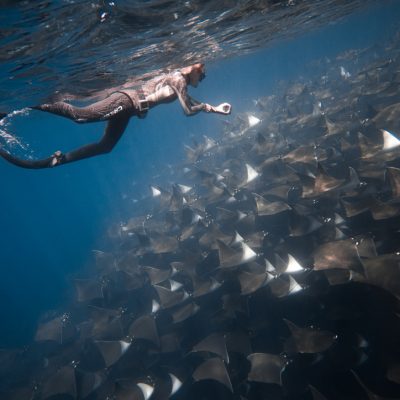
Yet the real show started when we slipped beneath the surface. Picture this: you’re finning through blue nothingness when suddenly the water darkens. A shadow rises from the depths – then another, and another – until you’re surrounded by a fever of mobulas. They are all around you, close enough to see the scars on their backs.

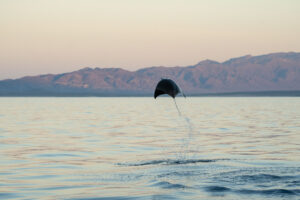
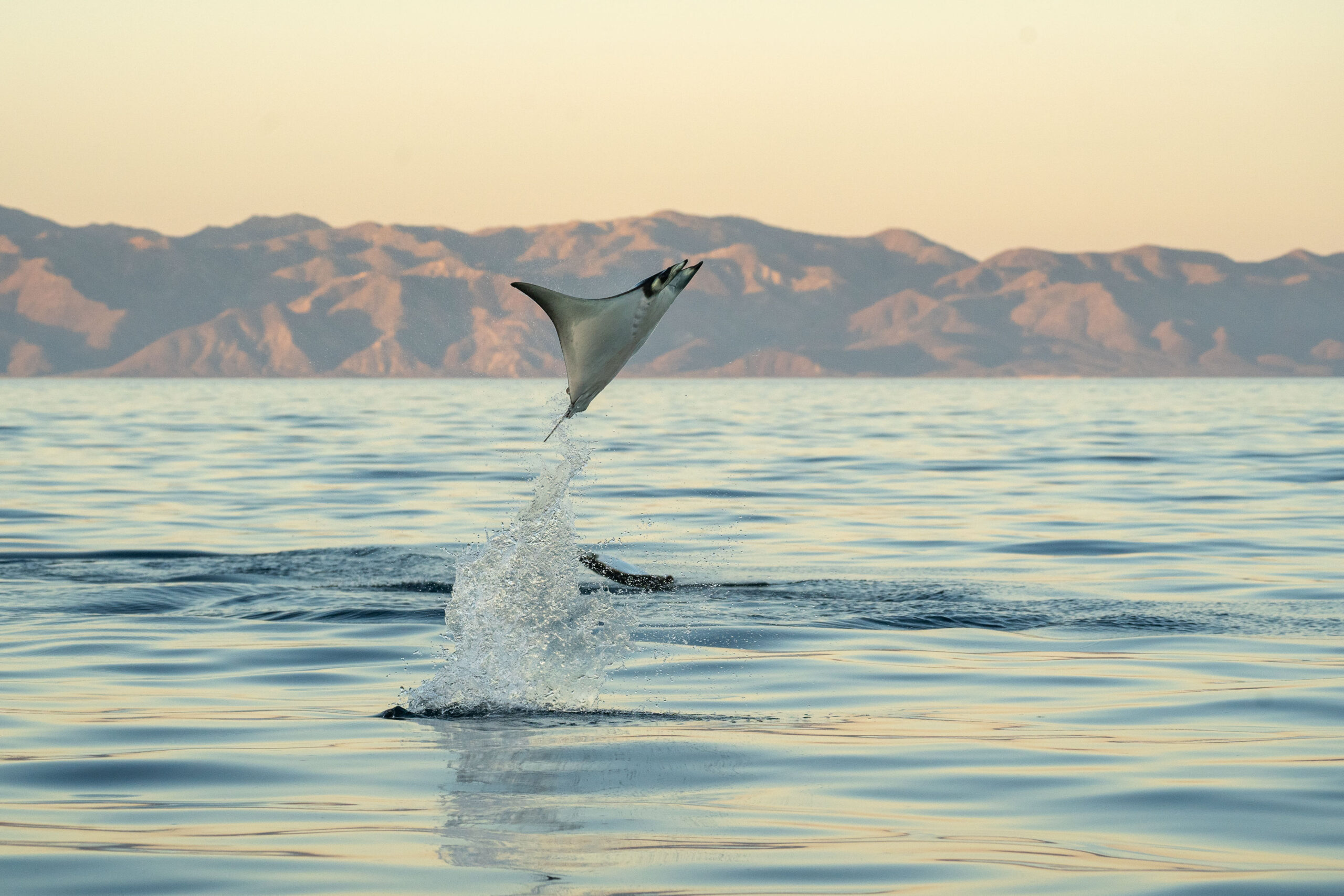
Mobula Ray jumping at sunset during a Mobula Expedition

Dolphin Dreams

Resident bottlenose dolphins greeted us almost daily—sometimes in small pods of 10, other times in hundreds. They bow-rode our boat, locked eyes with us underwater, and left us grinning every time. We also encountered playful pantropical spotted dolphins, spinner dolphins, common dolphins and risso’s dolphin!

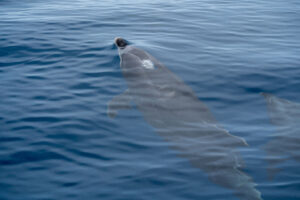
Bottlenose dolphin on the surface

The Big Five & Beyond

This season, we checked off marine megafauna royalty:

Sperm whales (the largest toothed whales on Earth)

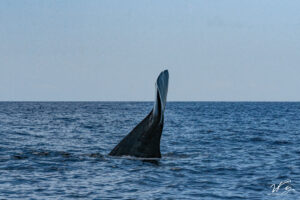
Sperm Whale going down

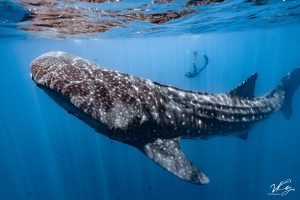
Whale sharks (the largest fish in the world)

Whale shark in baja Mexico with freefall academy during ocean safari

Orcas (the largest dolphin in the world)

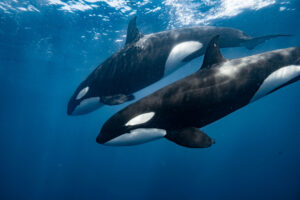
Orcas in a ocean safari in La Ventana during Mobula Season

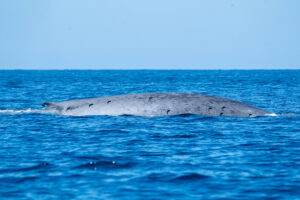
Blue whales (the biggest animals to ever exist)

Blue Whale in La Ventana during an ocean safari with Freefall Academy Mobula Season

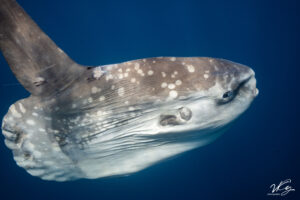
Mola molas (the heaviest bony fish in the world)

Mola mola during ocean safari in La Ventana with Freefall Academy

Plus, silky sharks, pilot whales (100+ strong!),  olive ridley turtles mating mid-ocean, and much more!

Citizen Science

If you’ve been reading us, you know that we’re all about citizen science: on every trip we record data that we share the scientists to help better understand animals. This was our top contribution this season:

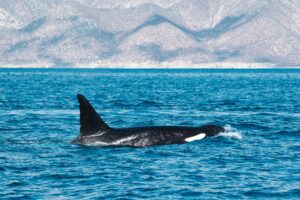
Tecpatl the Orca

We photographed a massive male orca—later, comparing the dorsal for ID’s, I found a match! E221 was first documented in 2006 near Mathemathitian Seamounts in the Eastern Tropical Pacific. Since then, he’s been spotted in Costa Rica (2021, 2023, 2024)—and now, Baja (2025)! We shared this information with Marea, an NGO that names the Orcas of Baja as a community project. We suggested the name Tecpatl, which means obsidian knife in nahuatl, and we won! Nos E221 has a name, and thanks to photo ID we can write the story of Tecpatl and many other orcas to better understand their movements, the pod structure, their diet and much more!

Orca in La Ventana during an ocean safari mobula expedition
Tecpatl the Orca

Stories worth telling

When the Orcas came to us

It was Day 6 of the expedition – the last water day. After yesterday’s disappointment (very crowded orca pod being harassed all day long, we left to be one less boat with them), we decided to start early at the sea lion colony, hoping for some quiet time before the tourist boats arrived. The morning light was golden as we slipped into the water, where we swam and freedove with sea lions.

I was taking photos of Rae (a participant on the expedition) when I heard the captain screaming: “ORCAS! ORCAS!”. First I thought that he was seeing them far away, then I saw the unmistakable dorsal find right next to the boat! My brain short-circuited – they were coming straight for us. We put our heads in the water and saw them gliding past us about 5m away from us!!

What happened next was pure magic.

For three hours, we had the pod all to ourselves (only after an hour 2 then 3 boats showed up). As if rewarding our patience from yesterday, we’re getting close underwater and doing eye contact. After several jumps, we decided to watch them from the boat again and suddenly they started bow riding! Guests were crying, laughing… After a few minutes bow riding, they went under and disappeared for the day, it was like they said goodbye! That is why is why we endure the long days. Check out some photos here.

Orcas in La Ventana during an ocean safari on a Mobula Expedition

The Dolphin Superpod That Stole Our Hearts

It started as one of those “let’s just check this last spot” moments. We’d already had a spectacular morning with mobulas and sea lions, but the afternoon stretched ahead with no reports of activity. The crew decided to go northeast.

Forty minutes later, we were in the middle of nowhere – just endless blue and our own wake. Then Pablo, our eagle-eyed captain, suddenly cut the engine. He saw something.

At first it looked like whitecaps on the horizon. Then the water began to boil.

As we crept closer, the scale became clear – at least 1,500 pantropical spotted dolphins, spread across miles of ocean. Not just traveling, but celebrating. Groups of 20-30 would break off to ride our bow, spinning mid-air before crashing back down.

When we slipped into the water, the real show began.

Dolphins came from every direction – some so close I could hear their high-pitched squeals reverberating through my body. A curious subgroup of about 30 formed a loose circle around us, tilting their heads to maintain eye contact as they passed. Pure magic, watch an instagram reel of the experience here.

That’s the thing about the Sea of Cortez – you never know what you’re going to find, and when you find it it’s mind blowing!

pan tropical spotted dolphins on an ocean safari in la ventana with freefall academy

Expedition vs. Day Trip: What’s Best for You?

  • Day Trips (about 6h): Perfect for everyone — if you are coming to La Paz and only have a day or two, this is for you! You’ll have an awesome experience with wildlife encounters.

  • Expeditions (8-10h): More offshore time = more wildlife encounters. If you want to see more variety of animals, get a better shot, have a better chance to find more exotic animals… this is for you. More time in the water and more days, our expeditions are 5-7 days.


Ready for Next Season?

Spaces for next season are limited. Will you join us for the adventure?

👉 Book Your Mobula Expedition Now

👉 Book Mobula Safari Your Day Trip Now

Read More
Posted on

Gray Whale Season 2022 Wrap Up

BY: Valentina / 2 COMMENTS / CATEGORIES: Baja, Conservation, whales

Gray Whale Season 2022 Wrap Up

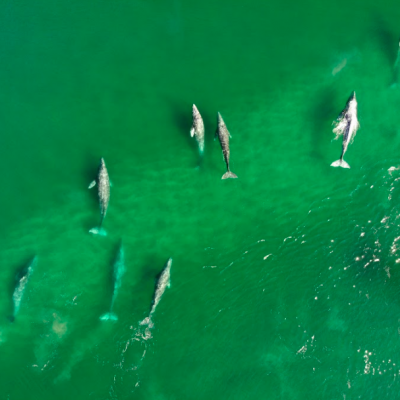
Gray whale season in Baja is officially over! It’s always a bittersweet time of year to see the whales leave: we will not see them until next year, but they’re migrating back to Alaska where they will be eating 1.2 tons of food every day to get strong and be able to come back to Baja next year. They have the longest migration of any mammal on Earth!

Spy hop gray whale watching tours from la paz on tour with freefall academy
Gray Whale watching in La Paz with freefall academy

This season has been outstanding! We had a 100% sighting success during our daily expeditions, and we witnessed some incredible behaviors. The most unforgettable moment to me was to watch the gray whales courtship and mate! We were able to see a male following the female, showing us the pectoral fins, twirling around and even saw the 2m (6 ft) penis! The most beautiful part was when they were belly to belly mating.

If you’ve come to our expeditions, you know that it is much more than whale watching. As a marine biologist, I love educating people who come onboard about gray whale biology, behavior, reproduction, ecology, conservation and pretty much anything I know. I take data of weather conditions and sightings every day, to be able to understand the whales in a deeper way. However, the captain, José knows the gray whales like his own family. He knows what time of month and day is best according to the moon and the tides. He runs a family business, where his fisherman dad provides the food that we eat on the tour, and his wife or sister cooks it for us. Best scallop you’ll ever try!

Gray Whale watching drone whale photography on tour with freefall academy
Captain Jose Friendly Gray Whale on tour with freefall academy in la paz baja mexico

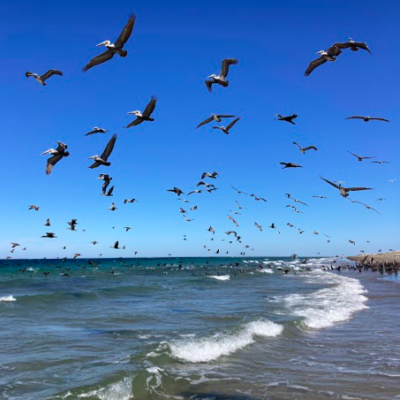
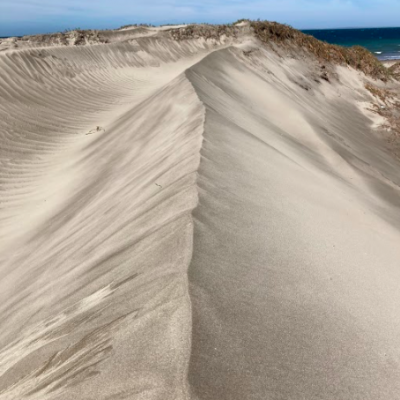
I also like to show the diverse ecosystems that Baja California Peninsula has to offer. On tours, we often visit the frigate bird colony in the mangroves, or wonder in the sand dunes next to hundreds or thousands of pelicans, cormorants and seagulls.

This Gray Whale season we were very happy to see moms with calfs, and very young whales (around 1 or 2 years old) which makes me so happy to see them healthy, meaning they have survived the most critical part of their lifetime!

Isla Margarita on tour with freefall academy in baja mexico
Bird watching Baja with freefall academy
Sand dunes on expedition with freefall academy

We can’t be grateful enough to nature and to the Gray Whales for being so generous and friendly! They made us cry tears of joy, laugh and smile. They’re presence fills us with joy and we can’t wait to see them again next season starting January 15th 2023! If you’d like more information about our daily or multiple-day expeditions, we organize tailored expeditions to fit your desires. Thank you whales and thanks to all of you who help make this happen!

Now it’s time to say goodbye to the Gray Whales, and hello to the Mobula Rays! The largest schools in the World can be found here in Baja, and it’s one of nature’s most spectacular events. Mobulas are famous for their high jumps and acrobatics in the air. Freediving with hundreds or thousands of them is a unique experience that you can’t miss. Check out our Mobula Ray Expedition on May 15-19, only 4 spots available. Email us to book your spot 🙂

Gray Whale watching drone whale photography on tour with freefall academy
Freediver Swimming with mobula rays in la ventana baja mexico with freefall academy
Read More
Posted on

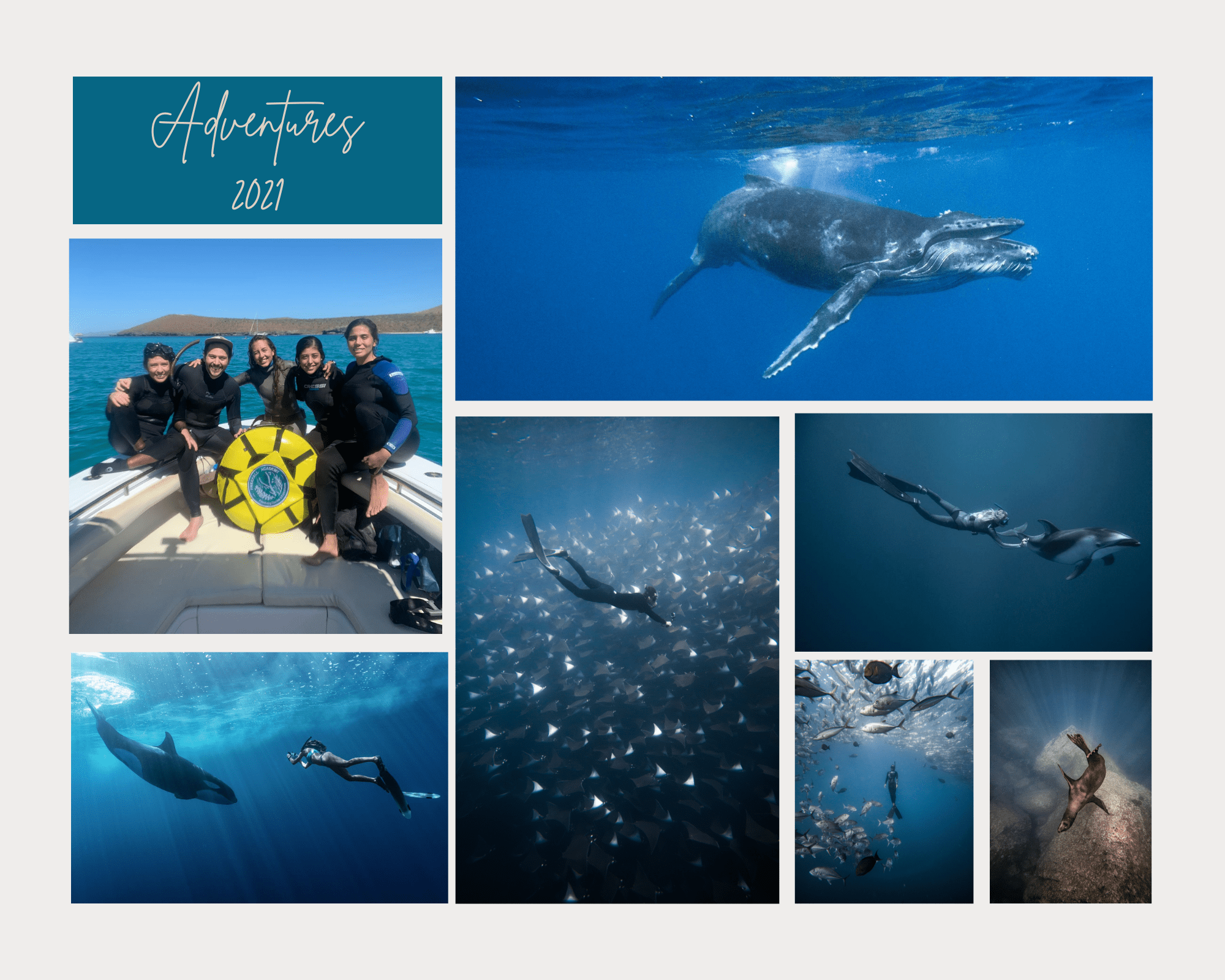
2021 Recap with Freefall Academy

BY: Valentina / 0 COMMENTS / CATEGORIES: Baja, Course, Espiritu Santo, Freediving, Sea Lions

2021 has been a wonderful year in the underwater world. We’ve had so many adventures that it’s hard to put it all in one blog post, so here is a little summary of the top moments of 2021 with Freefall Academy. Let’s recap!

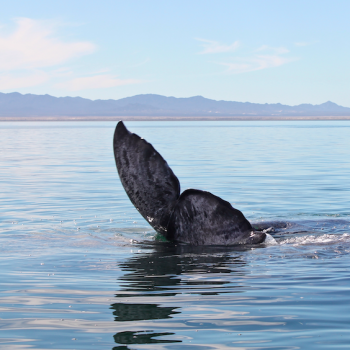
Gray Whale Tail on tour with freefall academy la paz baja whale watching tour
Gray Whales

It all started with Gray Whale Season in january-march. We went north of La Paz on day trips to do whale watching. Gray Whales are the friendliest whales in the world. On calm days, you can see dozens of them in the shallow water lagoons of Baja Califonia. Spy hopping, breaching, head slapping, lob tailing and slapping, and pectoral slapping! Some days the friedly whales came right to the boat and allowed us to give them a good old cratch!

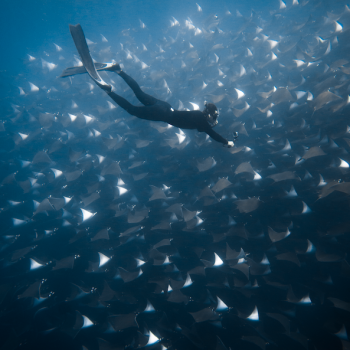
Freediver Ivan diving among thousands of mobula rays with freefall academy!
MOBULAS

Then, in March-May we had the Mobula Ray season! This is one of my favorite times of year because we are often surprised by unexpected visitors. On 2021 mobula season we also watched or swam with: turtles, sharks, dolphins, yellowtail fish and orcas! The mobulas didn’t disappoint, they showed as all their best acrobatic tricks from topside. And underwater they gracefully danced all around us. Imagine freediving and being surrounded by mobulas everywhere you can look. A truly magical experiece.

sailing
SAILED ACROSS THE PACIFIC OCEAN

At the end of May, Freefall Academy team took a different path and sailed across the Pacific Ocean to French Polynesia! The navigation took 18 days from Cabo to Nuku Hiva Island. It was a crew of three: Tyler, Oli and Valentina. The trip was far from easy, we started off by running from two tropical cyclones, then hit inconsistent winds. However, we had glorious days, breathtaking night watches looking at the universe, pods of dolphins riding the waves and uncountable learning lessons. Just this section deserves a blog post itself. You can read a little more about it here if you’re interested.

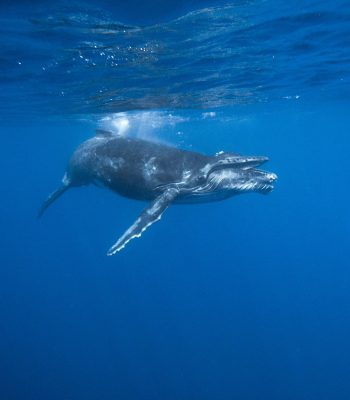
Baby Whale humpback whale tour with freefall academy in tonga
HUMPBACK WHALE

June to beginning of september we were in French Polynesia. We had many underwater adventures exploring the crystal clear waters of FP. However my favorite one was an encounter with a humpback whale calf, mom and escort. We were on the boat waiting for them to come up to breath, and suddenly the calf came right under the boat. I was in the water next to the boat, it showed us its belly and flipped its tail out of the water. The calf was looking at me and playing with the air in her jaw, making a lot of noice! Then mom and escort came up to breathe, they all showed me some dance moves and then went back down.

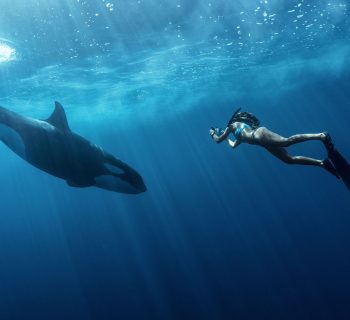
Swimming with orcas in la ventana baja mexico with freefall academy
orcas!

September to december it’s my favorite season to teach freediving courses and trainings because of the environmental conditions. The 31 st of October I got an Orca report from the captain, so the 1st of nov we went out on a mission. We were lucky to be the first boat who found them. A split pod of 5 orcas, including one mom and calf. We decided to give some space to mom and baby, and we stayed with a very curious young male that kept coming so close to us! A day I will never forget.

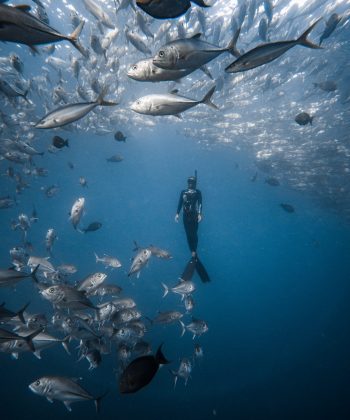
Freedive Cabo Pulmo Freefall Academy jacks
CABO PULMO: SHARKS, JACKS AND HUGE GROUPER!

October to beginning of december is the best time of year to go to Cabo Pulmo. This specific day we had an incredible day freediving with the famous school of jacks, as well as freediving with about 6 bull sharks. We were surrounded by a huge school of yellow snapper, then a bull shark gracefully came very close to us to check us out. But the cherry on top was being eye to eye with a Pacific Goliath Grouper that looked as big as the bull sharks! An overfished species that is rare to see, but is now more common to watch in Cabo Pulmo due to its protection as an MPA. They’re usually shy in scuba, but when freediving they come very close!

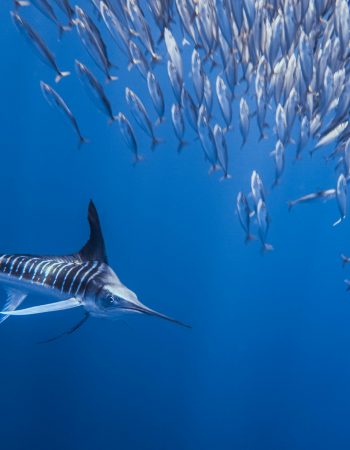
Marlin Expedition Baja Mexico with Freefall Academy hunt baitball sardine run
MARLINS, DOLPHINS AND MORE

Marlin season this year was outstanding! Not only we saw dozens of baitballs being hunted by marlins, but so much more! Mahi mahi, sea lions and wahoo joining the hunt. Superpod of thousands of common dolphins. Bryde’s whale eating the baitballs. Humpack whales dancing with dolphins. 100+ marlins on the same baitball. One of my favorite days out at sea guiding with Nakawe Project, we found a pod of hundreds of Pacific White Sided Dolphins. We spent hours having intimate interactions with them. As we freedived down, the dolphins would follow us and look at us in the eye. They were so curious! I have to admit I had tears of joy. For marlin expeditions, email us.

But what is the common characteristic of every single adventure? We are surrounded by people that love the ocean, like you! Our passion is to share these kind of adventures with people, and make them fall in love with the Ocean. Join us this 2022 and create unforgettable memories with us.


Thank you from Freefall Academy team! We wish you a wonderful 2022 full of magical underwater adventures.

Freediving Course in La Paz Baja Mexico with Freefall Academy

Subscribe to our Newsletter!

Join us to know all about our new trips, dates, disscounts and stories.

Read More
Posted on

Freediving Intermediate-Advanced Course

BY: Valentina / 0 COMMENTS / CATEGORIES: Baja, Course, Freediving, Freefall

AIDA 3  – Freediving Intermediate-Advanced Course

In this post you will find all the information you need about the Freediving Beginner Course.

AIDA3 Guidelines v3.1

Freefall Academy AIDA 3 Freediving Course Approach

The AIDA 3 Freediving Course can technically be completed in three days. However, we believe that squeezing all the necessary information and practice into such a short timeframe can be challenging. That’s why we have chosen to teach our AIDA 3 course over four days. This allows us to cover the same topics and exercises without rushing, giving you ample time to absorb the material. One of the things that sets us apart from other schools is our emphasis on optimal conditions. That’s why we exclusively offer Freediving Courses from May through November, as these months provide the best weather and conditions in La Paz and its surrounding areas. During this time, the wind is typically calm, the water is warmer, and visibility is significantly improved. In addition to prioritizing favorable conditions, we differentiate ourselves by offering two days of boat-based training. While many schools conduct their courses from the shore or mix, we believe that going out on the boat enhances the experience and allows us to find the best diving spots. We strive to create an enriching and enjoyable learning environment, optimizing your freediving experience with us.

Itinerary

Day 1

9am-12pm – We’ll meet at the classroom, fill out paperwork and start the theory lesson. 12:00-12:30 – Breathing session 12:30-2pm – Static Apnea Session

Day 2

9am-12pm – Theory session and equalization workshop 12:30-2:30pm – Dynamic Apnea Session

Day 3

8:30am- Lunch stretching session 9am – Depth Sessions 2pm – Finish

Day 4

8am – Meet and transport to La Ventana 9am – Depth Sessions 2pm – Drive back to La Paz 3pm – Finish   The location of the depth sessions may change according to the weather and the logistics. The exact time and schedule may change due to logistics. The exam will be online.

Price

$10,900 pesos per person Includes: theory manuals, pool fees, AIDA certification, boat fees, transportation from La Paz, freediving retal gear. 10% de descuento para mexicanos al presentar INE


Our Recommendations

To maximize your enjoyment and benefit from this course, we strongly recommend that you have a comfortable diving capability of at least 20 meters. This means being able to dive multiple times per session to that depth. The skills covered in the course are practiced within the range of 15-25 meters, with a maximum depth of 30 meters. If diving to 20 meters poses a significant challenge for you, it may hinder your ability to fully apply the new theory and skills learned during the course. In such cases, we advise you to engage in training and practice before pursuing the AIDA 3 course until you feel confident and at ease diving to the 20-meter mark. Once you have achieved this comfort level, you will be well-prepared to embark on the AIDA 3 course and make the most of your experience. We recommend that if you have your own gear to bring it in order to asure that you have a perfect fit. If you don’t have your own gear we will provide it for you. At time of booking please send us your height, weight and show size (eu).

We hope to see you underwater! If you have any doubts please contact us at apneafreefallacademy@gmail.com and we will be happy to assist you.

Read More
Posted on

AIDA 2 Freediving Beginner Course

BY: Valentina / 6 COMMENTS / CATEGORIES: Baja, Course, Freediving

AIDA 2 Star Course – Freediving Beginner Course

In this post you will find all the information you need about the Freediving Beginner Course. 

AIDA2 Guidelines v3.2Freefall Academy AIDA 2 Freediving Course Approach

The AIDA 2 Freediving Course can technically be completed in three days. However, we believe that squeezing all the necessary information and practice into such a short timeframe can be challenging. That’s why we have chosen to teach our AIDA 2 course over four days. This allows us to cover the same topics and exercises without rushing, giving you ample time to absorb the material.

One of the things that sets us apart from other schools is our emphasis on optimal conditions, especially for beginner freedivers. That’s why we exclusively offer Freediving Courses from May through November, as these months provide the best weather and conditions in La Paz and its surrounding areas. During this time, the wind is typically calm, the water is warmer, and visibility is significantly improved.

In addition to prioritizing favorable conditions, we differentiate ourselves by offering two days of boat-based training. While many schools conduct their courses from the shore or mix, we believe that going out on the boat enhances the experience and allows us to find the best diving spots. Furthermore, on the final day of the course, we usually teach in La Ventana, where after our freediving session, we make the most of our time by engaging in fun dives, where you can apply your training without the use of a line.

We strive to create an enriching and enjoyable learning environment, optimizing your freediving experience with us.


Itinerary

Day 1

9am-12pm – We’ll meet at the classroom, fill out paperwork and start the theory lesson.

12:00-12:30 – Breathing session

12:30-2pm – Static Apnea Session

Day 2

9am-12pm – Theory session and equalization workshop

12:30-2:30pm – Dynamic Apnea Session

Day 3

8:30am- Lunch stretching session

9am – Depth Session 

2pm – Finish

Day 4

8am – Meet and transport to La Ventana

9am – Depth Session and fun dives

2pm – Drive back to La Paz

3pm – Finish


The location of the depth sessions may change according to the weather and the logistics.

The exact time and schedule may change due to logistics.

The exam will be online.


Price

$8,950 pesos per person 

Includes: theory manuals, pool fees, AIDA certification, boat fees, transportation from La Paz, freediving retal gear.

10% de descuento para mexicanos al presentar INE


Our Recommendations

To fully enjoy this course, we recommend that you are confortable in the water. Prior freediving experience is not required, but definitely being able to comfortably swim and/or snorkel. If you don’t have any experience swimming and/or snorkeling we recommend that you take the AIDA 1 Discover Freediving Course.

We recommend that if you have your own gear to bring it in order to asure that you have a perfect fit. If you don’t have your own gear we will provide it for you. At time of booking please send us your height, weight and show size (eu).


We hope to see you underwater! If you have any doubts please contact us at apneafreefallacademy@gmail.com and we will be happy to assist you.


Read More
en_USEnglish
1
Scan the code