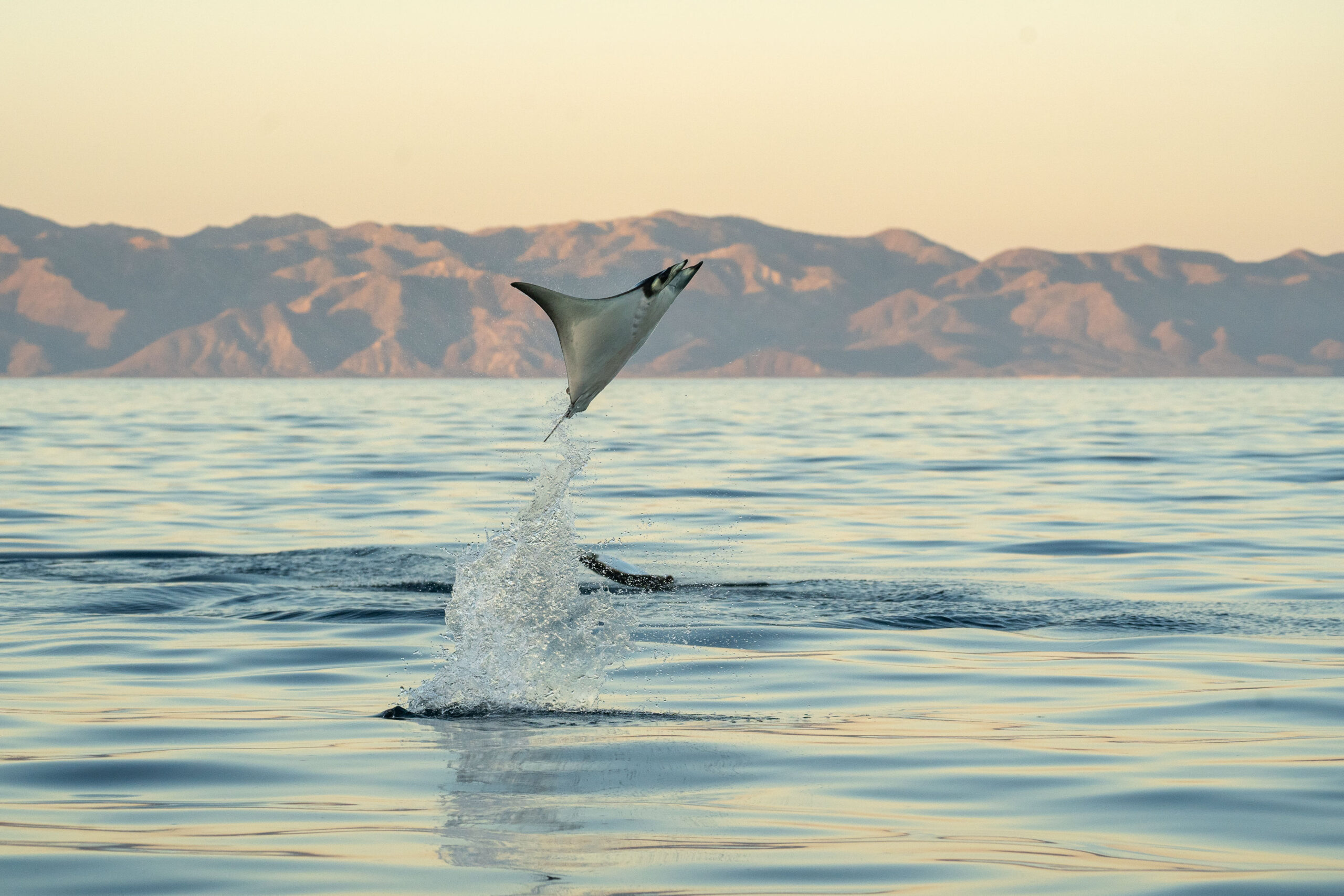
Mobula Season 2025 Highlights: Unforgettable Encounters
The Sea of Cortez is a theater of marine life, and this mobula season was nothing short of spectacular. From breathtaking vortexes of rays to unexpected encounters with apex predators, the ocean rewarded patience, respect, and a sense of adventure.
This isn’t just a trip—it’s an Ocean Safari. Some days, the sea gifts us thousands of mobulas, playful dolphins, and curious sea lions. Other days, we spend hours offshore, searching… waiting… But when the magic happens—it’s worth every second.
This Season’s Greatest Hits
The stars of the show: Mobulas
We witnessed their full repertoire:
-
Sunrise/Sunset leapers – entire schools jumping
-
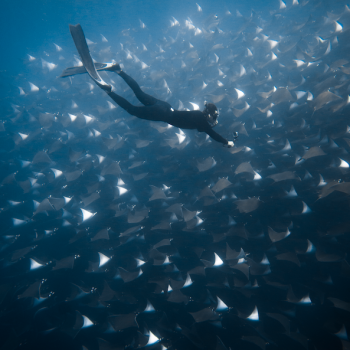
Vortex feeders – hundreds spiraling like living tornadoes
-
Mating rituals – males chasing females in a beautiful courtship we call mating train
Yet the real show started when we slipped beneath the surface. Picture this: you’re finning through blue nothingness when suddenly the water darkens. A shadow rises from the depths – then another, and another – until you’re surrounded by a fever of mobulas. They are all around you, close enough to see the scars on their backs.
Dolphin Dreams
Resident bottlenose dolphins greeted us almost daily—sometimes in small pods of 10, other times in hundreds. They bow-rode our boat, locked eyes with us underwater, and left us grinning every time. We also encountered playful pantropical spotted dolphins, spinner dolphins, common dolphins and risso’s dolphin!
The Big Five & Beyond
This season, we checked off marine megafauna royalty:
Sperm whales (the largest toothed whales on Earth)
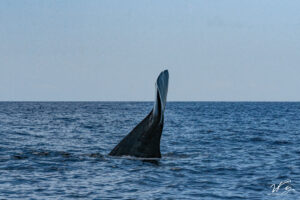
Whale sharks (the largest fish in the world)
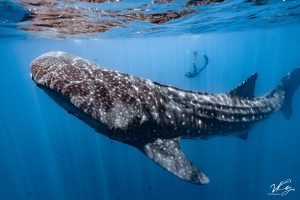
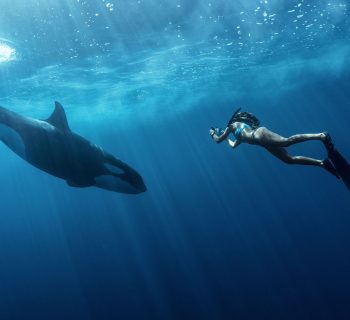
Orcas (the largest dolphin in the world)
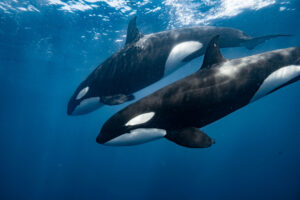
Blue whales (the biggest animals to ever exist)
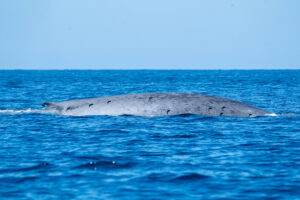
Mola molas (the heaviest bony fish in the world)
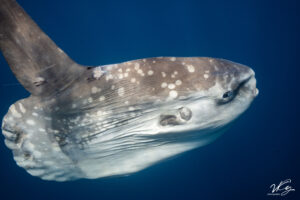
Plus, silky sharks, pilot whales (100+ strong!), olive ridley turtles mating mid-ocean, and much more!
Citizen Science
If you’ve been reading us, you know that we’re all about citizen science: on every trip we record data that we share the scientists to help better understand animals. This was our top contribution this season:
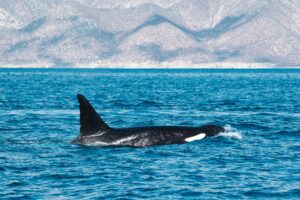
Tecpatl the Orca
We photographed a massive male orca—later, comparing the dorsal for ID’s, I found a match! E221 was first documented in 2006 near Mathemathitian Seamounts in the Eastern Tropical Pacific. Since then, he’s been spotted in Costa Rica (2021, 2023, 2024)—and now, Baja (2025)! We shared this information with Marea, an NGO that names the Orcas of Baja as a community project. We suggested the name Tecpatl, which means obsidian knife in nahuatl, and we won! Nos E221 has a name, and thanks to photo ID we can write the story of Tecpatl and many other orcas to better understand their movements, the pod structure, their diet and much more!
Stories worth telling
When the Orcas came to us
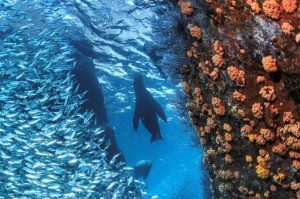
It was Day 6 of the expedition – the last water day. After yesterday’s disappointment (very crowded orca pod being harassed all day long, we left to be one less boat with them), we decided to start early at the sea lion colony, hoping for some quiet time before the tourist boats arrived. The morning light was golden as we slipped into the water, where we swam and freedove with sea lions.
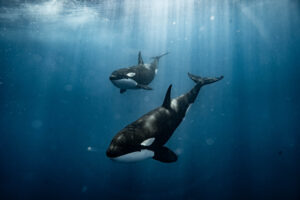
I was taking photos of Rae (a participant on the expedition) when I heard the captain screaming: “ORCAS! ORCAS!”. First I thought that he was seeing them far away, then I saw the unmistakable dorsal find right next to the boat! My brain short-circuited – they were coming straight for us. We put our heads in the water and saw them gliding past us about 5m away from us!!
What happened next was pure magic.
For three hours, we had the pod all to ourselves (only after an hour 2 then 3 boats showed up). As if rewarding our patience from yesterday, we’re getting close underwater and doing eye contact. After several jumps, we decided to watch them from the boat again and suddenly they started bow riding! Guests were crying, laughing… After a few minutes bow riding, they went under and disappeared for the day, it was like they said goodbye! That is why is why we endure the long days. Check out some photos here.
The Dolphin Superpod That Stole Our Hearts
It started as one of those “let’s just check this last spot” moments. We’d already had a spectacular morning with mobulas and sea lions, but the afternoon stretched ahead with no reports of activity. The crew decided to go northeast.
Forty minutes later, we were in the middle of nowhere – just endless blue and our own wake. Then Pablo, our eagle-eyed captain, suddenly cut the engine. He saw something.
At first it looked like whitecaps on the horizon. Then the water began to boil.
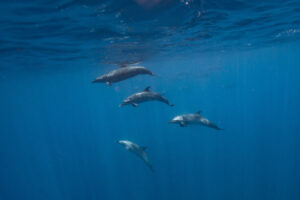
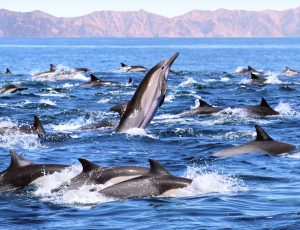
As we crept closer, the scale became clear – at least 1,500 pantropical spotted dolphins, spread across miles of ocean. Not just traveling, but celebrating. Groups of 20-30 would break off to ride our bow, spinning mid-air before crashing back down.
When we slipped into the water, the real show began.
Dolphins came from every direction – some so close I could hear their high-pitched squeals reverberating through my body. A curious subgroup of about 30 formed a loose circle around us, tilting their heads to maintain eye contact as they passed. Pure magic, watch an instagram reel of the experience here.
That’s the thing about the Sea of Cortez – you never know what you’re going to find, and when you find it it’s mind blowing!
Expedition vs. Day Trip: What’s Best for You?
-
Day Trips (about 6h): Perfect for everyone — if you are coming to La Paz and only have a day or two, this is for you! You’ll have an awesome experience with wildlife encounters.
-
Expeditions (8-10h): More offshore time = more wildlife encounters. If you want to see more variety of animals, get a better shot, have a better chance to find more exotic animals… this is for you. More time in the water and more days, our expeditions are 5-7 days.
Ready for Next Season?
Spaces for next season are limited. Will you join us for the adventure?


 English
  Español de México