Every year, when mobula season wraps up, I sit down and try to put into words what just happened. And every year, I realize words aren’t quite enough. But I’ll try anyway, because what we witnessed this season in La Ventana deserves to be told.
This year, people joined us from every single continent on Earth: all brought together by the ocean. That alone says something pretty special about this place.
First things first — the species list
One of the things that makes La Ventana so extraordinary is the sheer variety of life. Scientists call it a biodiversity hotspot, and after this season, I understand why more than ever.
Not every animal shows up every day — or even every week. But the fact that all of this lives in one place? That’s La Ventana.
What made this season different
1. Warmer water: a mixed blessing
The water was warmer than usual this year, which brought something beautiful: incredible visibility early in the season. Crystal clear, blue, gorgeous. But here’s the thing about mobulas: they follow the plankton. And plankton blooms in cooler, murkier water. So while the visibility was stunning, the mobulas were harder to find than in a typical season. Fewer numbers, and often deeper. We still had solid encounters.
But if you came expecting massive surface aggregations, this year taught us an important lesson: the ocean always has its own plans.
2. The most Mobula mobular we’ve ever seen
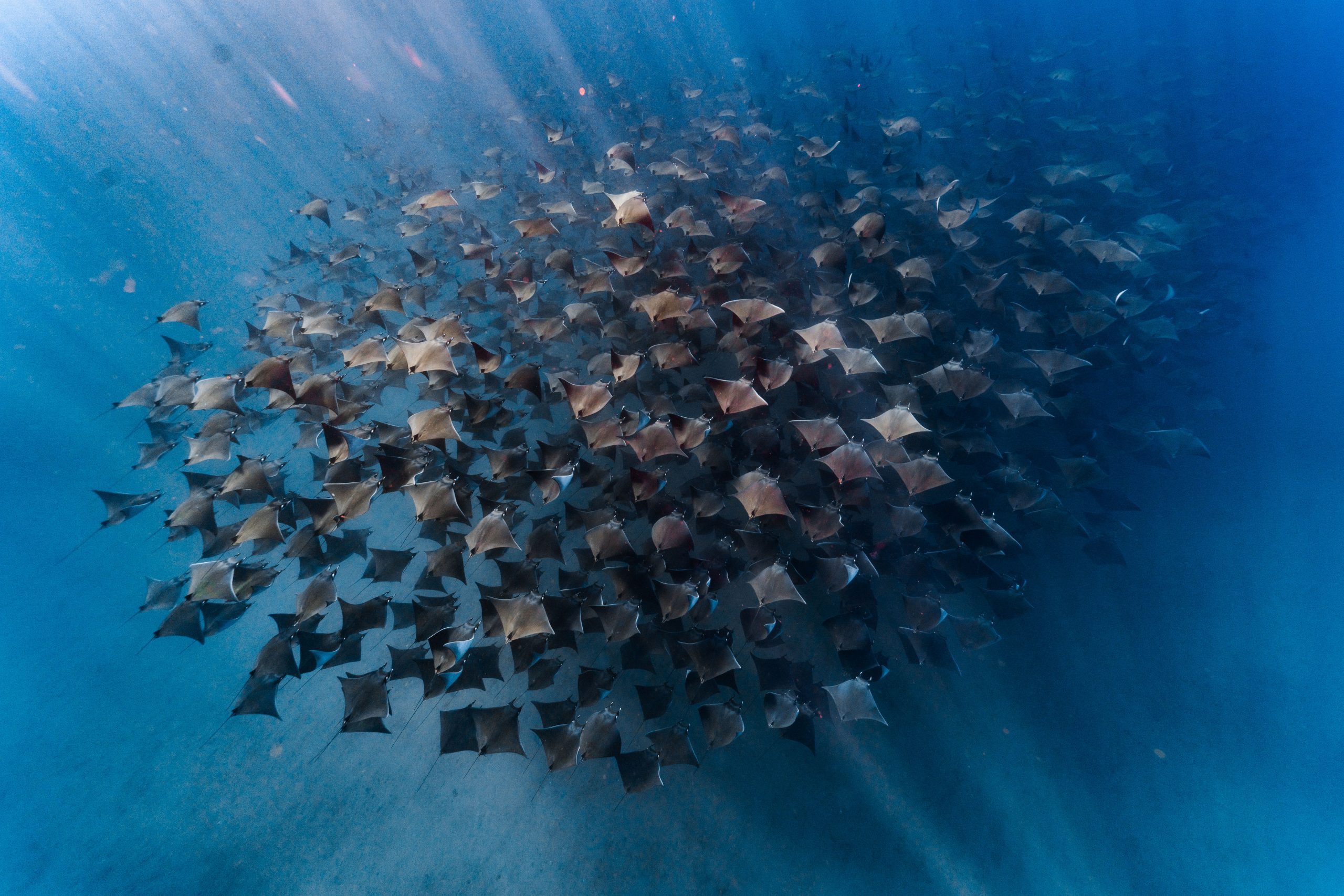
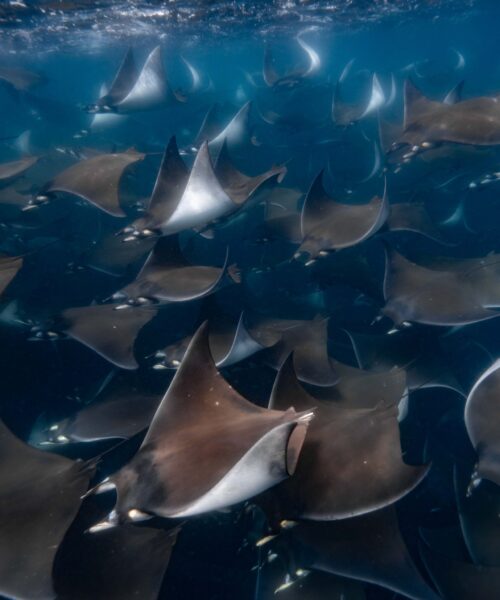
Mobula mobular — the larger, rarer cousin of the pygmy devil ray — showed up in numbers we’ve never seen before. If you’ve ever watched one glide past you underwater, you know: there’s something almost otherworldly about them. Slow and elegant.
My favorite encounter of the entire season happened on a day when we were far offshore, just our small group, all by ourselves. We dropped into the water and found a fever of 12 Mobula mobular in the middle of courtship. The males were chasing the female in slow, graceful circles, spiraling upward, then deeper, then back again. They circled all around us. They didn’t leave. We didn’t leave. We stayed in the water with them for over an hour.
(My action camera had no battery that day. Of course. 😂 Thankfully a guest had their camera rolling so I have proof it happened, I promise.)
“Encounters with this species usually last seconds to minutes. An hour is something I’ll never forget.”
3. The squid arrival — and everything it brought with it
By late June, our captains started noticing something: fishermen were pulling up squid. More than usual. A lot more. Anyone who knows the ocean knows what squid means: the predators follow. Within days, pilot whales arrived. And they stayed.
Weeks into July, we were seeing them every single week! Pods of 50 to 300 individuals, cruising slowly at the surface like they owned the place (they do). Their rounded heads bobbing, calves swimming close to curious snorkelers completely relaxed.
Pilot whales are my favorites. I’ll say it plainly. There’s something about their calm, social energy that feels like being welcomed. I could watch them for hours.
4. Sperm whales: the giants arrived
Squid also attracted sperm whales, the largest toothed whale on Earth. May brought mostly solitary individuals, just one or two at a time. But by June they were coming in groups, and by late June and early July we had two days that I still can’t fully believe happened: pods of more than 50 to 100 sperm whales!
In Mexico we can’t swim with them, so we watched from the surface — these massive, prehistoric-looking animals logging at the surface, breathing, socializing. It’s the kind of thing that makes you feel very small in the best possible way.
5. Cormorants (yes, really)
Okay, I know. Some people hear “cormorants” and think: boring. Wrong. While most enjoy the sea lions near the colony, I get completely absorbed watching the cormorants hunt on the reef. Birds that dive are basically feathered freedivers. I kept trying to follow them underwater and match their breath-hold. Sometimes I managed it. Sometimes they absolutely smoked me. Fast, funny, underrated. Come for the whales, stay for the cormorants.
6. Porcupine fish bay
Every season, without fail, someone visits the porcupine fish bay and completely loses their mind with joy. These round, spiky, wide-eyed little fish have absolutely no business being that cute, and yet here we are. If you come to La Ventana and skip the porcupine fish bay, did you really go to La Ventana?
7. Orcas and the July pattern
Orcas are the animal people ask about most. They’re elusive, unpredictable, and when you find them, nothing else compares. This season we saw them in May and June, but not in the numbers we hoped for. And then July happened.
Orcas. Every single week. Sometimes multiple days in a row. Cruising, hunting, socializing… in some of the bluest water ever. The best orca encounters of the entire season happened in July, in conditions that felt almost unfair in their beauty.
“Here’s what’s interesting: last year was the same. July was exceptional. Is this a pattern?”
Maybe. Orcas are notoriously hard to predict, and two or three good years in July doesn’t mean next year will be the same. But it’s an observation worth paying attention to. We’ll be watching closely.
A note before you book
If you’re thinking about joining us next season, here’s the most important thing I can tell you: Come with an open heart and an open mind. La Ventana is not a zoo. We can’t promise you’ll see every animal on that list. Some days the ocean gives you everything. Some days it gives you something quieter, smaller, and just as beautiful if you’re paying attention.
What I can promise is this: every single day on the water is worth it. You are incredibly lucky to be in the presence of wild animals — and that feeling never gets old, no matter how many seasons I’ve done this.
Thank you — really
None of this happens without the people who show up. Every single guest who joined us this season, whether for one day on the water or a full expedition, brought their own curiosity, their own energy, and their own love for the ocean. And that makes every encounter richer.
Thank you for trusting us with your time, your adventure, and your love for the sea. We don’t take that lightly. See you next season.
Ready to join us?
If you’re coming for a day and want to experience the magic of La Ventana, the Ocean Safari is your starting point. If you want to maximize your time in the water and have more variety of interactions, the Mobula Expedition is for you.
BY: Valentina / 0 COMMENTS / CATEGORIES: Sin categoría
We just wrapped Baja Odyssey, and I’m still buzzing
I just got back from Baja Odyssey… and I’m still buzzing. Four activity days. Countless species. Moments that feel impossible to explain — but I’ll try. Here’s a recap of what we lived out there. Here’s what makes this expedition so special.
Day 1 – La Ventana
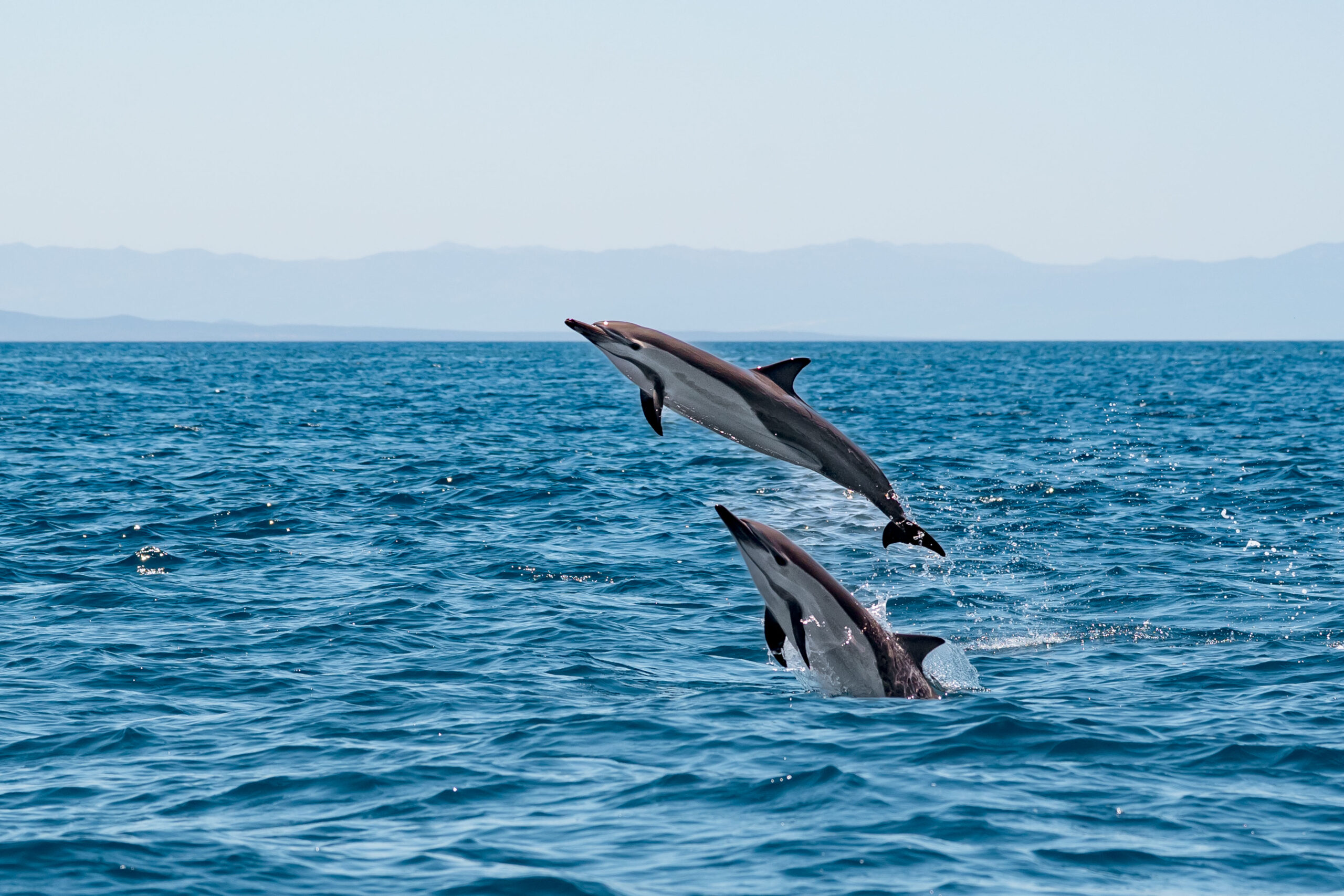
Within the first hour, we found mobula rays! They were super chill, so we slid in and ended up swimming with them for until we got tired. Then two humpback whales popped up. A pod of bottlenose dolphins right after. It honestly felt like the ocean was stacking encounters back-to-back. We fit in a freediving session too — a couple of students hit personal bests. And we wrapped the day having lunch on a quiet beach. Sun, sand, good food, good people. Solid start.
Day 2 – Espiritu Santo
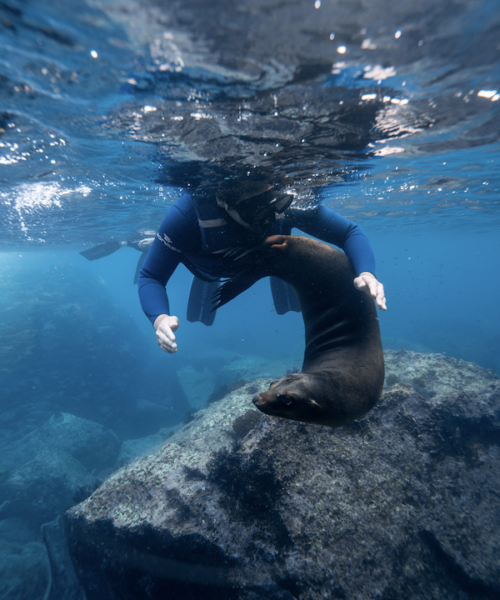
We headed out to the island looking for the friendliest sea lions… and wow, we found them. One little puppy completely stole the show — super curious, hugging everyone, rubbing on fins like it was his personal spa day. No one told him about “keeping distance,” apparently. After a long play session, we moved to the whale shark area and got lucky with a juvenile cruising by. Not on the itinerary, but we made it happen. Another solid day.
Day 3 – Magbay
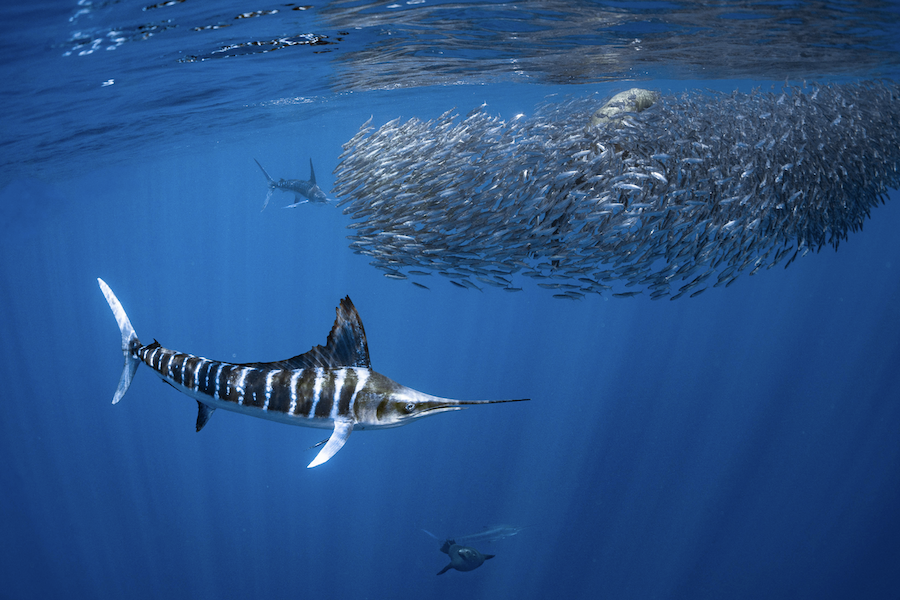
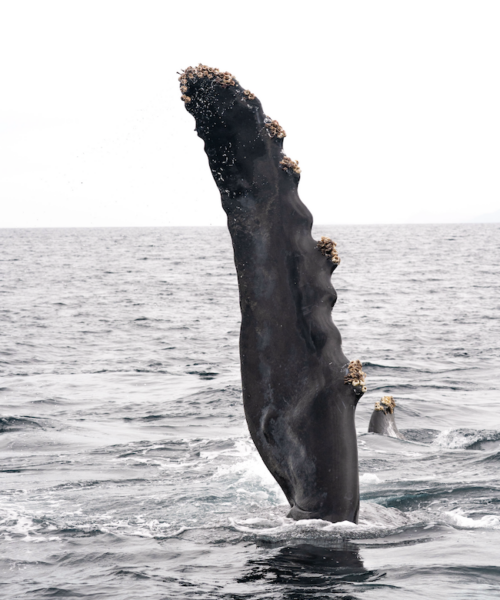
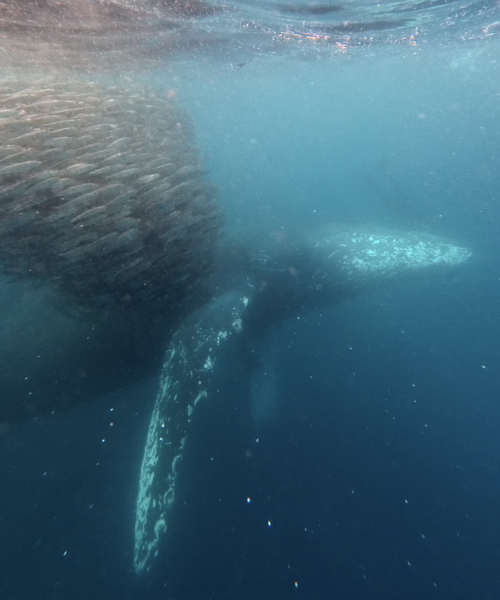
Day 3 was classic MagBay… with extra sauce. On the way out we ran into Pacific white-sided dolphins. Then we found both dynamic and static baitballs — full action — marlin and sea lions hammering the sardines. We even spotted a sailfish in the mix. More bottlenose dolphins showed up, and on our way back we had the moment of the day: a humpback whale that came out of nowhere, super close to the boat and chill, twice! Not something you see every day, which made it extra special for everyone onboard.
Day 4 – Magbay
On the last day everyone thought, “There’s no way it can get any better…” We started with a hike through the sand dunes and mangroves — calm, quiet, totally different vibes. Then on our way toward the marlin area we saw a ton of birds, so we went to check it out. Huge bait ball: sea lions and skipjack tuna feasting, pelicans and shearwaters diving nonstop. And out of nowhere… two humpback whales came in. One of those lifelong-memory moments. We wrapped the day with common dolphins bow riding and a delicious goodbye dinner. Perfect ending.
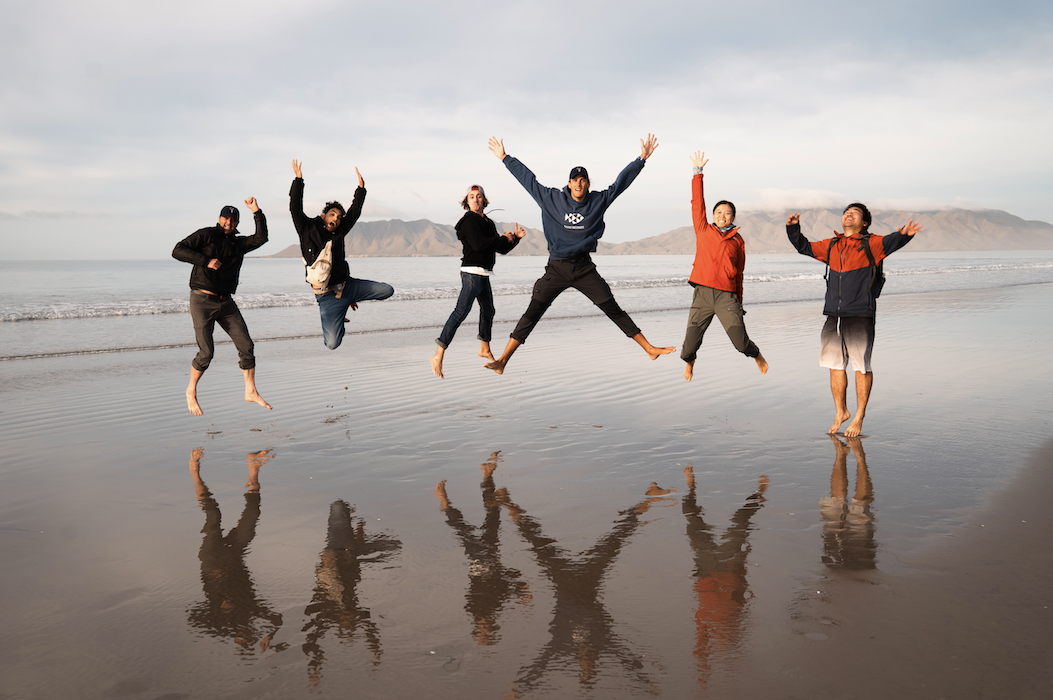
But honestly, what made this week stand out wasn’t just the wildlife. It was the people. Trevor, Ran, Jeff, Rubens, Tristan and Gilad — each of you brought your own energy, humor, curiosity, and heart into this trip. You made the Odyssey what it was. Thank you.
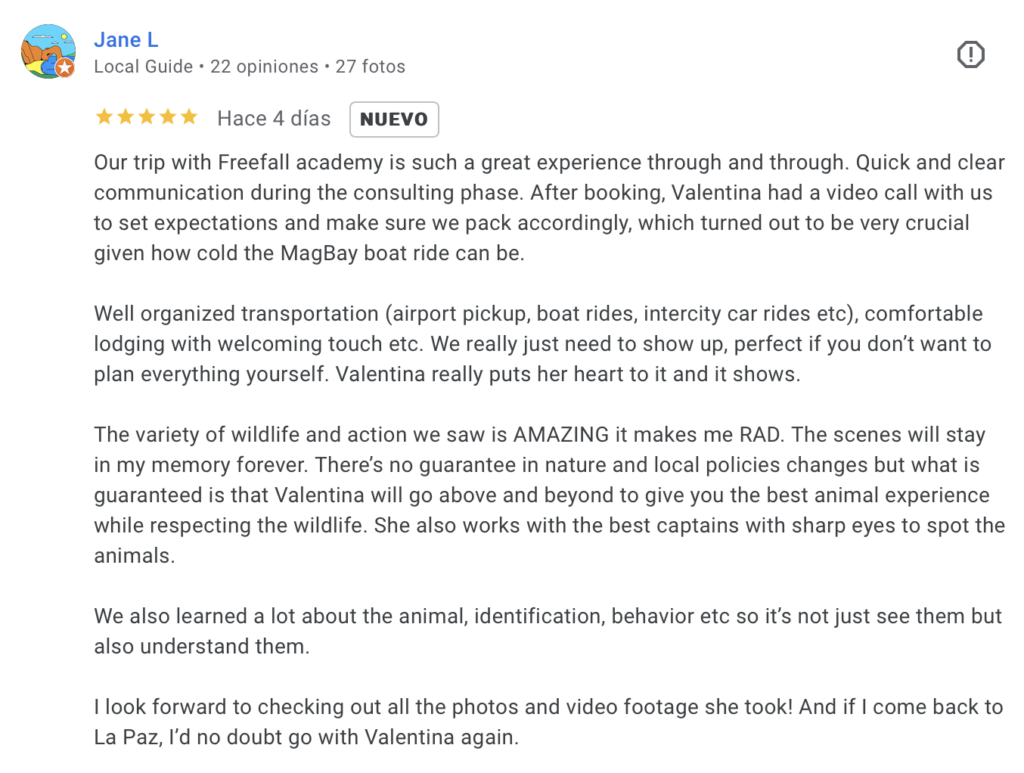
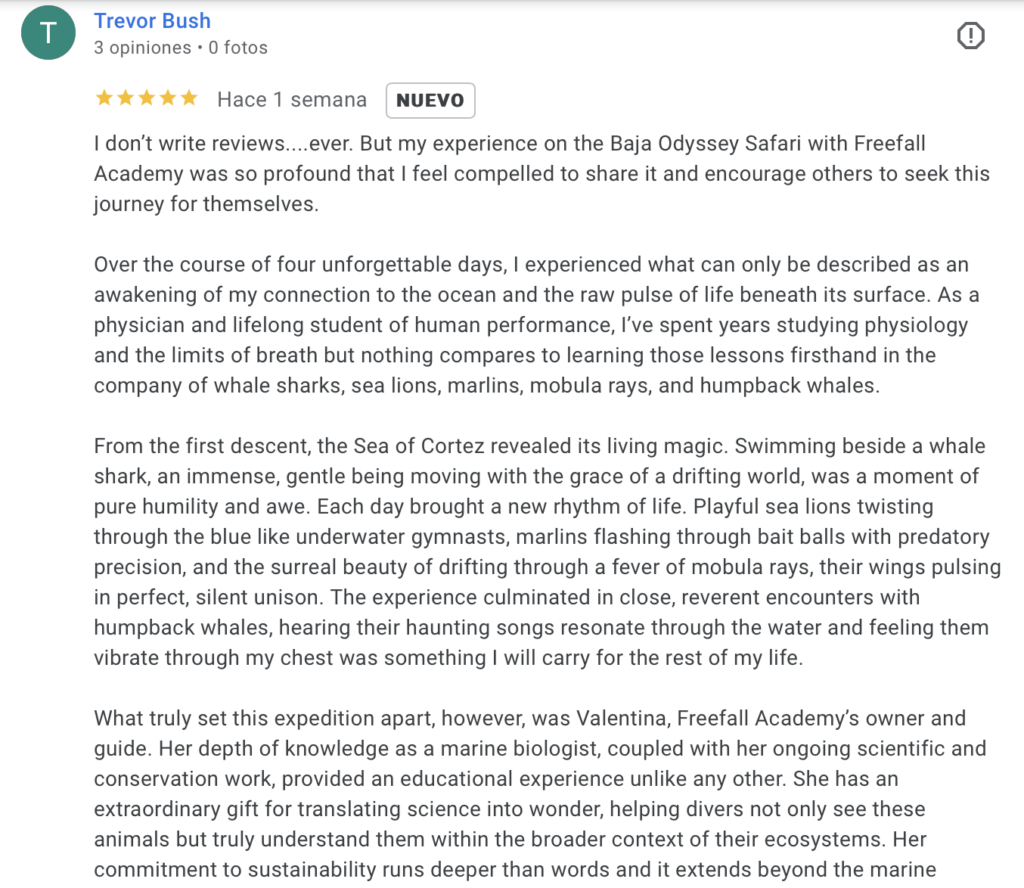
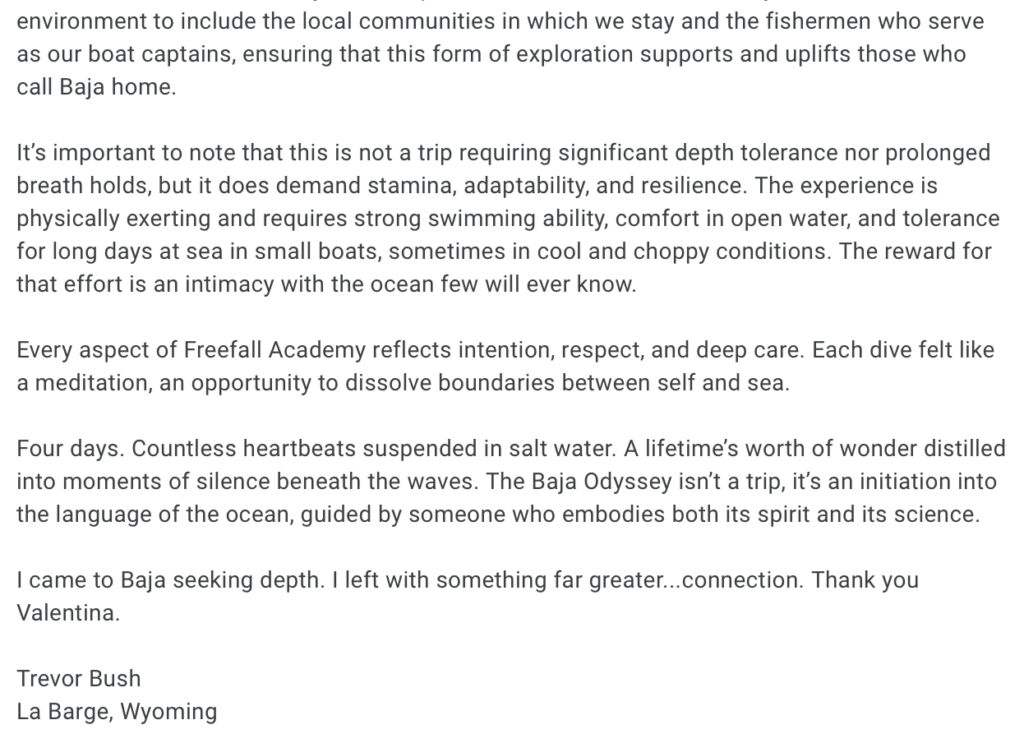
Here are a couple of beautifully written testimonials from our guests — and honestly, they made me tear up. I’m incredibly grateful to share my love for the ocean, freediving, and wildlife with people, and to see how these encounters can shift something inside them.
My mission has always been to help humans connect with wild animals in a deeper way — beyond a selfie or a bucket-list check. To teach their biology, their behavior, their stories… but more importantly, to show that they’re individuals with personalities and emotions. They deserve respect and admiration above anything else.
We’re just visitors with the privilege of slipping into their world for a few minutes or hours. And that alone is something to be grateful for.
Discover Freediving (AIDA 1) vs Beginner Freediving Course (AIDA 2)
– Which One is Right for You?
Introducción
¿Listo para explorar el mundo submarino con el buceo libre pero no sabes por dónde empezar?
Los cursos AIDA 1 y AIDA 2 son las puertas de entrada más populares a este deporte. Aunque ambos enseñan fundamentos, están diseñados para distintos niveles y objetivos. En esta guía, te explicamos las diferencias clave entre el curso de apnea AIDA 1 vs AIDA 2 para ayudarte a decidir cuál es el indicado para ti.
¿QUÉ ES AIDA?
AIDA (Asociación Internacional para el Desarrollo de la Apnea) es una de las organizaciones más reconocidas en la formación de buceo libre o apnea. Sus cursos están diseñados para que los apneístas progresen con seguridad y confianza, ya seas principiante o avanzado.
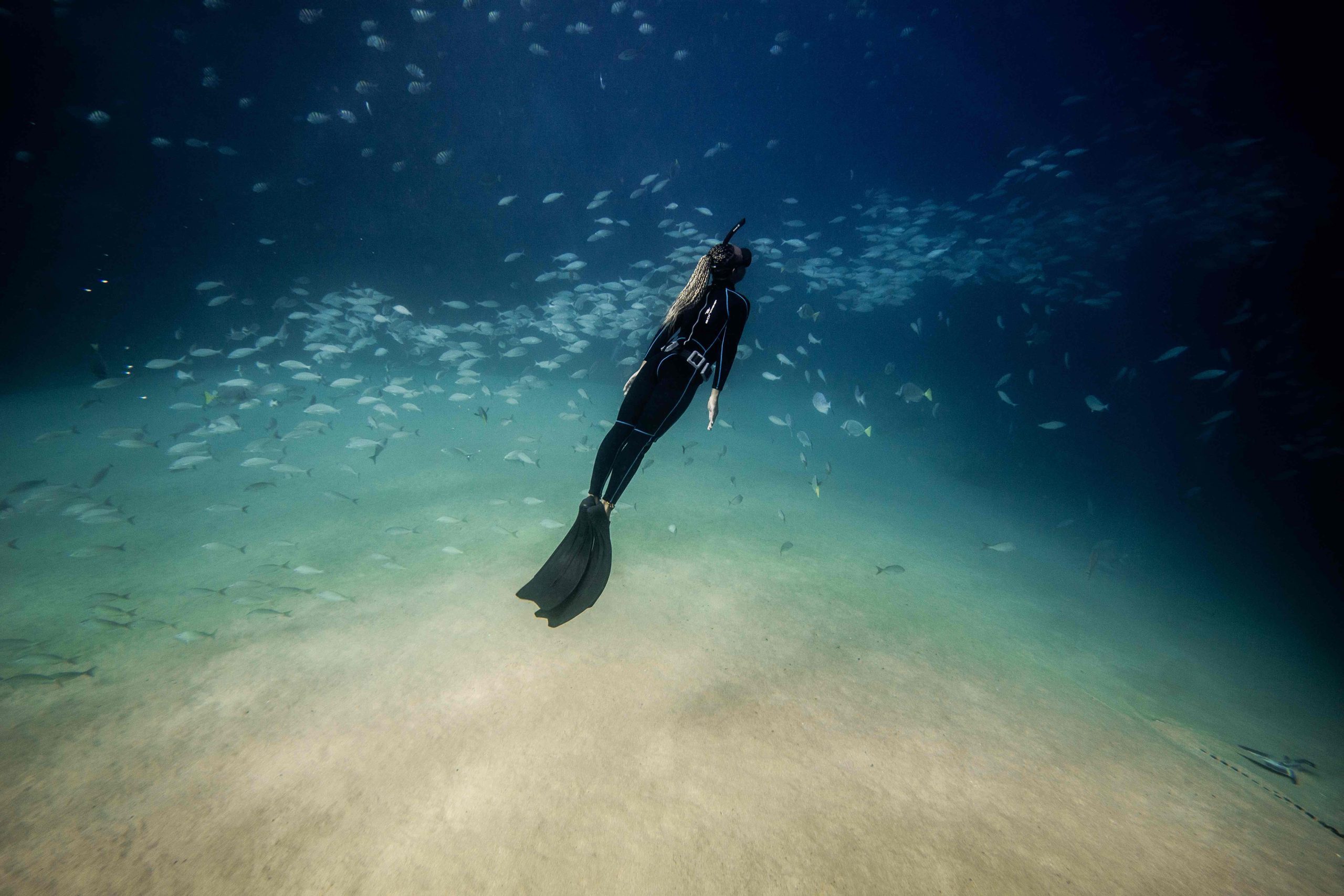
La apnea te permite explorar el mar de una manera completamente diferente
AIDA 1 Discover Freediving Course: The Perfect Introduction
El curso AIDA 1 Está diseñado para principiantes absolutos que quieren probar la apnea sin comprometerse a un programa extenso.
Duración: 1-2 días
Enfoque: Fundamentos básicos de la apnea, seguridad y relajación
Sesiones de Teoría: 1
Sesiones de Aguas Confinadas 1
Sesiones de Profundidad: 1 (solo con el curso de dos días)
Qué aprenderás::
Técnicas básicas de respiración para apnea
Protocolos de seguridad y cómo bucear con un compañero.
Introducción a la ecualización (para que no te duelan los oídos al bajar)
Técnicas simples de relajación en el agua.
Sesión de apnea estática
1 día de apnea en profundidad (solo para el curso de dos días)
Objetivo de profundidad:Sin requisito específico (el enfoque es la comodidad y seguridad en el agua).
Ideal para: Principiantes o aquellos que tienen curiosidad sobre la apnea y buscan un curso introductorio corto y sin presión.
AIDA 2 Beginner Freediving Course: Building Foundational Skills
El curso AIDA 2 is the next step for those who are more confident in the water. It is not a requirement to take the AIDA 1 course in order to attend the AIDA 2 course. It’s designed to help you dive deeper and refine your techniques from zero.
Duración: 4 días
EnfoqueTeoría más avanzada, técnicas de inmersión en profundas y más tiempo de práctica.
Sesiones de Teoría: 2
Sesiones de Aguas Confinadas 2
Sesiones de Profundidad: 3
Qué aprenderás::
Técnicas de respiración y ejercicios de apnea.
Métodos de compensación más avanzados (ej. técnica Frenzel).
Planificación de inmersiones y procedimientos de seguridad para mayores profundidades.
Teoría más avanzada sobre fisiología, física y riesgos del buceo libre.
Sesión de apnea estática
Sesión de apnea dinámica
2 días de apnea en profundidad
Objetivo de profundidad:: 12-20 metros
Ideal paraPersonas que quieren progresar a inmersiones más profundas, quienes se sienten cómodos en el agua (nadadores, snorkelers o buzos con tanque), quienes pueden dedicar 4 días para un curso intensivo (sin experiencia previa, pero siempre sintiéndose muy cómodos en el agua).
DIFERENCIAS CLAVE ENTRE EL AIDA 1 Y AIDA 2:
Esta es una comparación rápida para ayudarte a decidir:
Curso
AIDA 1
AIDA 2
Nivel
Principiante
Principiante
Duración
1-2 días
4 días
Objetivo de profundidad:
No hay un objetivo específico
12-20 metros (40-66 pies)
Enfoque
Fundamentos básicos de la apnea, seguridad y relajación
Fundamentos básicos, relajación, técnica, inmersiones más profundas y más tiempo de práctica
Certificación
Nivel introductorio
Nivel Fundamental
¿QUÉ CURSO DEBERÍAS ELEGIR?
Elige el AIDA 1 si:Eres nuevo en el buceo libre y quieres una introducción rápida y sin presión al deporte.
Perfecto para principiantes que desean aprender lo básico en solo 1-2 días.
Ideal para turistas que quieren probar la apnea pero no tienen tiempo suficiente durante su viaje para tomar el curso AIDA 2 de 4 días.
Elige el AIDA 2 si:Te sientes seguro en el agua y quieres más que un curso introductorio.
Ya completaste el AIDA 1 o tienes algo de experiencia en apnea.
Quieres aprender a bucear más profundo, refinar tus técnicas y profundizar en la teoría del buceo libre.
Conclusión
Tanto el curso de apnea AIDA 1 y AIDA 2 ofrecen oportunidades increíbles para explorar el mundo submarino, pero están diseñados para diferentes niveles de experiencia.
Si estás comenzando, el curso AIDA 1 es la forma perfecta de aprender lo básico en poco tiempo. Si estás listo para dar el siguiente paso, el curso AIDA 2 te ayudará a consolidar bases sólidas en buceo libre para sumergirte más profundo y aguantar la respiración por más tiempo.
¿Listo para comenzar tu camino en el mundo de la apnea? Descubre nuestros curso de apnea AIDA 1 vs AIDA 2 y elige el ideal para ti.
BY: Valentina / 0 COMMENTS / CATEGORIES: Sin categoría
Hi friends!
We’re thrilled to introduce an initiative that creates positive impact in the local communities we work with in Baja: Dive for change.
What is Dive for Change?
Dive for Change is more than just an initiative; it’s a commitment to making a difference. It stems from our deep-seated belief in the environmental and social responsibility that comes with tourism and diving activities. At its core, Dive for Change embodies the idea that our actions can contribute to meaningful transformations in the world around us.
Our Mission
Our mission with Dive for Change is twofold: to empower individuals through freediving education and to support local communities in coastal areas. We believe that by providing access to diving courses, we not only equip people with valuable skills but also foster a deeper appreciation for marine environments and the importance of conservation efforts.
In the communities we work with in Baja, the majority are involved in the fishing industry. Some of them engage in freediving for recreation or as a tool in fishing techniques. Most fishermen are aware of the risks associated with freediving; they’ve heard stories of people blacking out, or perhaps they’ve even experienced it firsthand. However, they may not be sure how to avoid these risks, how to perform rescues, or how to dive deeper and longer while minimizing dangers.
At our core, we aim to provide them with the knowledge and tools necessary to prevent freediving-related accidents from occurring.
How it works?
For every three freediving courses purchased with Freefall Academy, we pledge to gift a freediving course to one member of a local community. These courses are specifically tailored to individuals in coastal areas, including fishermen and their families, who may benefit from learning essential diving skills for their livelihoods or personal enjoyment. The courses that we will provide to them are totally free of charge.
We have two types of educational programs:
A talk about Safety and Risk Prevention in Freediving: this talk is about one hour long and it is targeted at bigger audiences. The aim is to give basic knowledge about freediving safety that will help save lives.
A Freediving Course: this is a two day course where we will teach theory and practical session including breathing exercises, a static and a depth session to 6-8 community members. This course will give them more in depth knowledge to practice freezing safely. The course is focused on safety and prevention.
The Birth of Dive for Change
In 2023, tragedy struck one of the local communities we frequently visited. A friend and fellow diver lost his life in a freediving accident. The news sent shockwaves through the diving community, leaving us with grief.
As I looked deeper into the circumstances surrounding the accident, it became painfully clear that it could have been prevented. The diver had been diving alone and was overweighted—a direct violation of the number one rule of freediving: never dive alone. This heartbreaking incident served as a stark reminder of the importance of knowledge and safety in the world of freediving.
Reflecting on this tragedy, coupled with our regular visits to these coastal communities for unforgettable wildlife adventures, I couldn’t shake the feeling that we owed something back to these places that had given us so much. It was during this time of introspection that the idea for Dive for Change began to take shape.
This made me rethink: how could Freefall Academy amplify its positive impact on these communities? And thus, Dive for Change was born—a project of hope, education, and empowerment for coastal communities and divers alike.
Our Impact So Far
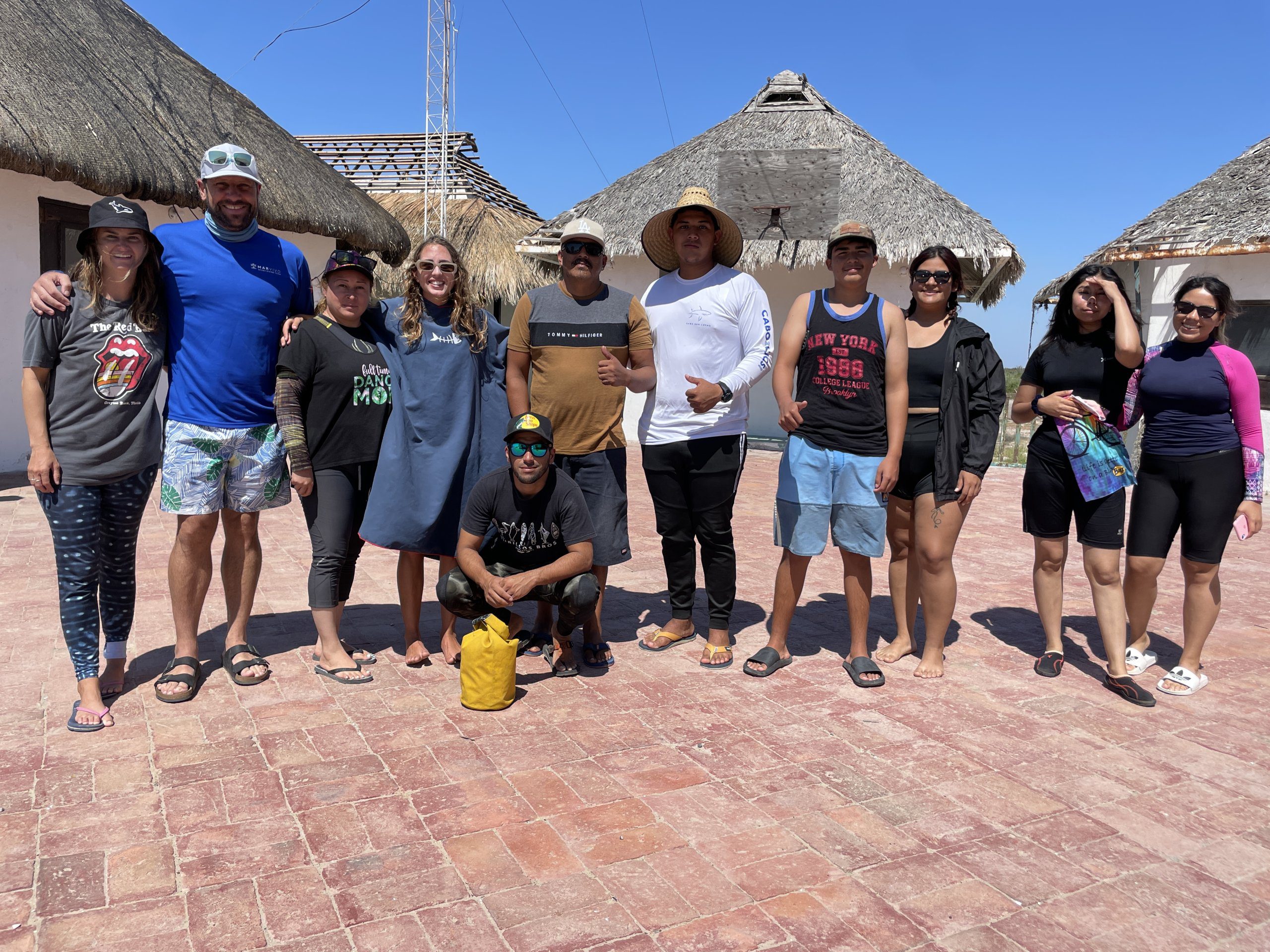
In September 2023, Dive for Change made its mark in Puerto San Carlos. We hosted a talk on freediving safety for over 40 attendees, followed by a three-day freediving course for eight eager students. The community’s response was overwhelmingly positive, with many expressing a desire for us to return. Our efforts are already making a tangible difference, and we’re excited to continue empowering coastal communities through education and action.
Making Waves of Change
By participating in a freediving course with Freefall Academy, you’re not just embarking on an exciting diving adventure; you’re also contributing to positive change in coastal communities. Your support helps us expand access to education, promote environmental awareness, and ultimately, create a ripple effect of empowerment and conservation along our coastlines.
Join Us!
Are you ready to Dive for Change? Join us in our mission to make a difference—one dive at a time.
Para brindar las mejores experiencias, utilizamos tecnologías como cookies para almacenar y/o acceder a la información del dispositivo. El consentimiento para estas tecnologías nos permitirá procesar datos como el comportamiento de navegación o identificaciones únicas en este sitio. No dar su consentimiento o retirarlo puede afectar negativamente a ciertas características y funciones.
Funcional
Siempre Activo
El almacenamiento o acceso técnico sea estrictamente necesario con el fin legítimo de posibilitar la utilización de un determinado servicio expresamente solicitado por el abonado o usuario, o con la única finalidad de efectuar la transmisión de una comunicación a través de una red de comunicaciones electrónicas.
Preferencias
El almacenamiento o acceso técnico es necesario con la finalidad legítima de almacenar preferencias no solicitadas por el suscriptor o usuario.
Estadísticas
El almacenamiento o acceso técnico que se utilice exclusivamente con fines estadísticos.El almacenamiento o acceso técnico que se utilice exclusivamente con fines estadísticos anónimos. Sin una citación, el cumplimiento voluntario por parte de su proveedor de servicios de Internet o registros adicionales de un tercero, la información almacenada o recuperada solo con este propósito generalmente no se puede usar para identificarlo.
Marketing
El almacenamiento técnico o el acceso son necesarios para crear perfiles de usuario para enviar publicidad o rastrear al usuario en un sitio web o en varios sitios web con fines de marketing similares.






 Español de México
  English