What Is an Ocean Safari in Baja? When to Go, What to Expect, and Everything You Need to Know
By Valentina
What is an Ocean Safari? Think African Safari but in a boat instead of a car, and in the ocean instead of the savanna. You’re driving around looking for wild animals in one of the most biodiverse places on the planet. You don’t know exactly what you’ll find that day. The possibilities are vast, and that’s very exciting.
Every day is unique. Nothing is guaranteed, and every day is special in its own way.
Maybe you’ll see the classic sea lions and mobulas because you came during mobula ray migration. Maybe you’ll find a species you never knew even existed—a rare dolphin or a different ray species. Maybe you hit the jackpot and find a pod of sperm whales. It’s wild. It’s unpredictable. And that’s exactly the point.
Safari actually means something closer to “journey” in Swahili. The real meaning is this: you’re exploring a wild place with intention and respect.
A safari is an experience where the animal gets to stay wild, and you get to feel what it’s like to be truly present in their world.
What makes Baja special—and why this destination exists as an ocean safari hotspot—is that you’re in the Sea of Cortez, one of the most biodiverse marine regions on the planet. This is where a third of all cetacean species (whales and dolphins) live. It’s home to the world’s largest mobula ray migration. It’s where whales migrate through in winter, where resident sea lions have built their colonies, where dolphins play year-round. The megafauna variety and abundance here is extraordinary.
But here’s the thing: seeing that megafauna ethically matters. And choosing an operator who understands that difference changes everything about what you take home from the water.
This guide will walk you through what an ocean safari actually is, when to come to Baja to see specific animals, what a real day on the water looks like, and how to choose an operator who respects the ocean as much as you do.
The Honest Definition (Everything It Is, and Isn’t)
An ocean safari is a snorkel tour where we head out to sea and try to find as many animals as possible. We’ll swim with them whenever the ocean allows it = whenever regulations permit, the animal isn’t stressed, and conditions are actually safe.
Here’s what makes it different from what you probably think it is.
It’s NOT scuba diving. No tanks, no certification required, no sitting on the bottom looking at fish. You’re on the surface, in the water, moving, breathing normally. You just need to be comfortable snorkelling without seeing the bottom and be independent.
It’s NOT a freediving tour. I know, I know. People think they need to be certified to come on a safari with us. Nope. Freediving is a bonus skill, not a requirement. If you’re freediving certified and the situation allows, you may freedive with animals always following what the guide says.
It’s NOT (necessarily) whale watching. This is a big one. Yes, sometimes we see whales and we watch them. But the same day you might see whales, you could be swimming with dolphins, spotting rays, watching sea lions play. It’s not a one-species experience. It’s an everything experience.
It’s NOT a performance show. I can’t stress this enough. The animals aren’t there to pose for your Instagram shot. They’re living their lives. We are incredibly privileged to watch, admire, and absolutely not disturb them. It’s nature. And sometimes nature decides to ignore us completely—and that’s actually the goal because it means we’re not interfering.
It’s NOT mass tourism. We run maximum 8 people per trip (usually 6 though). Why? Because you can’t have a real, educational, ethical experience when you’re crammed on a boat with 15 strangers. Small groups mean you actually hear the guide, you actually learn, and you don’t crowd the animals.
It’s NOT guaranteed. If someone promises you’ll see whales, see orcas, or see anything, don’t book with them. Trust me on this. We operate in the ocean, not a aquarium. Animals show up when they show up. Some days you search for hours. Some days you see five species in two hours. Both are valid ocean days.
At our core—and honestly, our differentiator—is this: a real ocean safari must have a safe, knowledgeable guide. Someone with proper certifications and formal marine biology training. That’s not typical in this industry. Most operators hire anyone who can swim. We hire marine biologists who have training, experience and certifications to keep you safe and educated.
Why? Because you’re not here just for the picture. You’re here for an incredibly educational experience. A tour with meaning. With purpose. You’re gonna learn why you’re seeing what you’re seeing, not just gawk at it.
That’s an ocean safari for us.
What You Actually Experience (The Day, the Animals, the Reality)
A Real Day on Safari
Your day usually starts between 7 or 8am, depending on the season. You’ll meet your guide at the famous boat ramp in La Ventana.
Once the group’s complete, everyone loads onto the panga. The captain and guide introduce themselves. Then we do a quick gear check if anyone rented equipment, make sure everything fits: snorkel masks, fins, wetsuits—whatever you need.
When everyone’s ready, your guide gives the safety briefing and intro talk. This is where they explain what we’re actually doing today, what to expect, and safety rules.
Then… off we go!
Finding animals is… an art, honestly. Sometimes we spot them in minutes. Sometimes it takes hours.
Here’s how it works once we find something: first we slow down. The guide watches the animal: their behavior, their mood, whether they’re relaxed or stressed. Based on what they’re seeing and the species, they decide: can we get in the water or not?
If yes? They explain exactly how to interact with this specific animal to keep it safe and keep you safe. Every species is different. A dolphin pod needs different approach than a mobula. The guide tells you the guidelines. Then they and the captain give the signal, and boom…you’re in.
How long you stay in depends on the animal. Could be 30 seconds. Could be two hours. Depends on their behavior, the conditions, and basically… them.
While you’re on the boat between encounters, there’s drinks (no alcohol), a light lunch (usually burritos or ceviche) and snacks like fruit or bars. Sometimes we eat on the island, jump off to stretch and rest. Sometimes we eat in the boat. Depends on the rhythm of the day and the group’s energy.
We repeat this until time’s up. The whole tour is 6 hours, though sometimes it extends if we’ve got an incredible encounter happening. Sometimes it’s shorter if weather gets ugly and we need to head back early for safety.
At the end of the day, we return to the same boat ramp where we started. Your guide passes you all the videos and photos from the day and you head home with memories that are actually gonna stay with you.
The Animals You Might Encounter (By Season)
First things first: everything I’m about to tell you applies to La Ventana specifically. Baja is huge, and different spots have different seasons. For example, gray whales migrate to other parts of Baja, but they basically almost never show up here.
On any given day of the year, no matter the season, it’s common to see resident bottlenose dolphins, sea lions (they’ve got their colonies here permanently), sea turtles near reefs or in open water, and rocky reefs with corals, fish, and invertebrates.
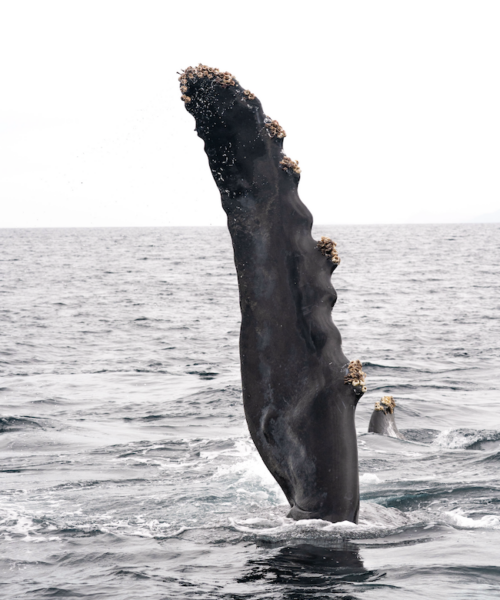
If you come in winter (roughly November through April), the possibilities expand. Humpback whales migrate through during this entire window. Blue whales show up more commonly February through April. These are bucket-list moments, and they happen here.
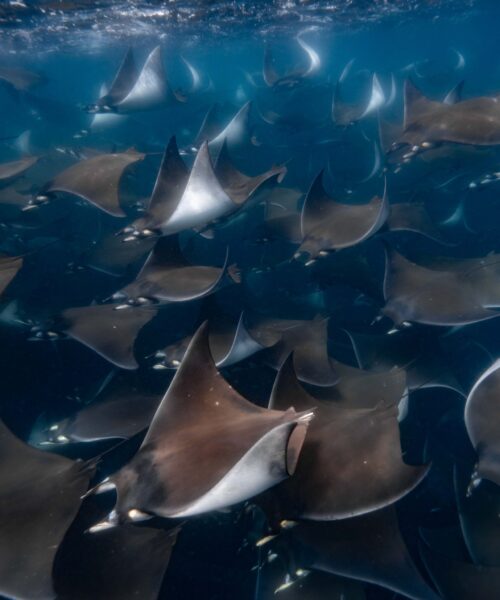
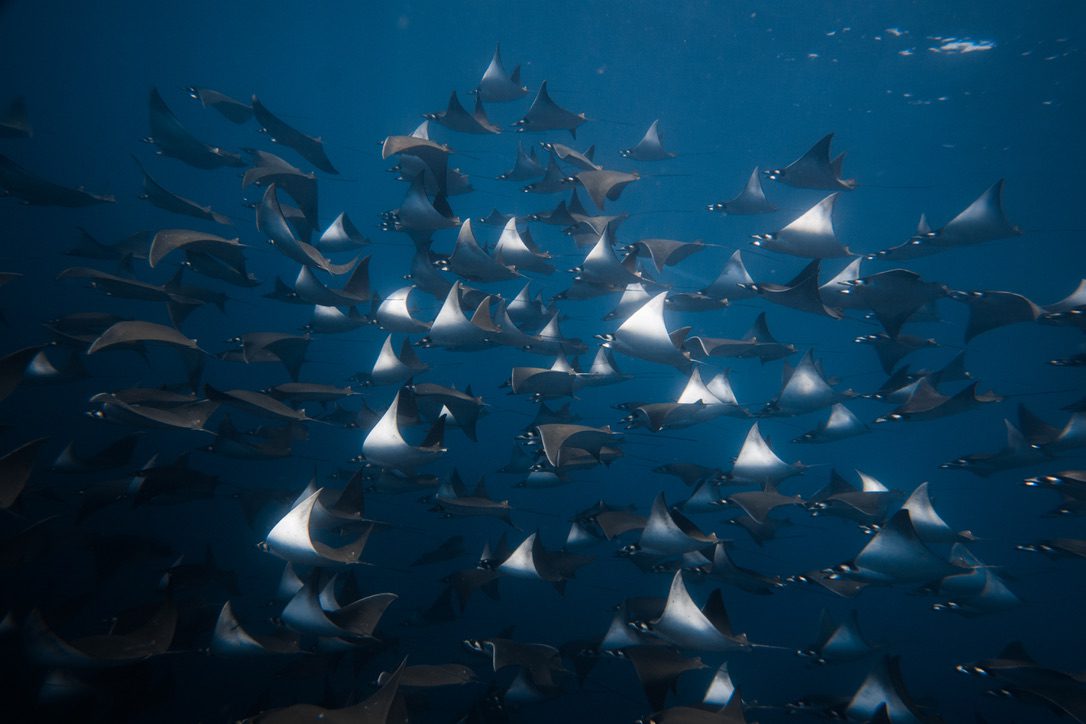
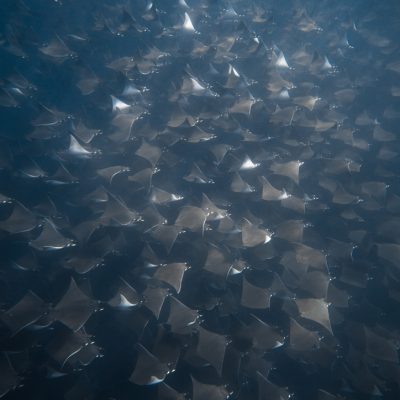
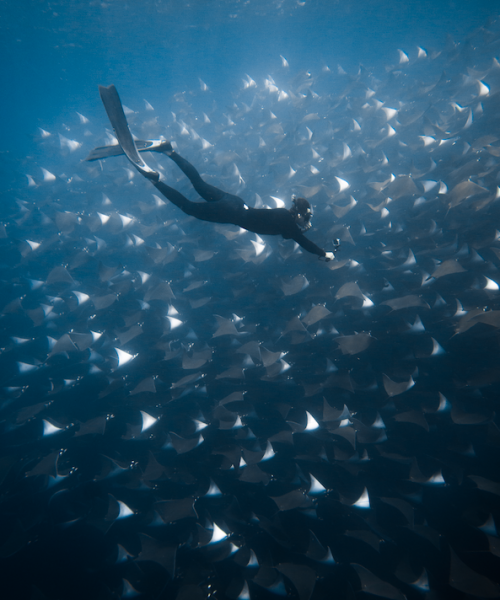
If you come in spring (roughly April through July), you’re timing the mobula ray migration. We’re talking about hundreds or thousands of them. Peaks are usually May and early June, if you want to see the huge fevers, those are your months.
Then there are the species that could show up any day of the year but won’t show up every day. This is where the ocean gets wild. We’re talking about massive cetacean diversity: Bryde’s whales, sperm whales; tons of dolphin species like common dolphins, Risso’s dolphins, pantropical spotted dolphins; larger cetaceans like orcas, pilot whales, false orcas; and the rarest ones: beaked whales, dwarf sperm whales (you probably didn’t even know they existed).
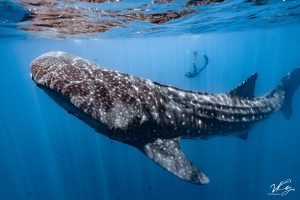
Beyond whales and dolphins, there are five species of mobulas (including giant mantas), whale sharks, silky sharks, hammerheads, makos, and more.
The ocean in La Ventana is genuinely biodiverse. But—and this is important—you don’t see everything in one day.
What Nobody Tells You
Everyone talks about orcas and mobulas and the “incredible diversity” of Baja. What nobody mentions is that you don’t see these things every day. Orcas are possible. They’re special. But they’re rare. If you come expecting to swim with orcas, you’re setting yourself up for disappointment. Mobulas are much more common, but even in peak season they’re not guaranteed.
Animals don’t always want to interact either. Sometimes they’re passing through. Sometimes they’re busy hunting or resting and they couldn’t care less about us. And that’s fine. That’s actually the point: they get to be undisturbed.
Mobulas can be pretty shy, and freediving usually spooks them. If you follow what the guide says (no freediving, no splashing) and the fever is relaxed, you can get really long swims (even hours!), but most fevers will swim away as fast as possible from a freediver.
You cannot swim with (baleen) whales in Mexico. It’s not allowed. So if you see whales, you watch from the boat. Orcas, dolphins, and pilot whales are not baleen whales, and we can swim with them following regulations.
This is why many people choose our expeditions instead of day trips. Four longer days gives you way more chances to see diverse species and have those bucket-list encounters.
Climate & Water Conditions (This Matters More Than You Think)
Baja’s weather changes dramatically by season, and so does the ocean. This is actually why we have so much marine life.
In January through March/April, the water is cold and green. Visibility can be low, maybe even 5 meters (16 feet). Water temperature can drop to 20°C (68°F) or below. Not exactly tropical. And we have very windy days, which means sometimes we have to come back early or cancel the tour.
By late April/early May, the water starts shifting. It gets bluer. It gets warmer. By late May, it’s usually blue, clear, and around 26°C (79°F).
This stays pretty consistent through September and October, when the water hits its warmest (just over 30°C / 86°F) and clearest (30+ meters / 100+ feet visibility). We are closed during September due to storm and hurricane season.
Then November rolls around and the northern winds start kicking up. The water cools again, turns greener. And the cycle repeats.
Every year varies a bit, but that’s the rhythm. And every season brings different animals because the ocean conditions change everything about what thrives here.
Ethical Encounters Are a Must
Here’s the thing: ethical encounters aren’t optional for us. They’re essential. And I’m gonna tell you why—because an ethical encounter gives you a quality experience.
People tend to see our behavior guidelines as limitations. But after almost a decade of interacting with these animals, we’ve learned a lot. We understand their behavior. We know what bothers them. When we give you rules for how to swim with an animal, it’s because we’ve learned the hard way what works and what doesn’t.
When you follow those guidelines, three things can happen:
1. They keep doing what they’re doing. This is great. It means we didn’t stress them, and you get to see a wild animal being itself. How awesome is that?
2. They come closer. They get curious. They come check you out. Lucky you.
3. They leave. Sometimes it happens even to the most experienced. If that happens, we don’t keep pressuring. We respect it and move on.
“The best encounters are ethical encounters.”
Let me give you an example. Sometimes we get a rebel who doesn’t follow the rules. Let’s call this rebel person Jack.
Jack is a freediver and he saw a video on Instagram of a person freediving with mobula rays, so he wants to replicate this. The guide tells the group that freediving is not allowed because these mobulas are going a bit fast and if we dive we will spook them. Everyone gets ready, jumps in, and watches the mesmerizing mobulas glide by. Two minutes later, Jack decides he’ll just do a shallow dive. He thinks to himself: it’s okay, it’s very shallow, they won’t mind. Jack proceeds to freedive 3 meters deep, spooks the whole fever of mobulas away, and the whole group is mad at him because what could’ve been a 20-minute swim ended up short at only 2 minutes.
Please don’t be like Jack.
Mobulas are actually not regulated by law—we make the rules to prioritize the best possible encounter for everyone. Trust us.
Orcas in Baja: The Reality Behind Social Media
I wanted to create a special section for this one because we get this request more than anything. “I want the orca tour in La Ventana.” And every time I hear that, it gives me the creeps.
I’m not gonna apologize for that. There’s a lot of emotions with this topic. In fact, I wrote an entire blog specifically about orca encounters in La Ventana because this question deserves real answers, not Instagram fantasy. Read the full blog here.
But I get it: orcas are incredibly beautiful and powerful animals. Seeing one is everyone’s dream. So I’m gonna tell you how to maximize your chances of seeing them. No bullshit.
There Is No Orca Season (And Anyone Who Says There Is, Is Bullshitting You)
Let me be clear. Orcas don’t have a season. They’re apex predators that can move more than 100 kilometers in a single day. There are very few of them (they’re apex predators). They’re completely unpredictable. They can show up any day of the year and what happened last year may not predict what will happen next year.
That said, we do see them more in certain months. Historically, that’s been April through August. But here’s the thing: I genuinely believe this has less to do with orca movement patterns and more to do with the fact that there are way more boats out there looking for them during those months, and they’re also windy months so the search can be limited. More boats = more search = more chances of finding them.
The Tricky Part
Even when orcas show up, the quality of your encounter depends on different factors. If you’re among the first boat(s) to find them you’ll have a real experience. If you find them later… it might be a different story.
May and June are peak season for tourists, which means peak season for boats. More boats = more chaos. So if you actually want a decent chance at seeing orcas and having a quality experience, here’s my advice:
Come in July.
July is golden for orca sightings. Mobula season is almost over (so we don’t see them as often), which means fewer tourists. The water is warm and blue. And the orca sightings have been pretty consistent over the past few years. But (and I need you to hear this) even in our best orca month, the chance is still low. And it’s still not guaranteed.
The Real Talk
Don’t come here expecting orcas. Seriously. Come for everything an ocean safari has to offer you: the dolphins, the mobulas, the whales, the sea lions, the diversity, the education, the raw ocean experience. Come for that.
If you see orcas? That’s the cherry on top.
Is an Ocean Safari Right for You? (Simple Decision Framework)
An ocean safari isn’t for everyone. And that’s okay. Let me be honest about who thrives on these trips and who probably shouldn’t book.
You’ll Thrive If…
You love marine life. You’re curious about why animals behave the way they do, and you actually want to learn.
You’re okay with uncertainty. Every day is different. Sometimes you see five species in two hours. Sometimes you search for hours until you find something. You understand that both are valid ocean days, and you trust that no matter what we find, it’s gonna be a great day.
You understand that nature is nature. You can’t control it. The ocean doesn’t perform on schedule. Animals don’t care about your bucket list. And you’re genuinely okay with that.
You love being in the water and in nature. You’re a good snorkeler. You don’t panic if you can’t see the bottom. You’re comfortable being in open water.
You can handle being on a boat for several hours without constant action. There are moments of searching, moments of waiting, and moments of intensity. You’re patient enough for all of it.
You come for the experience, not the photo. (Though you’ll get amazing photos. That’s just a bonus.)
This Might NOT Be for You If…
You don’t feel confident in the water or tend to panic. This is a dealbreaker. We need you to be a snorkeler who’s comfortable in open ocean conditions. If you’re not there yet, get some swim lessons first.
You need guaranteed sightings. That’s not how this works. If you come on a safari expecting to see specific animals, you may end up disappointed. We can’t promise that.
You have back problems or are pregnant. Talk to your doctor first.
You’re looking for luxury. This is adventure, not a cruise ship.
You only care about the photo. We’re here to witness nature, not to stage it for Instagram.
How to Choose an Ethical Ocean Safari Operator (Red Flags & Green Flags)
Here’s the uncomfortable truth: a lot of operators out there call themselves ethical. Most aren’t. They just know the language.
So before you book, here’s how to actually tell the difference between someone who walks the walk and someone who just talks the talk.
Green Flags (What to Look For)
✅ Legally registered with trained guides and proper certifications. You’d think this should be standard, right? It’s not. In La Ventana especially. So ask: Are they local? How long have they been operating? Are they actually trained? A lot of operators running tours right now have zero training for your safety and zero knowledge about animal welfare. Don’t assume. Ask.
✅ Small groups (maximum 6-8 people). There are operators who will try to maximize profit by cramming 10+ people onto a small boat. Don’t let them. For your safety and for the quality of your encounter, small groups are non-negotiable.
✅ Transparency. They won’t guarantee sightings. They clearly spell out what’s included and what’s not. They’re upfront about group size, timing, conditions, everything. No surprises.
✅ Gives back to conservation. Do they partner with local organizations? Do they donate a percentage? Do they involve guests in citizen science? Conservation commitment matters. It’s not just a marketing angle—it should be built into how they operate.
✅ Educational focus. The guide explains why you’re seeing what you’re seeing, not just “there’s a whale, take a photo.” We pride ourselves in having 100% marine biologist guides. You’ll leave not just with a photo, but with an incredible understanding of the species and the ecosystem.
✅ Reviews mention guide quality AND animal welfare. Read past reviews carefully. Do people rave about the guide’s knowledge? Do they mention that animals were treated respectfully? Both matter equally.
✅ Clear behavior guidelines for animals. And here’s the important part: they have the guts to take action if someone doesn’t follow the rules. (They need to be able to handle a Jack.)
Red Flags (What to Avoid)
❌ “Guaranteed sightings” promises. Run. Seriously. Anyone promising you’ll see specific animals doesn’t understand the ocean.
❌ No guide credentials or wildlife education background. If they can’t send you a photo of their NOM09 guide certification or Orca Permit, or if they can’t tell you about animals beyond “cool, right?”—pass.
❌ They’re just influencers. Look, I’m not against influencers. We actually work with some incredible ones (photographers, trip leaders). But there are some unexperienced ones who want to capitalize on their fame. Their viral mobula video from that one visit to La Ventana gets a million comments: “Take me there!” So they hire a random captain and play “guide” with zero knowledge about local regulations and animal behavior. If you’re booking with a foreign company, they should be partnering with a local operator who has a trained local captain/guide team. If they’re not, that’s a problem.
❌ The tour is suspiciously cheap. Cheap usually means one (or all) of these: they’re not a legal company, so they don’t have proper first aid training or safety credentials; they’re hiring boats that aren’t properly maintained or safe; they have fuel limits that prevent real searching (so they stick to close spots); or their guides work for tips, which creates pressure on animals to deliver encounters. None of that is good.
❌ No website or reviews. If you can’t find them online or read what past clients said, there’s a reason.
❌ Their social media is 90% orca encounters. Sorry, but they’re selling you something that isn’t real. That’s false advertising.
❌ No clear cancellation policy. Bad weather happens. Emergencies happen. A legit operator has a clear policy for cancellations and rescheduling. If they’re vague about it, move on.
Ready to Join Us?
So here’s the bottom line: an ocean safari is an adventure where you’ll get to experience the ocean on its terms, with people who actually care about what they’re doing.
If you’ve made it this far and think yeah, that’s exactly what I want—then you’re our person.
If this resonates with you, come explore our ocean safaris. And if you want to take it even further, check out our mobula expeditions for more time in the water and better chances at those rare encounters.
Every year, when mobula season wraps up, I sit down and try to put into words what just happened. And every year, I realize words aren’t quite enough. But I’ll try anyway, because what we witnessed this season in La Ventana deserves to be told.
This year, people joined us from every single continent on Earth: all brought together by the ocean. That alone says something pretty special about this place.
First things first — the species list
One of the things that makes La Ventana so extraordinary is the sheer variety of life. Scientists call it a biodiversity hotspot, and after this season, I understand why more than ever.
Not every animal shows up every day — or even every week. But the fact that all of this lives in one place? That’s La Ventana.
What made this season different
1. Warmer water: a mixed blessing
The water was warmer than usual this year, which brought something beautiful: incredible visibility early in the season. Crystal clear, blue, gorgeous. But here’s the thing about mobulas: they follow the plankton. And plankton blooms in cooler, murkier water. So while the visibility was stunning, the mobulas were harder to find than in a typical season. Fewer numbers, and often deeper. We still had solid encounters.
But if you came expecting massive surface aggregations, this year taught us an important lesson: the ocean always has its own plans.
2. The most Mobula mobular we’ve ever seen
Mobula mobular — the larger, rarer cousin of the pygmy devil ray — showed up in numbers we’ve never seen before. If you’ve ever watched one glide past you underwater, you know: there’s something almost otherworldly about them. Slow and elegant.
My favorite encounter of the entire season happened on a day when we were far offshore, just our small group, all by ourselves. We dropped into the water and found a fever of 12 Mobula mobular in the middle of courtship. The males were chasing the female in slow, graceful circles, spiraling upward, then deeper, then back again. They circled all around us. They didn’t leave. We didn’t leave. We stayed in the water with them for over an hour.
(My action camera had no battery that day. Of course. 😂 Thankfully a guest had their camera rolling so I have proof it happened, I promise.)
“Encounters with this species usually last seconds to minutes. An hour is something I’ll never forget.”
3. The squid arrival — and everything it brought with it
By late June, our captains started noticing something: fishermen were pulling up squid. More than usual. A lot more. Anyone who knows the ocean knows what squid means: the predators follow. Within days, pilot whales arrived. And they stayed.
Weeks into July, we were seeing them every single week! Pods of 50 to 300 individuals, cruising slowly at the surface like they owned the place (they do). Their rounded heads bobbing, calves swimming close to curious snorkelers completely relaxed.
Pilot whales are my favorites. I’ll say it plainly. There’s something about their calm, social energy that feels like being welcomed. I could watch them for hours.
4. Sperm whales: the giants arrived
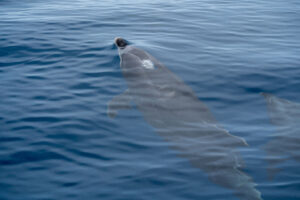
Squid also attracted sperm whales, the largest toothed whale on Earth. May brought mostly solitary individuals, just one or two at a time. But by June they were coming in groups, and by late June and early July we had two days that I still can’t fully believe happened: pods of more than 50 to 100 sperm whales!
In Mexico we can’t swim with them, so we watched from the surface — these massive, prehistoric-looking animals logging at the surface, breathing, socializing. It’s the kind of thing that makes you feel very small in the best possible way.
5. Cormorants (yes, really)
Okay, I know. Some people hear “cormorants” and think: boring. Wrong. While most enjoy the sea lions near the colony, I get completely absorbed watching the cormorants hunt on the reef. Birds that dive are basically feathered freedivers. I kept trying to follow them underwater and match their breath-hold. Sometimes I managed it. Sometimes they absolutely smoked me. Fast, funny, underrated. Come for the whales, stay for the cormorants.
6. Porcupine fish bay
Every season, without fail, someone visits the porcupine fish bay and completely loses their mind with joy. These round, spiky, wide-eyed little fish have absolutely no business being that cute, and yet here we are. If you come to La Ventana and skip the porcupine fish bay, did you really go to La Ventana?
7. Orcas and the July pattern
Orcas are the animal people ask about most. They’re elusive, unpredictable, and when you find them, nothing else compares. This season we saw them in May and June, but not in the numbers we hoped for. And then July happened.
Orcas. Every single week. Sometimes multiple days in a row. Cruising, hunting, socializing… in some of the bluest water ever. The best orca encounters of the entire season happened in July, in conditions that felt almost unfair in their beauty.
“Here’s what’s interesting: last year was the same. July was exceptional. Is this a pattern?”
Maybe. Orcas are notoriously hard to predict, and two or three good years in July doesn’t mean next year will be the same. But it’s an observation worth paying attention to. We’ll be watching closely.
A note before you book
If you’re thinking about joining us next season, here’s the most important thing I can tell you: Come with an open heart and an open mind. La Ventana is not a zoo. We can’t promise you’ll see every animal on that list. Some days the ocean gives you everything. Some days it gives you something quieter, smaller, and just as beautiful if you’re paying attention.
What I can promise is this: every single day on the water is worth it. You are incredibly lucky to be in the presence of wild animals — and that feeling never gets old, no matter how many seasons I’ve done this.
Thank you — really
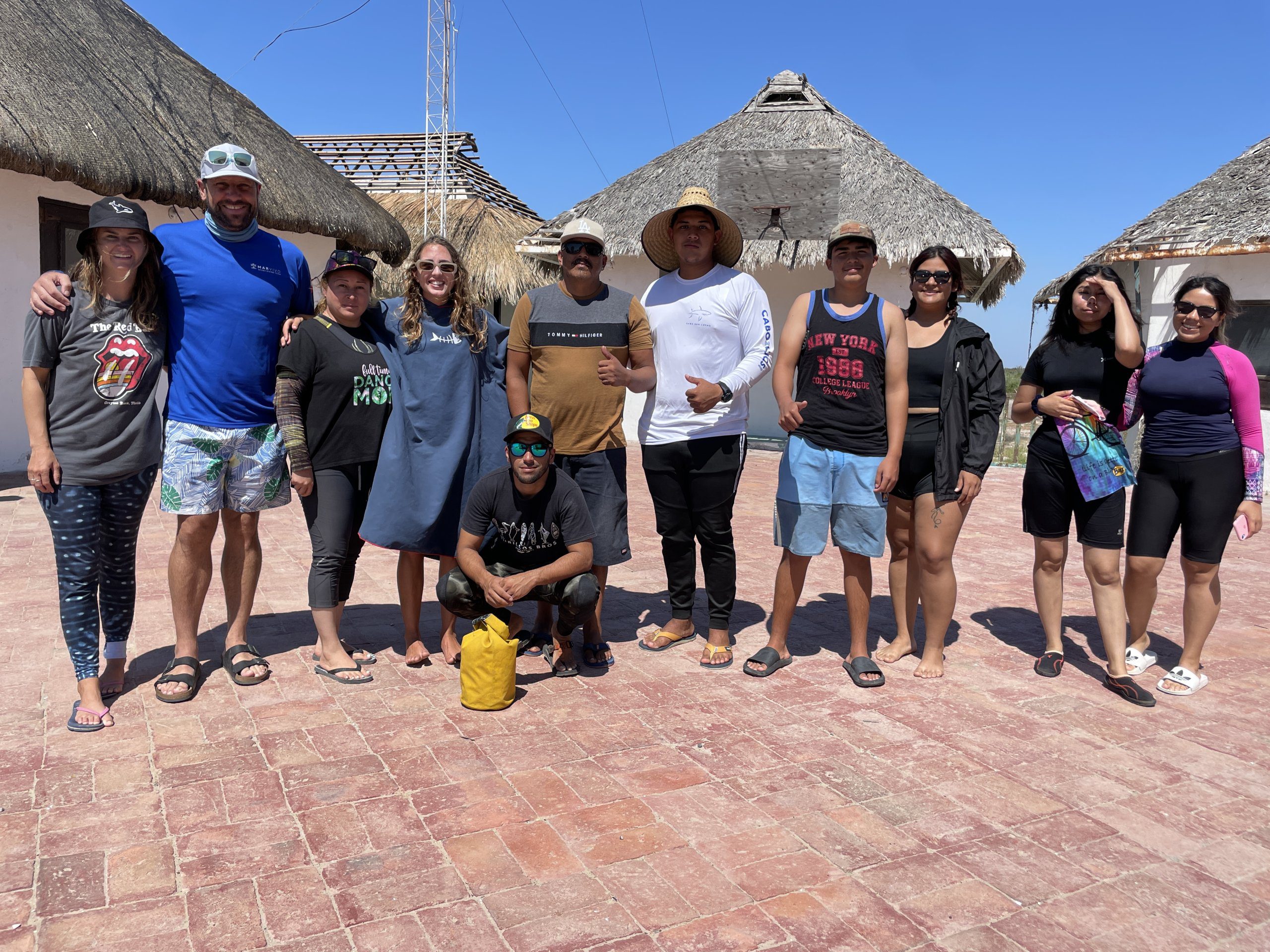
None of this happens without the people who show up. Every single guest who joined us this season, whether for one day on the water or a full expedition, brought their own curiosity, their own energy, and their own love for the ocean. And that makes every encounter richer.
Thank you for trusting us with your time, your adventure, and your love for the sea. We don’t take that lightly. See you next season.
Ready to join us?
If you’re coming for a day and want to experience the magic of La Ventana, the Ocean Safari is your starting point. If you want to maximize your time in the water and have more variety of interactions, the Mobula Expedition is for you.
The Honest Truth About Swimming With Orcas in La Ventana, Baja
Have you seen countless Instagram reels of people claiming they swam with orcas in La Ventana, Baja, Mexico — and now dream of experiencing that moment for yourself?
You’re not alone. Orcas are powerful, intelligent, emotional animals. Seeing them in the wild — let alone swimming near them — can be deeply moving and unforgettable.
But before you book a trip with the sole goal of swimming with orcas, there’s something important you need to understand. This article isn’t here to sell you a fantasy. It’s here to share the truth — so your expectations can meet reality, and you can decide whether coming to Baja with the goal of swimming with orcas is truly the right choice for you.
A Bit of Context: Swimming With Orcas Was Never the Norm
Just a few years ago, ocean safaris and orca-focused tourism barely existed in Baja California. Operators would occasionally see orcas while traveling to fishing grounds or dive sites — a few sightings per year, if lucky. Even then, encounters were rare and unpredictable.
Back then, swimming with orcas was never something you planned for. It was something that happened by chance.
How Ocean Safaris Changed Orca Encounters
As ocean safaris grew in popularity, more boats began heading offshore specifically searching for wildlife. With more boats looking, there were more sightings — including more encounters with orcas. And with that, something shifted.
Visibility increased — not predictability. Orcas didn’t suddenly become more common. There were simply more boats actively searching for them. At the same time, social media exploded with images and videos of people swimming with orcas, creating the impression that these encounters were frequent, repeatable, and almost guaranteed. They are not.
When It Became Too Much
At some point, the desire to swim with orcas crossed an ethical line. For many operators, content creation and ego — “I swam with an orca” — became more important than the animals’ wellbeing. What we started seeing more often:
Boats chasing orcas for hours
Cutting across their path
Separating family members
Dropping people into the water while orcas were actively hunting
10, 20, sometimes 30+ boats pursuing the same pod
These behaviors disrupt natural hunting, social bonds, and movement patterns. This is not curiosity. This is pressure.
The Truth Behind Instagram Videos of Swimming With Orcas
Yes — orca content sells. A lot. But what Instagram rarely tells you:
Orcas are not seen frequently year-round
Many “swim with orcas” tours are marketed dishonestly
Orcas travel vast distances daily and cannot be scheduled
Some viral videos are slowed down, making evasive behavior look calm or curious
Ask yourself: How would you feel if 20 boats chased you and your family all day, cutting you off and dropping people in front of you? That is not a natural interaction — and it is not ethical wildlife tourism. Selling guaranteed opportunities to swim with orcas in the wild is simply not honest.
It’s Not All Bad: Ethical Orca Encounters Do Exist
Not every orca encounter is harmful. When pressure is low, when boats are respectful, when animals are relaxed — orcas can be curious, calm, and even playful. And when swimming with orcas happens under those conditions — on , terms — it can be one of the most profound wildlife experiences on Earth. These encounters still exist. But they require patience, restraint, and respect.
A Step in the Right Direction: Orca Regulations in Mexico
In response to increasing pressure on orcas, the Mexican government introduced the first management plan for swimming with orcas in 2025. This plan regulates how orca encounters should be handled in La Ventana. It is still new. It will continue evolving. And it will require enforcement. But it is a necessary step toward protecting orcas in the wild.
How We Approach Swimming With Orcas at Freefall Academy
At Freefall Academy, we don’t sell “swim with orcas” tours or expeditions. We stand firmly by ethical wildlife encounters. That means:
If we arrive at an orca sighting and see heavy boat pressure, we leave
We do not chase or crowd animals
We do not force interactions
Sometimes we enter the water — sometimes we don’t
This can be difficult for guests when their dream of swimming with orcas feels so close. But these are wild animals. Families. Mothers with calves. Animals with culture, communication, and memory. If they are being harassed, we choose not to participate.
Our approach is simple: we search for wildlife independently and let encounters happen naturally. Most days, we don’t find orcas. But most days, we find something extraordinary.
A Necessary Shift in Mentality
Coming to Baja should not be about ticking “swim with orcas” off a bucket list. While swimming with orcas is possible, it should always be the cherry on top, never the expectation. If your only goal is swimming with orcas, Baja — and especially Freefall Academy — may not be the right fit.
However, if you want:
Long days at sea
One of the most biodiverse places on Earth for large marine animals
Experiences guided by a marine biologist
Ethical encounters rooted in respect, not pressure
And the openness to be surprised by what the ocean decides to give
Then you’re exactly who this experience is for.
How to Increase Your Chances of Seeing Orcas (Honestly)
There are no guarantees when it comes to orcas — but there are meaningful differences between our Ocean Safaris and our Mobula Ray Expeditions when it comes to search effort and time at sea.
Ocean Safaris
Ocean Safaris are single-day trips, usually around 6 hours on the water. They are exploratory and dynamic, and between April and August this is when we most often encounter orcas on a day-trip basis. These trips are ideal if:
You have limited time in Baja
You want an incredible wildlife experience in one day
You’re open to whatever the ocean offers
Orcas are a possibility, never an expectation. That said, in recent seasons we’ve noticed more frequent sightings from late June through July. We can’t promise that pattern will repeat, but it’s useful data if you’re planning your timing.
Mobula Ray Expeditions
Mobula Ray Expeditions are multi-day expeditions designed around searching. During Abril a Junio, massive mobula ray aggregations form in this region. These aggregations sometimes attract apex predators, including orcas. What makes expeditions different:
Multiple consecutive days at sea
Longer days on the water — typically 8 to 10+ hours
Time to adapt, read conditions, and recognize patterns
Far more flexibility to follow the ocean, not a fixed schedule
Simply put: more days + more hours + more searching = higher chances. If seeing orcas is important to you — and you’re comfortable with uncertainty, long days, and no guarantees — a Mobula Ray Expedition offers your best shot.
The Bottom Line
Ocean Safaris are an incredible way to explore Baja’s wildlife in a single day. But if your goal is to maximize your chances of encountering orcas in the wild, expeditions — especially during mobula season — provide the most search time, the most flexibility, and the highest realistic odds. Still, orcas remain rare. And that rarity is exactly what makes the encounter meaningful.
A Final Reminder
Come with an open mind. Release expectations. Trust the process.
When you stop chasing the idea of swimming with orcas, the ocean often gives you something far more meaningful.
BY: Valentina / 0 COMMENTS / CATEGORIES: Sin categoría
We just wrapped Baja Odyssey, and I’m still buzzing
I just got back from Baja Odyssey… and I’m still buzzing. Four activity days. Countless species. Moments that feel impossible to explain — but I’ll try. Here’s a recap of what we lived out there. Here’s what makes this expedition so special.
Day 1 – La Ventana
Within the first hour, we found mobula rays! They were super chill, so we slid in and ended up swimming with them for until we got tired. Then two humpback whales popped up. A pod of bottlenose dolphins right after. It honestly felt like the ocean was stacking encounters back-to-back. We fit in a freediving session too — a couple of students hit personal bests. And we wrapped the day having lunch on a quiet beach. Sun, sand, good food, good people. Solid start.
Day 2 – Espiritu Santo
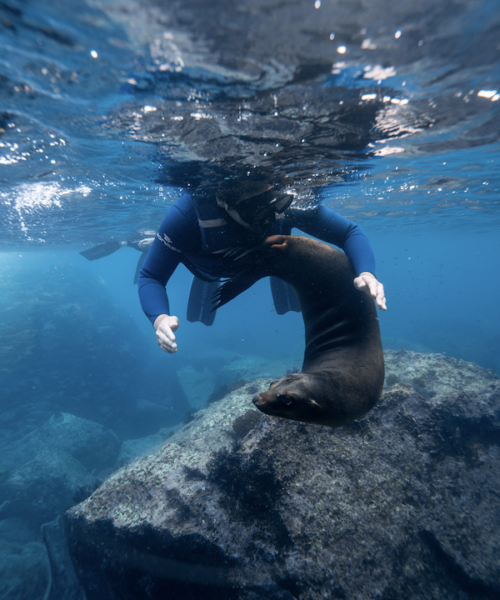
We headed out to the island looking for the friendliest sea lions… and wow, we found them. One little puppy completely stole the show — super curious, hugging everyone, rubbing on fins like it was his personal spa day. No one told him about “keeping distance,” apparently. After a long play session, we moved to the whale shark area and got lucky with a juvenile cruising by. Not on the itinerary, but we made it happen. Another solid day.
Day 3 – Magbay
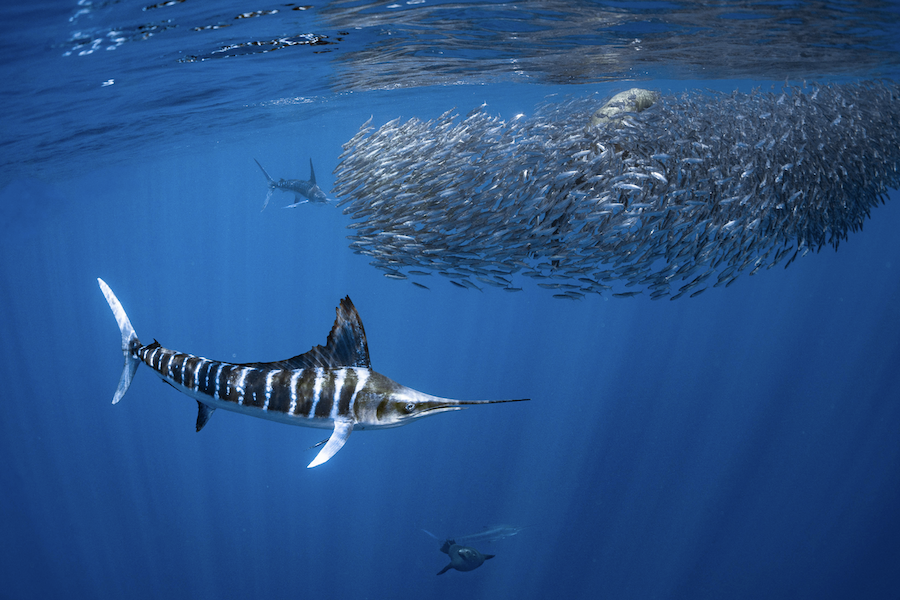
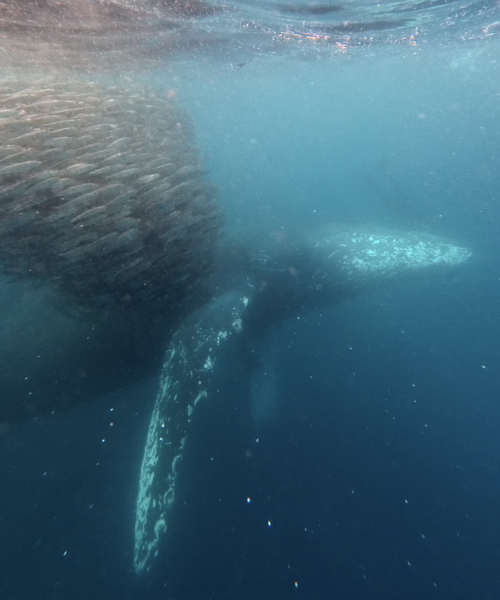
Day 3 was classic MagBay… with extra sauce. On the way out we ran into Pacific white-sided dolphins. Then we found both dynamic and static baitballs — full action — marlin and sea lions hammering the sardines. We even spotted a sailfish in the mix. More bottlenose dolphins showed up, and on our way back we had the moment of the day: a humpback whale that came out of nowhere, super close to the boat and chill, twice! Not something you see every day, which made it extra special for everyone onboard.
Day 4 – Magbay
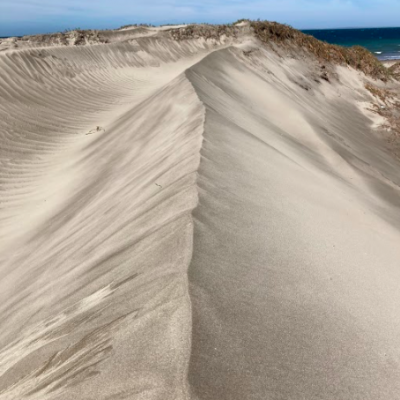
On the last day everyone thought, “There’s no way it can get any better…” We started with a hike through the sand dunes and mangroves — calm, quiet, totally different vibes. Then on our way toward the marlin area we saw a ton of birds, so we went to check it out. Huge bait ball: sea lions and skipjack tuna feasting, pelicans and shearwaters diving nonstop. And out of nowhere… two humpback whales came in. One of those lifelong-memory moments. We wrapped the day with common dolphins bow riding and a delicious goodbye dinner. Perfect ending.
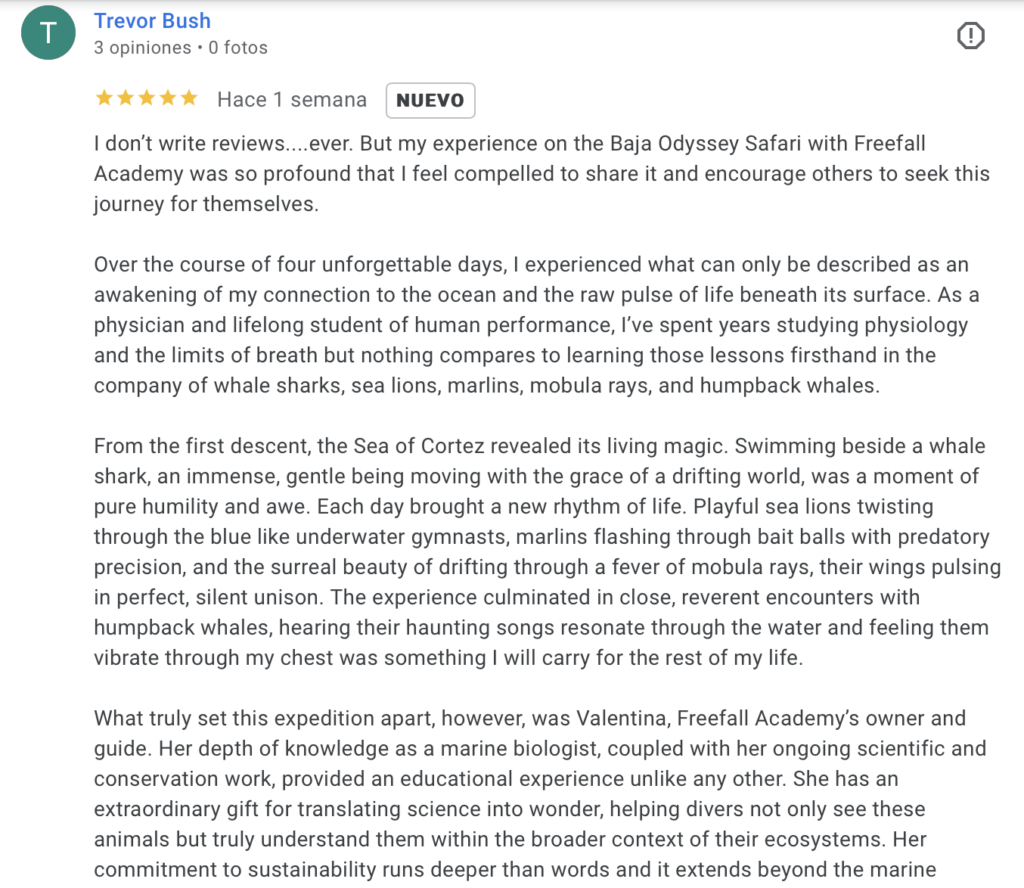
But honestly, what made this week stand out wasn’t just the wildlife. It was the people. Trevor, Ran, Jeff, Rubens, Tristan and Gilad — each of you brought your own energy, humor, curiosity, and heart into this trip. You made the Odyssey what it was. Thank you.
Here are a couple of beautifully written testimonials from our guests — and honestly, they made me tear up. I’m incredibly grateful to share my love for the ocean, freediving, and wildlife with people, and to see how these encounters can shift something inside them.
My mission has always been to help humans connect with wild animals in a deeper way — beyond a selfie or a bucket-list check. To teach their biology, their behavior, their stories… but more importantly, to show that they’re individuals with personalities and emotions. They deserve respect and admiration above anything else.
We’re just visitors with the privilege of slipping into their world for a few minutes or hours. And that alone is something to be grateful for.
Swimming with Orcas in Mexico is Now Legal in La Ventana, Baja: Here’s All You Need to Know
Introducción: contexto del nado con orcas en México
Por primera vez en la historia, nadar con orcas en México es oficialmente legal — pero solo bajo condiciones muy específicas.
En julio de 2025, el gobierno mexicano publicó el “Plan de Manejo Temporal para la Interacción Responsable con Orcas en La Ventana, Baja California Sur.” Esta nueva regulación finalmente define cómo los humanos pueden entrar al agua con orcas de forma segura y ética.
Hasta ahora, los encuentros existían en una zona legal gris. No había reglas — solo improvisación. Algunos capitanes se acercaban con responsabilidad; otros no. Sin límites claros, el acoso se volvió común: las embarcaciones rodeaban los grupos, los motores se acercaban demasiado, y las orcas eran perseguidas en busca de la foto perfecta.
Esta nueva ley busca cambiar eso. Es el primer intento real de manejar los encuentros con orcas de una manera que proteja tanto a los animales como a las personas en el agua. No es perfecta — de hecho, es un período de prueba de un año diseñado para evaluar y ajustar el sistema — pero es un paso crucial hacia un futuro donde el turismo oceánico y la conservación puedan coexistir verdaderamente.
Nuestros capitanes ahora cuentan con los primeros permisos oficiales para nadar con orcas en La Ventana, y vemos este momento como algo más que emocionante — es una responsabilidad. . .
Until now, encounters existed in a legal gray area. There were no rules — only improvisation. Some captains approached responsibly, others didn’t. Without clear limits, harassment became common: boats surrounded pods, engines roared too close, and orcas were often chased for the perfect shot.
This new law will hopefully change that. It’s the first real attempt to manage orca encounters in a way that protects both the animals and the people in the water. It’s not perfect — in fact, it’s a one-year . meant to test and adjust the system — but it’s a crucial first step toward a future where ocean tourism and conservation can truly coexist.
Our captains now have the first official permits to swim with orcas in La Ventana, and we see this moment as more than just exciting — it’s a responsibility.
QUÉ DICE LA NUEVA LEY (Y POR QUÉ IMPORTA)
Después de años operando en una zona legal gris, México finalmente ha establecido su primer plan oficial de manejo para nadar y observar orcas — un programa piloto de un año (de agosto de 2025 a julio de 2026) en La Ventana, Baja California Sur.
Este plan establece condiciones estrictas sobre quién puede entrar al agua, cuándo y cómo. Es el primer intento real de transformar los encuentros con orcas de algo caótico a algo controlado y consciente.
Aquí están las reglas más importantes:
🛥 Embarcaciones: Solo se permiten lanchas pequeñas de menos de 10 metros (≈ 32 pies). Cada operador puede usar una sola embarcación autorizada.
🚤 Límite diario: Solo 24 embarcaciones por día, divididas en 8 horarios (3 embarcaciones por turno, entre las 7:00 a.m. y las 6:00 p.m.).
🌊 Distancias:
Observación activa: mínimo 20 metros entre la lancha y las orcas.
Embarcaciones en espera: a 60–100 metros de distancia.
👥 Personas en el agua: Máximo 5 personas, incluyendo al guía.
⏱ Tiempo: Cada encuentro puede durar hasta 30 minutos, más 15 minutos para la aproximación y salida.
🚫 Cuándo no se permite nadar:
Si las orcas están cazando, descansando o alimentándose de presas grandes (>2 m) como delfines o ballenas.
Solo se permite cuando las orcas muestran un comportamiento tranquilo, social o cooperativo con presas pequeñas como peces, mobulas o tortugas.
📍 Área autorizada: Las actividades están restringidas a un polígono designado cerca de La Ventana, desde Playa Central hasta Ensenada de Muertos.
⚠️ Otras restricciones:
No se permiten drones, alimentación ni contacto físico.
Las embarcaciones no deben bloquear la trayectoria de las orcas.
Los capitanes deben permanecer a bordo; solo un guía, identificado con un marcador rojo, puede acompañar a los nadadores en el agua.
Estas medidas están diseñadas para proteger tanto a las orcas como a las personas, reducir el estrés en los animales y permitir a las autoridades recolectar datos para un manejo a largo plazo.
Una nota personal
Este es un año de prueba — un experimento para ver cómo los operadores responsables, como nosotros, pueden coexistir en armonía con estos depredadores marinos.
Seré honesta: algunas de las nuevas reglas son confusas y probablemente necesitarán ajustes. Pero por primera vez, existe estructura y responsabilidad.
Es un paso adelante — imperfecto, pero necesario. . , ..
This plan sets strict conditions for who can enter the water, when, and how. Here are the most important rules:
. Only small boats under 10 meters (≈ 32 ft) are allowed. Each operator can use just one permitted boat.
, Only 24 boats per day, divided into 8 time slots (3 boats per slot, between 7:00 AM and 6:00 PM).
.
Active observation: minimum 20 meters between boat and orcas.
Waiting boats: 60–100 meters away.
. Maximum 5 people, including the guide.
, Each encounter can last up to 30 minutes, plus 15 minutes for approach and exit.
.
If orcas are hunting, resting, or feeding on large prey (>2 m) such as dolphins or whales.
Only permitted when orcas show calm, social, or cooperative behavior with small prey like fish, mobulas, or turtles.
. Activities are restricted to a designated polygon near La Ventana, from Playa Central to Ensenada de Muertos.
,
,
Boats must never block the orcas’ path.
Captains stay aboard; only one guide — wearing a red marker for visibility — may accompany swimmers.
. ..
. . — a test to see how responsible operators, like us, can coexist with these apex predators in harmony. Some of the new rules are confusing and will probably need adjustments. But for the first time, there’s structure and accountability. It’s a step forward — imperfect but necessary.
POR QUÉ ESTO IMPORTA — Y QUÉ ESPERAMOS QUE CAMBIE
Durante años, los encuentros con orcas en México ocurrieron en una especie de “viejo oeste” del turismo marino — sin reglas, sin límites, sin verdadera supervisión.
Cada operador hacía las cosas a su manera. Algunos eran respetuosos, mantenían su distancia y dejaban que las orcas marcaran el ritmo. Otros no.
Los motores las perseguían. Los grupos eran rodeados por embarcaciones. La gente se lanzaba al agua demasiado cerca, demasiado rápido. A veces se volvía caótico.
Nosotros siempre nos alejábamos de esas situaciones — no queríamos ser parte del problema.
Y aunque muchos tenían buenas intenciones, la verdad es que sin regulación, incluso la emoción puede convertirse en acoso.
Por eso esta nueva ley importa. Marca el primer esfuerzo real por manejar el comportamiento humano alrededor de las orcas, antes de que sea demasiado tarde.
No se trata de quitarle emoción a la experiencia — se trata de asegurarse de que esa emoción no ocurra a costa de las orcas.
Para nosotros en Freefall Academy, también se trata de responsabilidad.
Siempre hemos creído que los encuentros deben suceder en sus términos — con calma, en silencio, de manera natural.
El nuevo sistema de permisos finalmente reconoce y recompensa ese enfoque, estableciendo una base de respeto que el océano necesita con urgencia.
Aun así, esto es solo el comienzo.
El plan tiene validez por un año — una temporada piloto para recopilar datos y evaluar qué funciona y qué no. Muchas de las reglas actuales probablemente evolucionarán.
Algunas tienen mucho sentido; otras parecen poco prácticas cuando estás realmente en el agua.
Pero eso está bien. Los cambios en las políticas oceánicas rara vez llegan perfectos — surgen a partir de la prueba, la retroalimentación y la experiencia.
Lo que esperamos es que este nuevo marco se convierta en la semilla de algo más grande:
Un sistema permanente y bien diseñado que proteja a las orcas, apoye a los capitanes locales y ofrezca a los viajeros la oportunidad de vivir algo profundamente transformador — sin dañar lo que lo hace tan poderoso.
Porque al final del día, el objetivo no es solo hacer legal nadar con orcas.
Es hacerlo sostenible, ético y respetuoso — un modelo de cómo el turismo marino puede coexistir con la naturaleza salvaje, en lugar de ir en su contra. . of marine tourism — no rules, no limits, no real oversight. Every operator did things differently. Some were respectful, keeping their distance and letting the orcas lead. Others weren’t. Engines chased. Pods were surrounded by boats. People jumped in too close, too fast.
, .
That’s why this new law matters. It marks the first real effort to . before it’s too late. It’s not about taking the thrill away — it’s about making sure that thrill doesn’t come at the expense of the orcas.
For us at Freefall Academy, it’s also about accountability. We’ve always believed encounters should happen on , terms — calm, quiet, natural. The new permit system finally rewards that approach.
Still, this is only a beginning. The plan is valid for one year — . to gather data and evaluate what works. What we hope is that this new framework becomes the seed of something bigger: a permanent, well-designed system that protects orcas, supports local captains, and gives travelers the chance to experience something profoundly moving — without harming what makes it so powerful.
Qué significa esto para ti (y qué esperar en un Ocean Safari)
Unirte a uno de nuestros Ocean Safaris means becoming part of something historic. Here’s what to expect:
Encuentros verdaderos, no hay garantías Orcas are wild and constantly on the move. Some days, the ocean offers a breathtaking encounter. Other days, they’re hundreds of miles away. That uncertainty is part of the magic.
Ven por el Safari, no solo las Orcas Our safaris are about much more than one species — mobula rays, dolphins, turtles, pilot whales. Every day is different. That’s why we recommend joining for multiple days, to increase your chances and experience the true diversity of Baja’s marine life.
Mejor temporada para ver Orcas Orcas can appear any month, but spring and summer (April–July) tend to offer the best chances.
December to March: we focus on other locations due to difficult weather conditions in La Ventana during those months.
Grupos Intimos A maximum of 5 people in the water — small enough to hear your heartbeat and the soft clicks of the ocean.
Guias Expertos Led by marine biologists, with the official Mexican guide certification NOM09. We read the ocean’s moods and let animals lead the encounter — never the other way around.
Experiencia educativa Each trip includes educational briefings on animal biology, behavior, communication, and conservation.
This isn’t about chasing the ocean’s biggest headline — it’s about showing up for whatever the sea wants to share that day. And when an orca does appear, when it chooses to approach you in its own rhythm and time, you understand why patience is part of the adventure.
El futuro de los encuentros con orcas: lo que viene
This new law is a beginning — not a finish line. 2025 is a ., a test to see if humans can share the water with orcas responsibly. It’s far from perfect, but that’s how change begins — with small, imperfect steps toward something better.
Our hope is that this management plan evolves into a long-term system that works for everyone: the orcas, the captains, and the travelers who come from all over the world to meet Baja’s marine life with open hearts.
At Freefall Academy, we’re proud to help lead that movement. Every safari we run, every briefing we give, every respectful encounter we share is a statement of what ocean tourism can be when done with intention.
So if you’ve ever dreamed of meeting orcas in the wild — not in a tank, not on a screen, but . — this is your moment. Join us in Baja.
📅 Mejor temporada: Abril a Agosto
🌎 Donde: .
💙 Experiencia: Ocean Safari con Freefall Academy
Mobula Season 2025 Highlights: Unforgettable Encounters
The Sea of Cortez is a theater of marine life, and this mobula season was nothing short of spectacular. From breathtaking vortexes of rays to unexpected encounters with apex predators, the ocean rewarded patience, respect, and a sense of adventure.
This isn’t just a trip—it’s an Safari Marino. Some days, the sea gifts us thousands of mobulas, playful dolphins, and curious sea lions. Other days, we spend hours offshore, searching… waiting… But when the magic happens—it’s worth every second.
This Season’s Greatest Hits
The stars of the show: Mobulas
We witnessed their full repertoire:
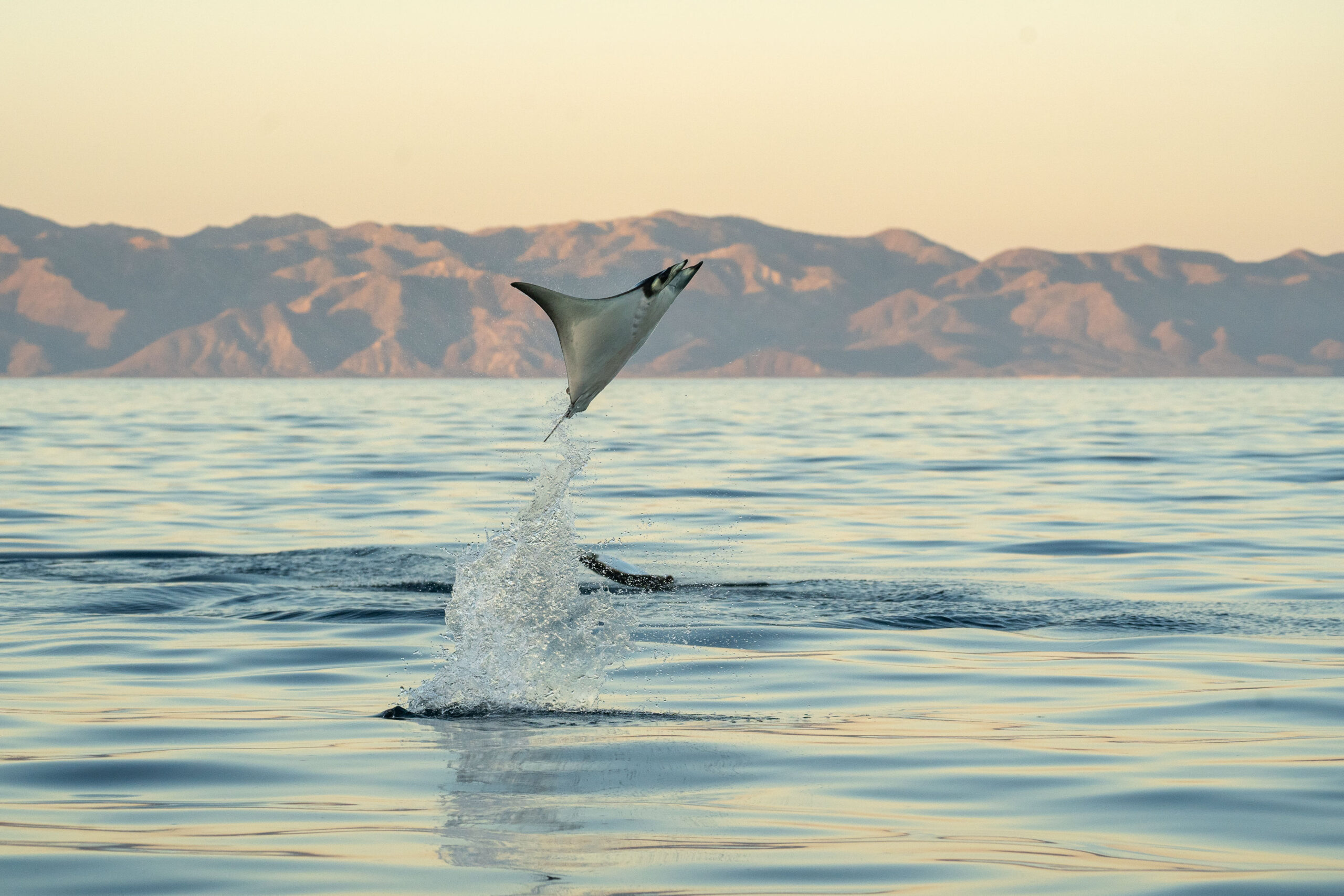
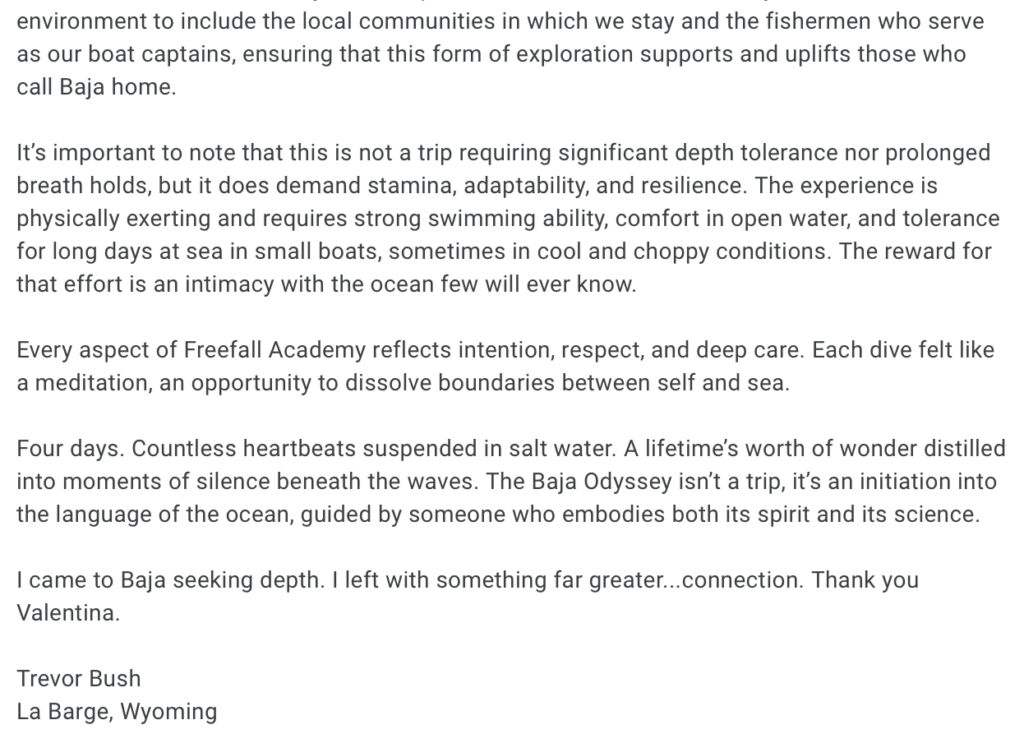
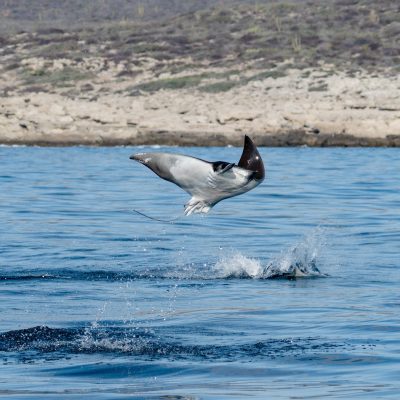
Sunrise/Sunset leapers – entire schools jumping
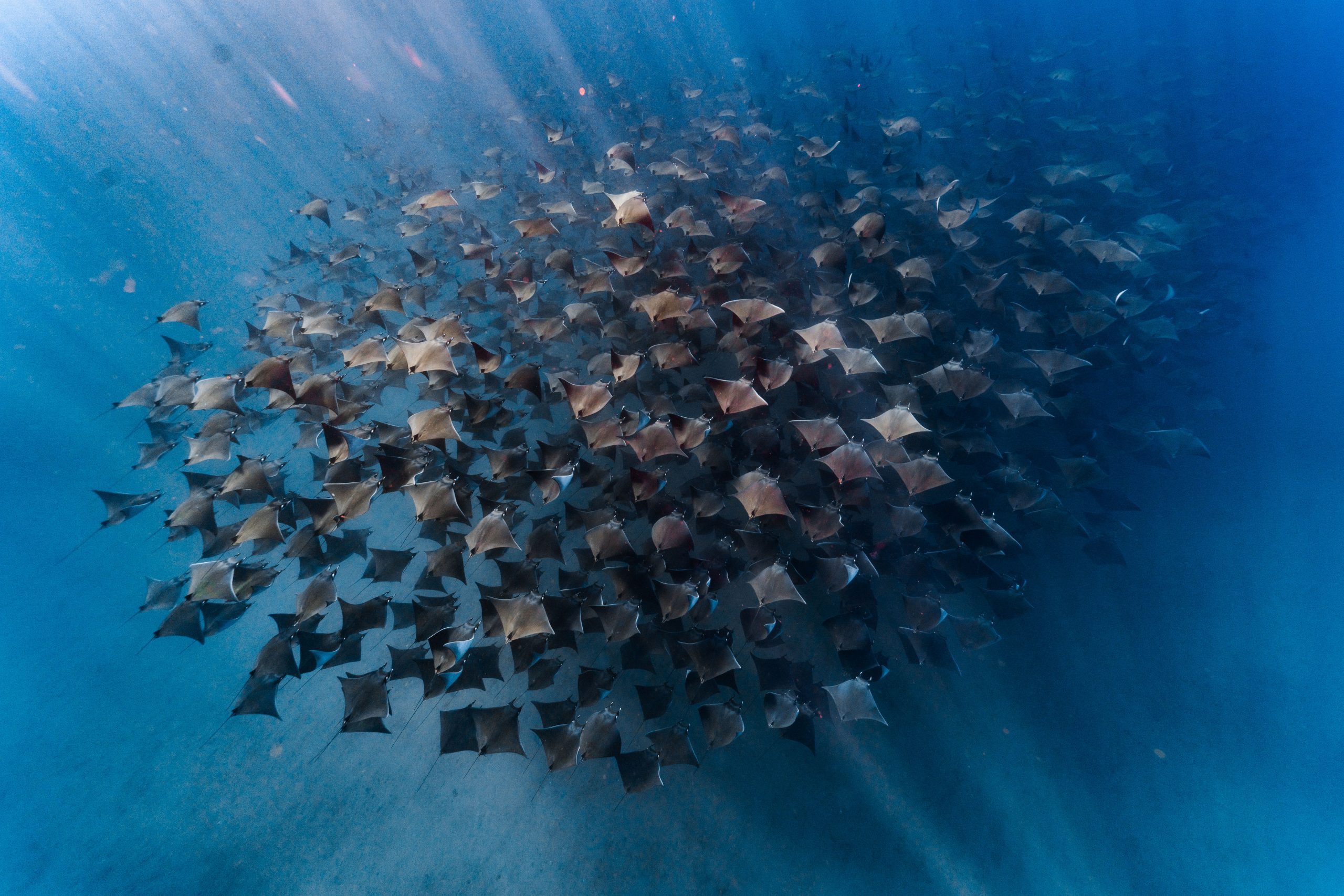
Vortex feeders – hundreds spiraling like living tornadoes
Mating rituals – males chasing females in a beautiful courtship we call mating train
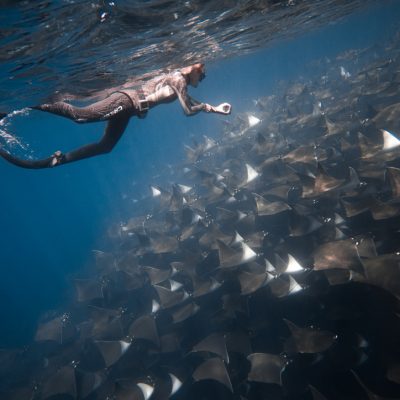
Yet the real show started when we slipped beneath the surface. Picture this: you’re finning through blue nothingness when suddenly the water darkens. A shadow rises from the depths – then another, and another – until you’re surrounded by a fever of mobulas. They are all around you, close enough to see the scars on their backs.
Mobula Ray jumping at sunset during a Mobula Expedition
Dolphin Dreams
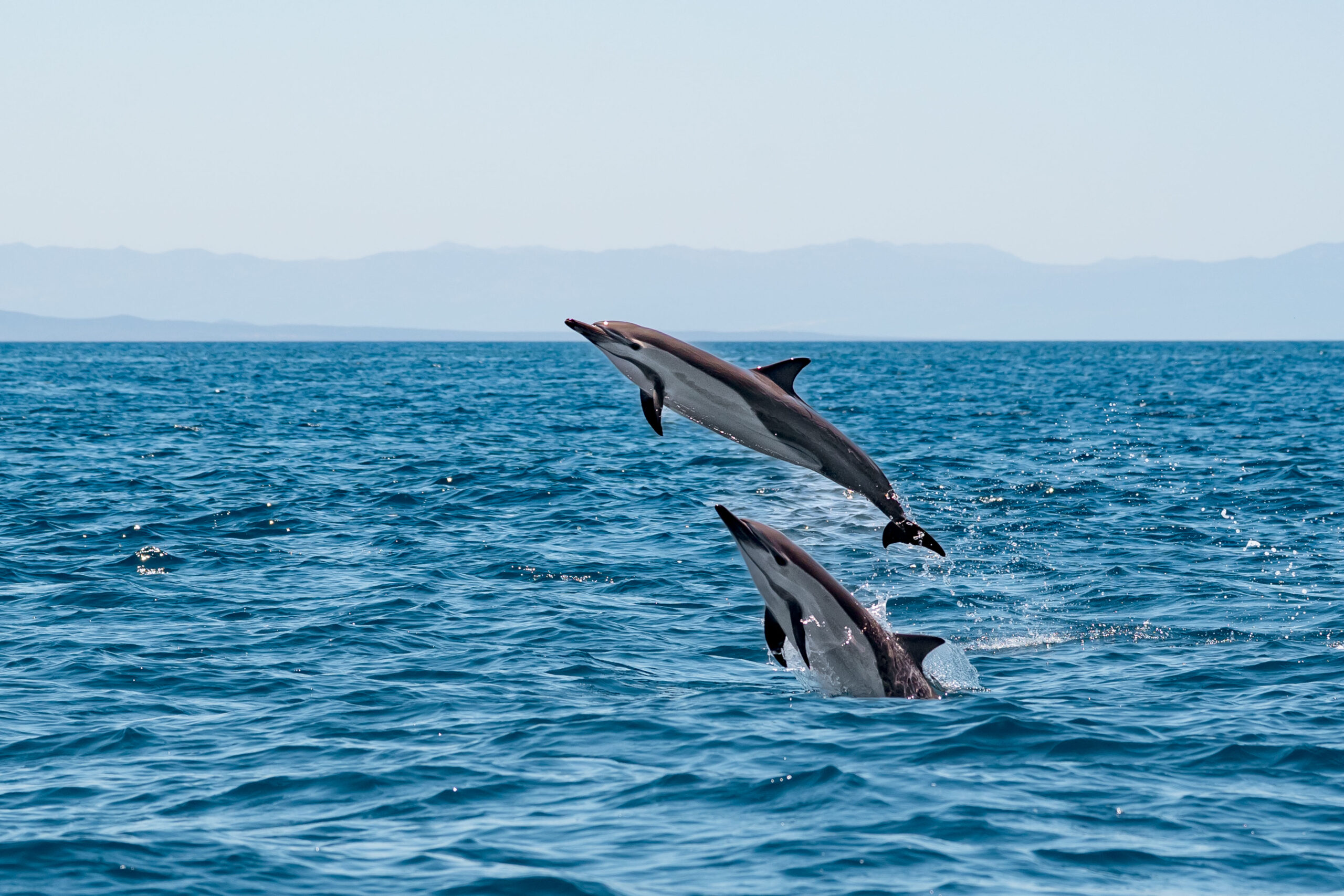
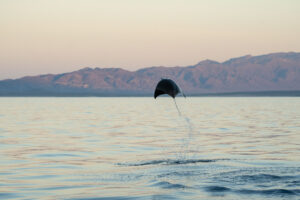
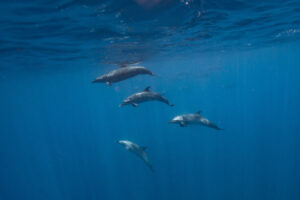
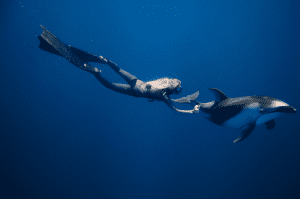
Resident bottlenose dolphins greeted us almost daily—sometimes in small pods of 10, other times in hundreds. They bow-rode our boat, locked eyes with us underwater, and left us grinning every time. We also encountered playful pantropical spotted dolphins, spinner dolphins, common dolphins and risso’s dolphin!
Bottlenose dolphin on the surface
The Big Five & Beyond
This season, we checked off marine megafauna royalty:
Sperm whales (the largest toothed whales on Earth)
Whale sharks (the largest fish in the world)
Whale shark in baja Mexico with freefall academy during ocean safari
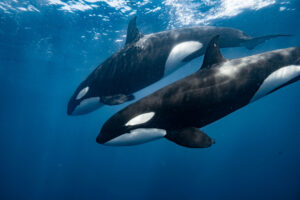
. (the largest dolphin in the world)
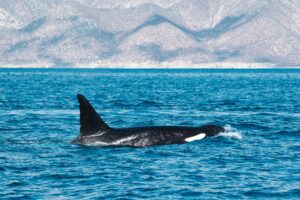
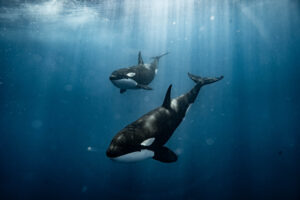
Orcas in a ocean safari in La Ventana during Mobula Season
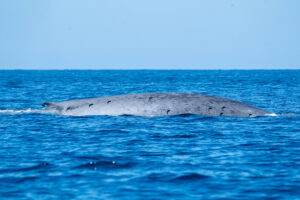
Blue whales (the biggest animals to ever exist)
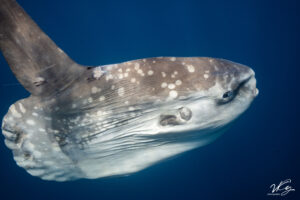
Mola molas (the heaviest bony fish in the world)
Plus, silky sharks, pilot whales (100+ strong!), olive ridley turtles mating mid-ocean, and much more!
Citizen Science
If you’ve been reading us, you know that we’re all about citizen science: on every trip we record data that we share the scientists to help better understand animals. This was our top contribution this season:
Tecpatl the Orca
We photographed a massive male orca—later, comparing the dorsal for ID’s, I found a match! E221 was first documented in 2006 near Mathemathitian Seamounts in the Eastern Tropical Pacific. Since then, he’s been spotted in Costa Rica (2021, 2023, 2024)—and now, Baja (2025)! We shared this information with Marea, an NGO that names the Orcas of Baja as a community project. We suggested the name Tecpatl, which means obsidian knife in nahuatl, and we won! Nos E221 has a name, and thanks to photo ID we can write the story of Tecpatl and many other orcas to better understand their movements, the pod structure, their diet and much more!
Tecpatl the Orca
Stories worth telling
When the Orcas came to us
It was Day 6 of the expedition – the last water day. After yesterday’s disappointment (very crowded orca pod being harassed all day long, we left to be one less boat with them), we decided to start early at the sea lion colony, hoping for some quiet time before the tourist boats arrived. The morning light was golden as we slipped into the water, where we swam and freedove with sea lions.
I was taking photos of Rae (a participant on the expedition) when I heard the captain screaming: “ORCAS! ORCAS!”. First I thought that he was seeing them far away, then I saw the unmistakable dorsal find right next to the boat! My brain short-circuited – they were coming straight for us. We put our heads in the water and saw them gliding past us about 5m away from us!!
What happened next was pure magic.
For three hours, we had the pod all to ourselves (only after an hour 2 then 3 boats showed up). As if rewarding our patience from yesterday, we’re getting close underwater and doing eye contact. After several jumps, we decided to watch them from the boat again and suddenly they started bow riding! Guests were crying, laughing… After a few minutes bow riding, they went under and disappeared for the day, it was like they said goodbye! That is why is why we endure the long days. Check out some photos here.
The Dolphin Superpod That Stole Our Hearts
It started as one of those “let’s just check this last spot” moments. We’d already had a spectacular morning with mobulas and sea lions, but the afternoon stretched ahead with no reports of activity. The crew decided to go northeast.
Forty minutes later, we were in the middle of nowhere – just endless blue and our own wake. Then Pablo, our eagle-eyed captain, suddenly cut the engine. He saw something.
At first it looked like whitecaps on the horizon. Then the water began to boil.
As we crept closer, the scale became clear – at least 1,500 pantropical spotted dolphins, spread across miles of ocean. Not just traveling, but celebrating. Groups of 20-30 would break off to ride our bow, spinning mid-air before crashing back down.
When we slipped into the water, the real show began.
Dolphins came from every direction – some so close I could hear their high-pitched squeals reverberating through my body. A curious subgroup of about 30 formed a loose circle around us, tilting their heads to maintain eye contact as they passed. Pure magic, watch an instagram reel of the experience here.
That’s the thing about the Sea of Cortez – you never know what you’re going to find, and when you find it it’s mind blowing!
Expedition vs. Day Trip: What’s Best for You?
Day Trips (about 6h): Perfect for everyone — if you are coming to La Paz and only have a day or two, this is for you! You’ll have an awesome experience with wildlife encounters.
Expeditions (8-10h): More offshore time = more wildlife encounters. If you want to see more variety of animals, get a better shot, have a better chance to find more exotic animals… this is for you. More time in the water and more days, our expeditions are 5-7 days.
Ready for Next Season?
Spaces for next season are limited. Will you join us for the adventure?
Discover Freediving (AIDA 1) vs Beginner Freediving Course (AIDA 2)
– Which One is Right for You?
Introducción
¿Listo para explorar el mundo submarino con el buceo libre pero no sabes por dónde empezar?
Los cursos AIDA 1 y AIDA 2 son las puertas de entrada más populares a este deporte. Aunque ambos enseñan fundamentos, están diseñados para distintos niveles y objetivos. En esta guía, te explicamos las diferencias clave entre el curso de apnea AIDA 1 vs AIDA 2 para ayudarte a decidir cuál es el indicado para ti.
¿QUÉ ES AIDA?
AIDA (Asociación Internacional para el Desarrollo de la Apnea) es una de las organizaciones más reconocidas en la formación de buceo libre o apnea. Sus cursos están diseñados para que los apneístas progresen con seguridad y confianza, ya seas principiante o avanzado.
La apnea te permite explorar el mar de una manera completamente diferente
AIDA 1 Discover Freediving Course: The Perfect Introduction
El curso AIDA 1 Está diseñado para principiantes absolutos que quieren probar la apnea sin comprometerse a un programa extenso.
Duración: 1-2 días
Enfoque: Fundamentos básicos de la apnea, seguridad y relajación
Sesiones de Teoría: 1
Sesiones de Aguas Confinadas 1
Sesiones de Profundidad: 1 (solo con el curso de dos días)
Qué aprenderás::
Técnicas básicas de respiración para apnea
Protocolos de seguridad y cómo bucear con un compañero.
Introducción a la ecualización (para que no te duelan los oídos al bajar)
Técnicas simples de relajación en el agua.
Sesión de apnea estática
1 día de apnea en profundidad (solo para el curso de dos días)
Objetivo de profundidad:Sin requisito específico (el enfoque es la comodidad y seguridad en el agua).
Ideal para: Principiantes o aquellos que tienen curiosidad sobre la apnea y buscan un curso introductorio corto y sin presión.
AIDA 2 Beginner Freediving Course: Building Foundational Skills
El curso AIDA 2 is the next step for those who are more confident in the water. It is not a requirement to take the AIDA 1 course in order to attend the AIDA 2 course. It’s designed to help you dive deeper and refine your techniques from zero.
Duración: 4 días
EnfoqueTeoría más avanzada, técnicas de inmersión en profundas y más tiempo de práctica.
Sesiones de Teoría: 2
Sesiones de Aguas Confinadas 2
Sesiones de Profundidad: 3
Qué aprenderás::
Técnicas de respiración y ejercicios de apnea.
Métodos de compensación más avanzados (ej. técnica Frenzel).
Planificación de inmersiones y procedimientos de seguridad para mayores profundidades.
Teoría más avanzada sobre fisiología, física y riesgos del buceo libre.
Sesión de apnea estática
Sesión de apnea dinámica
2 días de apnea en profundidad
Objetivo de profundidad:: 12-20 metros
Ideal paraPersonas que quieren progresar a inmersiones más profundas, quienes se sienten cómodos en el agua (nadadores, snorkelers o buzos con tanque), quienes pueden dedicar 4 días para un curso intensivo (sin experiencia previa, pero siempre sintiéndose muy cómodos en el agua).
DIFERENCIAS CLAVE ENTRE EL AIDA 1 Y AIDA 2:
Esta es una comparación rápida para ayudarte a decidir:
Curso
AIDA 1
AIDA 2
Nivel
Principiante
Principiante
Duración
1-2 días
4 días
Objetivo de profundidad:
No hay un objetivo específico
12-20 metros (40-66 pies)
Enfoque
Fundamentos básicos de la apnea, seguridad y relajación
Fundamentos básicos, relajación, técnica, inmersiones más profundas y más tiempo de práctica
Certificación
Nivel introductorio
Nivel Fundamental
¿QUÉ CURSO DEBERÍAS ELEGIR?
Elige el AIDA 1 si:Eres nuevo en el buceo libre y quieres una introducción rápida y sin presión al deporte.
Perfecto para principiantes que desean aprender lo básico en solo 1-2 días.
Ideal para turistas que quieren probar la apnea pero no tienen tiempo suficiente durante su viaje para tomar el curso AIDA 2 de 4 días.
Elige el AIDA 2 si:Te sientes seguro en el agua y quieres más que un curso introductorio.
Ya completaste el AIDA 1 o tienes algo de experiencia en apnea.
Quieres aprender a bucear más profundo, refinar tus técnicas y profundizar en la teoría del buceo libre.
Conclusión
Tanto el curso de apnea AIDA 1 y AIDA 2 ofrecen oportunidades increíbles para explorar el mundo submarino, pero están diseñados para diferentes niveles de experiencia.
Si estás comenzando, el curso AIDA 1 es la forma perfecta de aprender lo básico en poco tiempo. Si estás listo para dar el siguiente paso, el curso AIDA 2 te ayudará a consolidar bases sólidas en buceo libre para sumergirte más profundo y aguantar la respiración por más tiempo.
¿Listo para comenzar tu camino en el mundo de la apnea? Descubre nuestros curso de apnea AIDA 1 vs AIDA 2 y elige el ideal para ti.
BY: Valentina / 0 COMMENTS / CATEGORIES: Sin categoría
Hi friends!
We’re thrilled to introduce an initiative that creates positive impact in the local communities we work with in Baja: Dive for change.
What is Dive for Change?
Dive for Change is more than just an initiative; it’s a commitment to making a difference. It stems from our deep-seated belief in the environmental and social responsibility that comes with tourism and diving activities. At its core, Dive for Change embodies the idea that our actions can contribute to meaningful transformations in the world around us.
Our Mission
Our mission with Dive for Change is twofold: to empower individuals through freediving education and to support local communities in coastal areas. We believe that by providing access to diving courses, we not only equip people with valuable skills but also foster a deeper appreciation for marine environments and the importance of conservation efforts.
In the communities we work with in Baja, the majority are involved in the fishing industry. Some of them engage in freediving for recreation or as a tool in fishing techniques. Most fishermen are aware of the risks associated with freediving; they’ve heard stories of people blacking out, or perhaps they’ve even experienced it firsthand. However, they may not be sure how to avoid these risks, how to perform rescues, or how to dive deeper and longer while minimizing dangers.
At our core, we aim to provide them with the knowledge and tools necessary to prevent freediving-related accidents from occurring.
How it works?
For every three freediving courses purchased with Freefall Academy, we pledge to gift a freediving course to one member of a local community. These courses are specifically tailored to individuals in coastal areas, including fishermen and their families, who may benefit from learning essential diving skills for their livelihoods or personal enjoyment. The courses that we will provide to them are totally free of charge.
We have two types of educational programs:
A talk about Safety and Risk Prevention in Freediving: this talk is about one hour long and it is targeted at bigger audiences. The aim is to give basic knowledge about freediving safety that will help save lives.
A Freediving Course: this is a two day course where we will teach theory and practical session including breathing exercises, a static and a depth session to 6-8 community members. This course will give them more in depth knowledge to practice freezing safely. The course is focused on safety and prevention.
The Birth of Dive for Change
In 2023, tragedy struck one of the local communities we frequently visited. A friend and fellow diver lost his life in a freediving accident. The news sent shockwaves through the diving community, leaving us with grief.
As I looked deeper into the circumstances surrounding the accident, it became painfully clear that it could have been prevented. The diver had been diving alone and was overweighted—a direct violation of the number one rule of freediving: never dive alone. This heartbreaking incident served as a stark reminder of the importance of knowledge and safety in the world of freediving.
Reflecting on this tragedy, coupled with our regular visits to these coastal communities for unforgettable wildlife adventures, I couldn’t shake the feeling that we owed something back to these places that had given us so much. It was during this time of introspection that the idea for Dive for Change began to take shape.
This made me rethink: how could Freefall Academy amplify its positive impact on these communities? And thus, Dive for Change was born—a project of hope, education, and empowerment for coastal communities and divers alike.
Our Impact So Far
In September 2023, Dive for Change made its mark in Puerto San Carlos. We hosted a talk on freediving safety for over 40 attendees, followed by a three-day freediving course for eight eager students. The community’s response was overwhelmingly positive, with many expressing a desire for us to return. Our efforts are already making a tangible difference, and we’re excited to continue empowering coastal communities through education and action.
Making Waves of Change
By participating in a freediving course with Freefall Academy, you’re not just embarking on an exciting diving adventure; you’re also contributing to positive change in coastal communities. Your support helps us expand access to education, promote environmental awareness, and ultimately, create a ripple effect of empowerment and conservation along our coastlines.
Join Us!
Are you ready to Dive for Change? Join us in our mission to make a difference—one dive at a time.
Did you know that the largest migration of any ray in the World occurs every year in Baja, Mexico? It is one of our favorite events of the year. Who are they? The correct common name is Munk’s Pigmy Devil Ray (Mobula munkiana). In this blog post we will talk about its biology, conservation and some fun facts of Mobula Rays!
I always like to start with the basics, what are Mobulas? (if this is too nerdy for you, skip this paragraph, sorry I can’t help it, I’m a marine biologist). They are vertebrate animals that belong to the class Chondrichthyes, which are fishes whose skeleton is made out of cartilage, unlike humans’ which is made out of bone. This group includes sharks, rays and chimaeras. The rays, also called Batoidea, differentiates from sharks and rays because they have particular characteristics that are unique to them, such as having a flat body and gills positioned under the pectoral fins. There are 10 species of Mobulas (genus Mobula), here we will explore the smallest of all, Mobula munkiana.
What are they doing in Baja anyways?
This is a question that local scientists have been trying to answer. Mobula Conservation has found some interesting information. We know that they aggregate in hundreds or thousands and migrate to the Sea of Cortez during the spring months. We have also seen them do courtship behavior and lots of jumping in the air. But it wasn’t until 2021 when a very complete study was published where they suggest that they are coming here to mate and give birth! This is huge!
Apparently the mating and pupping season begins in April, when the water is warmer. This allows the neonates and juveniles to use shallow bays where there is food available and protection from open ocean predators. These bays are nursery areas, where the young Mobulas will spend their first months of life until they are big and strong enough to start aggregating and joining the Mobula migration.
Why do Mobula Rays jump?
They can jump up to 3 m in the air! Some of the hypothesis scientists have made include: mating behavior, to remove parasites, as a form of communication and for fun. I personally believe that they really want to fly and won’t give up.
Hundreds can jump at the same time, which is super fun to watch. It sounds like popping popcorn, quite the spectacle! They not only jump but do backflips, 360s, flips, flops, turns… that’s why people call them the oceans’ aerialists.
What do Mobulas feed on?
Mobulas are filter feeders, so don’t worry they won’t try to eat you! They feed on tiny animals floating on the water column called zooplankton. In Mexico they have been found to feed mostly on planktonic crustaceans like Euphausiids and Copepods.
Mobula Mating behavior
Mobulas have a complex mate choice system. Their courtship can last several days where females are chased by different males. The male winner bites the pectoral fin of the female to be able to copulate.
Main threats for Mobulas, and Conservation efforts
Mobulas are threatened by many different factors. They are particularly vulnerable because they have only one pup per litter possibly every 3-5 years. They start reproducing probably at around 5-6 years of age and have a lifespan of around 20 years. So do the math, they are not having a lot of offspring in their lifetime. Add to the equation the fact that they migrate in up to thousands of individuals and they become particularly vulnerable to overexploitation, specifically fishing and bycatch. They are often found as bycatch in tropical tuna purse seines and longlines (the most common ways to fish tuna), so next time you eat sushi think twice! Climate change, pollution, illegal fishing and bad tourism practices are also some of the threats that Mobulas go through.
However it is not all bad! Luckily in Mexico they have been protected since 2004 against capture (fishing), trade and consumption. This is regulated by the law NOM-029-PESCA-2004. To conserve an animal you need to know them first. Mobula Conservation has a citizen science program, where you can help get data about them during our tours!
See them for yourself!
Mobulas are fascinating, so why not enjoy watching them in their natural environment? We run daily trips from Thursday to Sunday in May and June. Come join us and watch these pancakes shoot up to the sky, swim with them, watch them engage in mating behaviors and maybe even predation.
We have small groups of usually 4 but up to 6 people per day. Our guides are trained to show you the best way you can interact with them to have a respectful behavior towards them which will make them stay with us longer! If you want to swim with these incredible creatures, let us know!
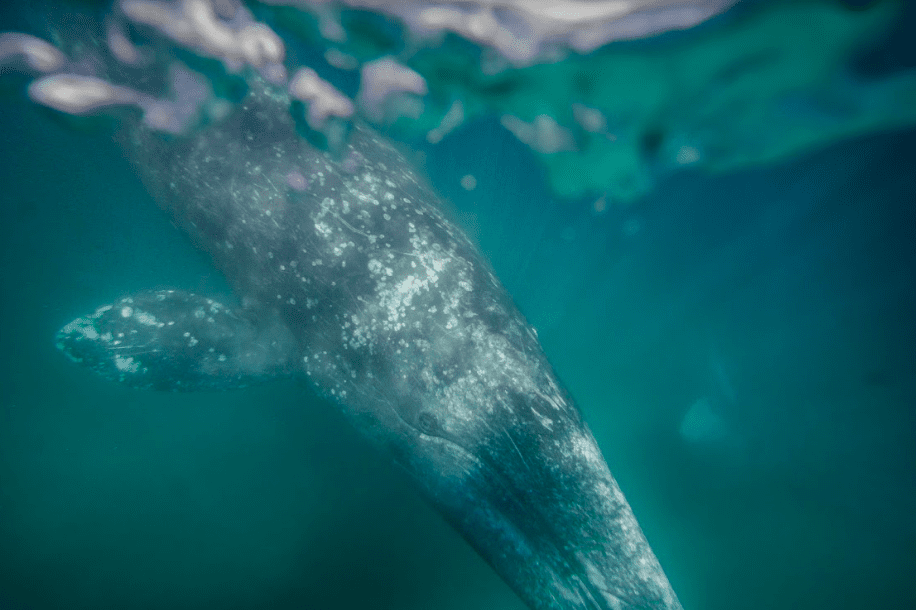
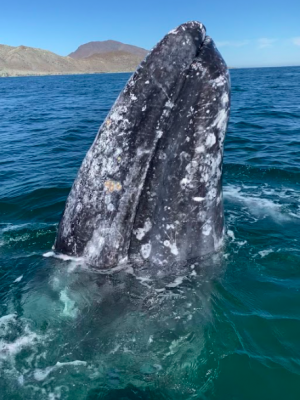
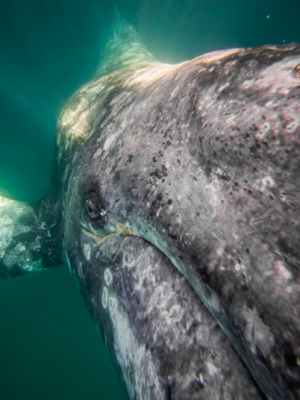
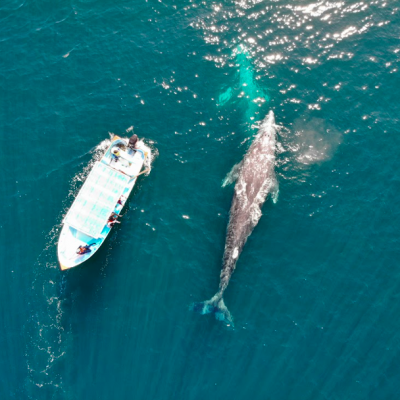
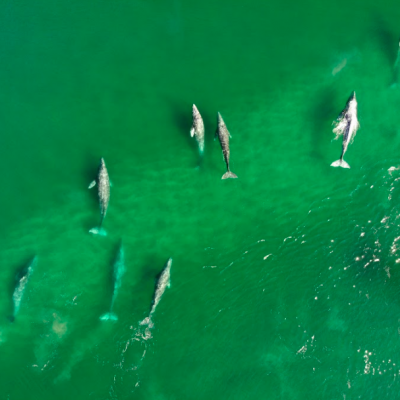
Gray whale season in Baja is officially over! It’s always a bittersweet time of year to see the whales leave: we will not see them until next year, but they’re migrating back to Alaska where they will be eating 1.2 tons of food every day to get strong and be able to come back to Baja next year. They have the longest migration of any mammal on Earth!
This season has been outstanding! We had a 100% sighting success during our daily expeditions, and we witnessed some incredible behaviors. The most unforgettable moment to me was to watch the gray whales courtship and mate! We were able to see a male following the female, showing us the pectoral fins, twirling around and even saw the 2m (6 ft) penis! The most beautiful part was when they were belly to belly mating.
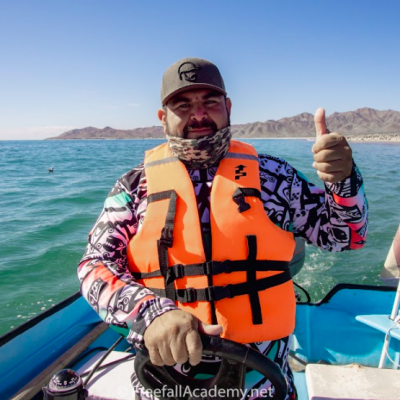
If you’ve come to our expeditions, you know that it is much more than whale watching. As a marine biologist, I love educating people who come onboard about gray whale biology, behavior, reproduction, ecology, conservation and pretty much anything I know. I take data of weather conditions and sightings every day, to be able to understand the whales in a deeper way. However, the captain, José knows the gray whales like his own family. He knows what time of month and day is best according to the moon and the tides. He runs a family business, where his fisherman dad provides the food that we eat on the tour, and his wife or sister cooks it for us. Best scallop you’ll ever try!
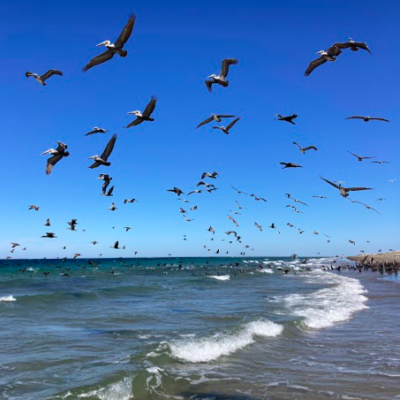
I also like to show the diverse ecosystems that Baja California Peninsula has to offer. On tours, we often visit the frigate bird colony in the mangroves, or wonder in the sand dunes next to hundreds or thousands of pelicans, cormorants and seagulls.
This ballena gris en baja sur Mexico season we were very happy to see moms with calfs, and very young whales (around 1 or 2 years old) which makes me so happy to see them healthy, meaning they have survived the most critical part of their lifetime!
We can’t be grateful enough to nature and to the Gray Whales for being so generous and friendly! They made us cry tears of joy, laugh and smile. They’re presence fills us with joy and we can’t wait to see them again next season starting January 15th 2023! If you’d like more information about our daily or multiple-day expeditions, we organize tailored expeditions to fit your desires. Thank you whales and thanks to all of you who help make this happen!
Now it’s time to say goodbye to the Gray Whales, and hello to the Mobula Rays! The largest schools in the World can be found here in Baja, and it’s one of nature’s most spectacular events. Mobulas are famous for their high jumps and acrobatics in the air. Freediving with hundreds or thousands of them is a unique experience that you can’t miss. Check out our Mobula Ray Expedition on May 15-19, only 4 spots available. Mándenos correo to book your spot 🙂
Para brindar las mejores experiencias, utilizamos tecnologías como cookies para almacenar y/o acceder a la información del dispositivo. El consentimiento para estas tecnologías nos permitirá procesar datos como el comportamiento de navegación o identificaciones únicas en este sitio. No dar su consentimiento o retirarlo puede afectar negativamente a ciertas características y funciones.
Funcional
Siempre Activo
El almacenamiento o acceso técnico sea estrictamente necesario con el fin legítimo de posibilitar la utilización de un determinado servicio expresamente solicitado por el abonado o usuario, o con la única finalidad de efectuar la transmisión de una comunicación a través de una red de comunicaciones electrónicas.
Preferencias
El almacenamiento o acceso técnico es necesario con la finalidad legítima de almacenar preferencias no solicitadas por el suscriptor o usuario.
Estadísticas
El almacenamiento o acceso técnico que se utilice exclusivamente con fines estadísticos.El almacenamiento o acceso técnico que se utilice exclusivamente con fines estadísticos anónimos. Sin una citación, el cumplimiento voluntario por parte de su proveedor de servicios de Internet o registros adicionales de un tercero, la información almacenada o recuperada solo con este propósito generalmente no se puede usar para identificarlo.
Marketing
El almacenamiento técnico o el acceso son necesarios para crear perfiles de usuario para enviar publicidad o rastrear al usuario en un sitio web o en varios sitios web con fines de marketing similares.











 Español de México
  English