What Is an Ocean Safari in Baja? When to Go, What to Expect, and Everything You Need to Know
By Valentina
What is an Ocean Safari? Think African Safari but in a boat instead of a car, and in the ocean instead of the savanna. You’re driving around looking for wild animals in one of the most biodiverse places on the planet. You don’t know exactly what you’ll find that day. The possibilities are vast, and that’s very exciting.
Every day is unique. Nothing is guaranteed, and every day is special in its own way.
Maybe you’ll see the classic sea lions and mobulas because you came during mobula ray migration. Maybe you’ll find a species you never knew even existed—a rare dolphin or a different ray species. Maybe you hit the jackpot and find a pod of sperm whales. It’s wild. It’s unpredictable. And that’s exactly the point.
Safari actually means something closer to “journey” in Swahili. The real meaning is this: you’re exploring a wild place with intention and respect.
A safari is an experience where the animal gets to stay wild, and you get to feel what it’s like to be truly present in their world.
What makes Baja special—and why this destination exists as an ocean safari hotspot—is that you’re in the Sea of Cortez, one of the most biodiverse marine regions on the planet. This is where a third of all cetacean species (whales and dolphins) live. It’s home to the world’s largest mobula ray migration. It’s where whales migrate through in winter, where resident sea lions have built their colonies, where dolphins play year-round. The megafauna variety and abundance here is extraordinary.
But here’s the thing: seeing that megafauna ethically matters. And choosing an operator who understands that difference changes everything about what you take home from the water.
This guide will walk you through what an ocean safari actually is, when to come to Baja to see specific animals, what a real day on the water looks like, and how to choose an operator who respects the ocean as much as you do.
The Honest Definition (Everything It Is, and Isn’t)
An ocean safari is a snorkel tour where we head out to sea and try to find as many animals as possible. We’ll swim with them whenever the ocean allows it = whenever regulations permit, the animal isn’t stressed, and conditions are actually safe.
Here’s what makes it different from what you probably think it is.
It’s NOT scuba diving. No tanks, no certification required, no sitting on the bottom looking at fish. You’re on the surface, in the water, moving, breathing normally. You just need to be comfortable snorkelling without seeing the bottom and be independent.
It’s NOT a freediving tour. I know, I know. People think they need to be certified to come on a safari with us. Nope. Freediving is a bonus skill, not a requirement. If you’re freediving certified and the situation allows, you may freedive with animals always following what the guide says.
It’s NOT (necessarily) whale watching. This is a big one. Yes, sometimes we see whales and we watch them. But the same day you might see whales, you could be swimming with dolphins, spotting rays, watching sea lions play. It’s not a one-species experience. It’s an everything experience.
It’s NOT a performance show. I can’t stress this enough. The animals aren’t there to pose for your Instagram shot. They’re living their lives. We are incredibly privileged to watch, admire, and absolutely not disturb them. It’s nature. And sometimes nature decides to ignore us completely—and that’s actually the goal because it means we’re not interfering.
It’s NOT mass tourism. We run maximum 8 people per trip (usually 6 though). Why? Because you can’t have a real, educational, ethical experience when you’re crammed on a boat with 15 strangers. Small groups mean you actually hear the guide, you actually learn, and you don’t crowd the animals.
It’s NOT guaranteed. If someone promises you’ll see whales, see orcas, or see anything, don’t book with them. Trust me on this. We operate in the ocean, not a aquarium. Animals show up when they show up. Some days you search for hours. Some days you see five species in two hours. Both are valid ocean days.
At our core—and honestly, our differentiator—is this: a real ocean safari must have a safe, knowledgeable guide. Someone with proper certifications and formal marine biology training. That’s not typical in this industry. Most operators hire anyone who can swim. We hire marine biologists who have training, experience and certifications to keep you safe and educated.
Why? Because you’re not here just for the picture. You’re here for an incredibly educational experience. A tour with meaning. With purpose. You’re gonna learn why you’re seeing what you’re seeing, not just gawk at it.
That’s an ocean safari for us.
What You Actually Experience (The Day, the Animals, the Reality)
A Real Day on Safari
Your day usually starts between 7 or 8am, depending on the season. You’ll meet your guide at the famous boat ramp in La Ventana.
Once the group’s complete, everyone loads onto the panga. The captain and guide introduce themselves. Then we do a quick gear check if anyone rented equipment, make sure everything fits: snorkel masks, fins, wetsuits—whatever you need.
When everyone’s ready, your guide gives the safety briefing and intro talk. This is where they explain what we’re actually doing today, what to expect, and safety rules.
Then… off we go!
Finding animals is… an art, honestly. Sometimes we spot them in minutes. Sometimes it takes hours.
Here’s how it works once we find something: first we slow down. The guide watches the animal: their behavior, their mood, whether they’re relaxed or stressed. Based on what they’re seeing and the species, they decide: can we get in the water or not?
If yes? They explain exactly how to interact with this specific animal to keep it safe and keep you safe. Every species is different. A dolphin pod needs different approach than a mobula. The guide tells you the guidelines. Then they and the captain give the signal, and boom…you’re in.
How long you stay in depends on the animal. Could be 30 seconds. Could be two hours. Depends on their behavior, the conditions, and basically… them.
While you’re on the boat between encounters, there’s drinks (no alcohol), a light lunch (usually burritos or ceviche) and snacks like fruit or bars. Sometimes we eat on the island, jump off to stretch and rest. Sometimes we eat in the boat. Depends on the rhythm of the day and the group’s energy.
We repeat this until time’s up. The whole tour is 6 hours, though sometimes it extends if we’ve got an incredible encounter happening. Sometimes it’s shorter if weather gets ugly and we need to head back early for safety.
At the end of the day, we return to the same boat ramp where we started. Your guide passes you all the videos and photos from the day and you head home with memories that are actually gonna stay with you.
The Animals You Might Encounter (By Season)
First things first: everything I’m about to tell you applies to La Ventana specifically. Baja is huge, and different spots have different seasons. For example, gray whales migrate to other parts of Baja, but they basically almost never show up here.
On any given day of the year, no matter the season, it’s common to see resident bottlenose dolphins, sea lions (they’ve got their colonies here permanently), sea turtles near reefs or in open water, and rocky reefs with corals, fish, and invertebrates.
If you come in winter (roughly November through April), the possibilities expand. Humpback whales migrate through during this entire window. Blue whales show up more commonly February through April. These are bucket-list moments, and they happen here.
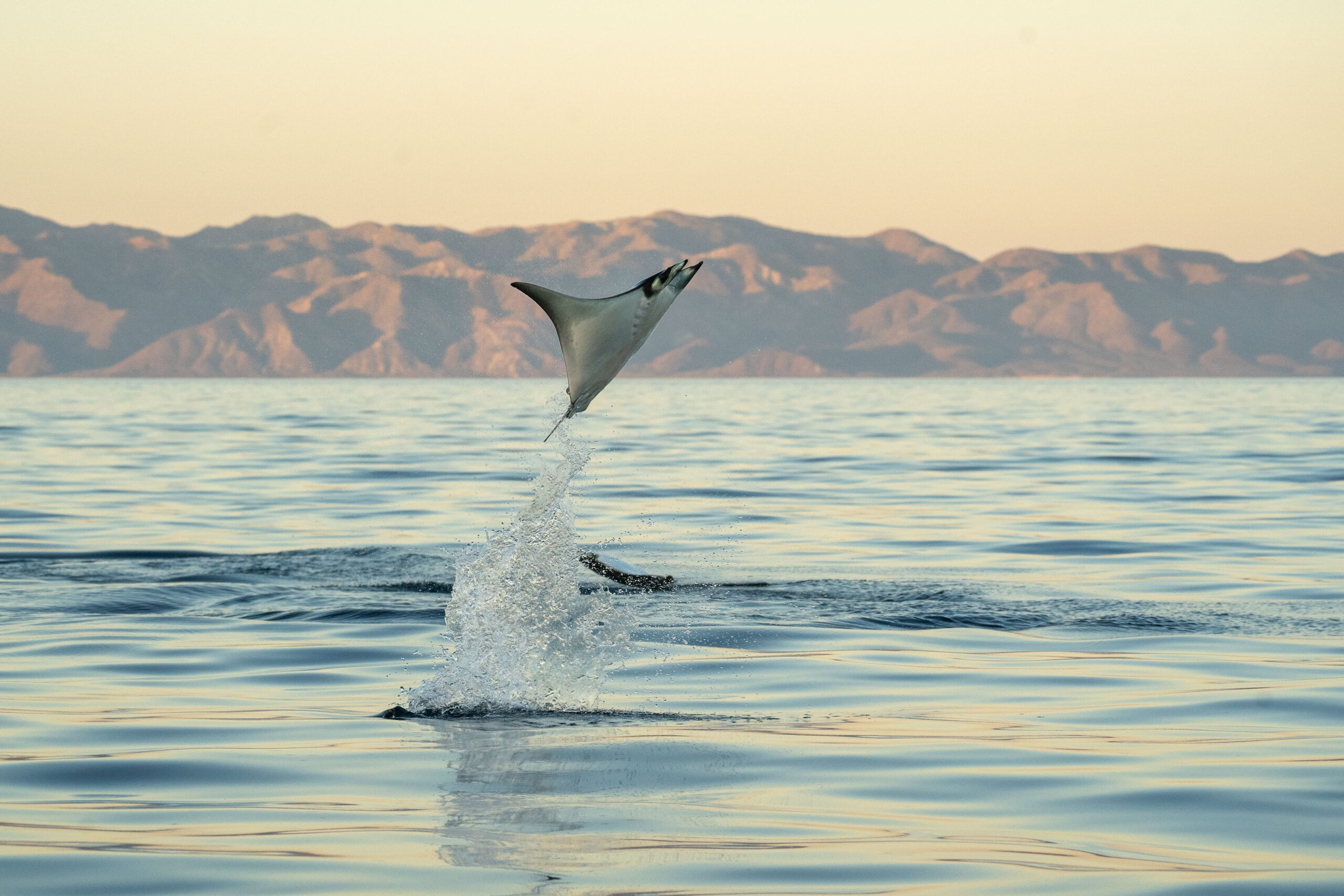
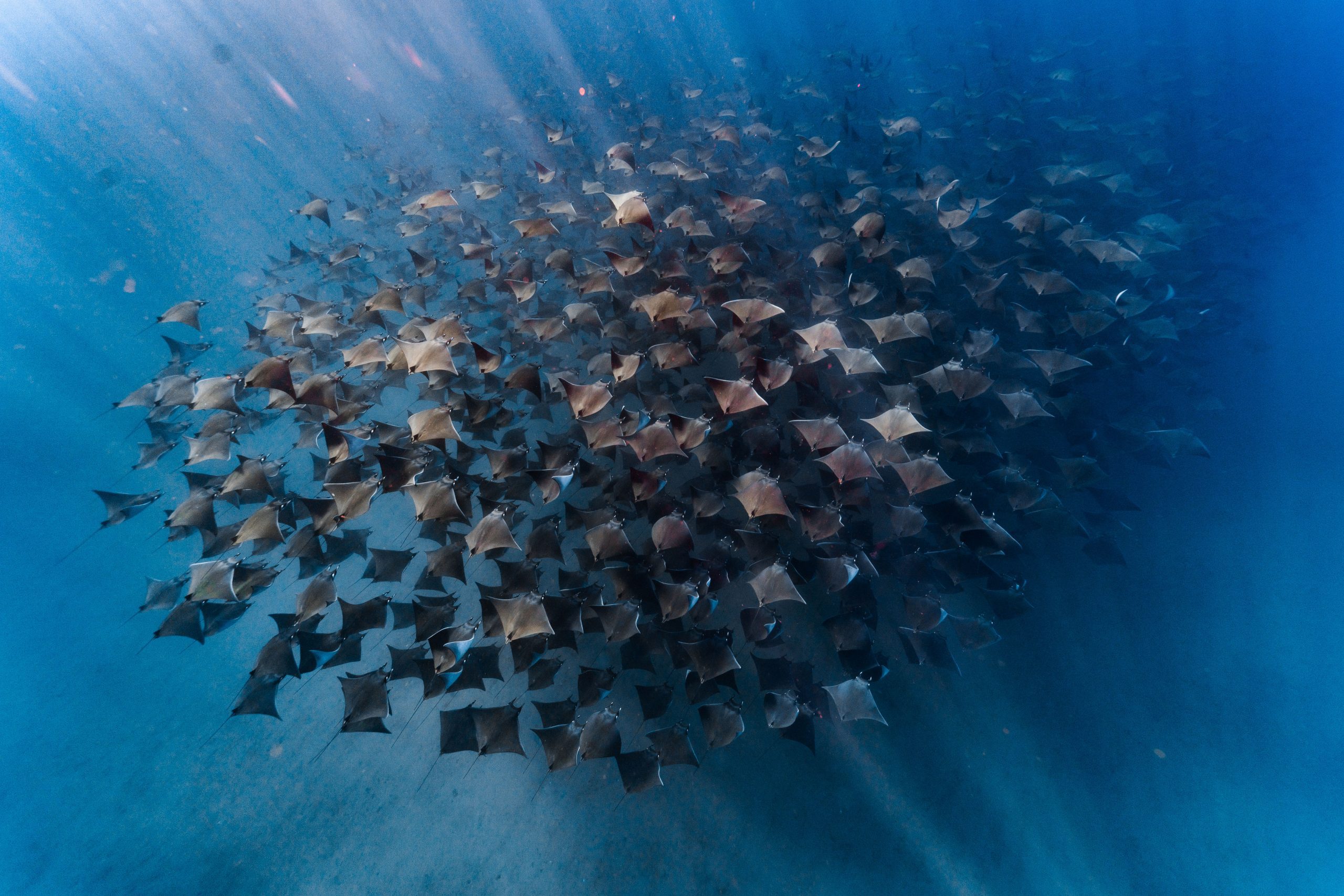
If you come in spring (roughly April through July), you’re timing the mobula ray migration. We’re talking about hundreds or thousands of them. Peaks are usually May and early June, if you want to see the huge fevers, those are your months.
Then there are the species that could show up any day of the year but won’t show up every day. This is where the ocean gets wild. We’re talking about massive cetacean diversity: Bryde’s whales, sperm whales; tons of dolphin species like common dolphins, Risso’s dolphins, pantropical spotted dolphins; larger cetaceans like orcas, pilot whales, false orcas; and the rarest ones: beaked whales, dwarf sperm whales (you probably didn’t even know they existed).
Beyond whales and dolphins, there are five species of mobulas (including giant mantas), whale sharks, silky sharks, hammerheads, makos, and more.
The ocean in La Ventana is genuinely biodiverse. But—and this is important—you don’t see everything in one day.
What Nobody Tells You
Everyone talks about orcas and mobulas and the “incredible diversity” of Baja. What nobody mentions is that you don’t see these things every day. Orcas are possible. They’re special. But they’re rare. If you come expecting to swim with orcas, you’re setting yourself up for disappointment. Mobulas are much more common, but even in peak season they’re not guaranteed.
Animals don’t always want to interact either. Sometimes they’re passing through. Sometimes they’re busy hunting or resting and they couldn’t care less about us. And that’s fine. That’s actually the point: they get to be undisturbed.
Mobulas can be pretty shy, and freediving usually spooks them. If you follow what the guide says (no freediving, no splashing) and the fever is relaxed, you can get really long swims (even hours!), but most fevers will swim away as fast as possible from a freediver.
You cannot swim with (baleen) whales in Mexico. It’s not allowed. So if you see whales, you watch from the boat. Orcas, dolphins, and pilot whales are not baleen whales, and we can swim with them following regulations.
This is why many people choose our expeditions instead of day trips. Four longer days gives you way more chances to see diverse species and have those bucket-list encounters.
Climate & Water Conditions (This Matters More Than You Think)
Baja’s weather changes dramatically by season, and so does the ocean. This is actually why we have so much marine life.
In January through March/April, the water is cold and green. Visibility can be low, maybe even 5 meters (16 feet). Water temperature can drop to 20°C (68°F) or below. Not exactly tropical. And we have very windy days, which means sometimes we have to come back early or cancel the tour.
By late April/early May, the water starts shifting. It gets bluer. It gets warmer. By late May, it’s usually blue, clear, and around 26°C (79°F).
This stays pretty consistent through September and October, when the water hits its warmest (just over 30°C / 86°F) and clearest (30+ meters / 100+ feet visibility). We are closed during September due to storm and hurricane season.
Then November rolls around and the northern winds start kicking up. The water cools again, turns greener. And the cycle repeats.
Every year varies a bit, but that’s the rhythm. And every season brings different animals because the ocean conditions change everything about what thrives here.
Ethical Encounters Are a Must
Here’s the thing: ethical encounters aren’t optional for us. They’re essential. And I’m gonna tell you why—because an ethical encounter gives you a quality experience.
People tend to see our behavior guidelines as limitations. But after almost a decade of interacting with these animals, we’ve learned a lot. We understand their behavior. We know what bothers them. When we give you rules for how to swim with an animal, it’s because we’ve learned the hard way what works and what doesn’t.
When you follow those guidelines, three things can happen:
1. They keep doing what they’re doing. This is great. It means we didn’t stress them, and you get to see a wild animal being itself. How awesome is that?
2. They come closer. They get curious. They come check you out. Lucky you.
3. They leave. Sometimes it happens even to the most experienced. If that happens, we don’t keep pressuring. We respect it and move on.
“The best encounters are ethical encounters.”
Let me give you an example. Sometimes we get a rebel who doesn’t follow the rules. Let’s call this rebel person Jack.
Jack is a freediver and he saw a video on Instagram of a person freediving with mobula rays, so he wants to replicate this. The guide tells the group that freediving is not allowed because these mobulas are going a bit fast and if we dive we will spook them. Everyone gets ready, jumps in, and watches the mesmerizing mobulas glide by. Two minutes later, Jack decides he’ll just do a shallow dive. He thinks to himself: it’s okay, it’s very shallow, they won’t mind. Jack proceeds to freedive 3 meters deep, spooks the whole fever of mobulas away, and the whole group is mad at him because what could’ve been a 20-minute swim ended up short at only 2 minutes.
Please don’t be like Jack.
Mobulas are actually not regulated by law—we make the rules to prioritize the best possible encounter for everyone. Trust us.
Orcas in Baja: The Reality Behind Social Media
I wanted to create a special section for this one because we get this request more than anything. “I want the orca tour in La Ventana.” And every time I hear that, it gives me the creeps.
I’m not gonna apologize for that. There’s a lot of emotions with this topic. In fact, I wrote an entire blog specifically about orca encounters in La Ventana because this question deserves real answers, not Instagram fantasy. Read the full blog here.
But I get it: orcas are incredibly beautiful and powerful animals. Seeing one is everyone’s dream. So I’m gonna tell you how to maximize your chances of seeing them. No bullshit.
There Is No Orca Season (And Anyone Who Says There Is, Is Bullshitting You)
Let me be clear. Orcas don’t have a season. They’re apex predators that can move more than 100 kilometers in a single day. There are very few of them (they’re apex predators). They’re completely unpredictable. They can show up any day of the year and what happened last year may not predict what will happen next year.
That said, we do see them more in certain months. Historically, that’s been April through August. But here’s the thing: I genuinely believe this has less to do with orca movement patterns and more to do with the fact that there are way more boats out there looking for them during those months, and they’re also windy months so the search can be limited. More boats = more search = more chances of finding them.
The Tricky Part
Even when orcas show up, the quality of your encounter depends on different factors. If you’re among the first boat(s) to find them you’ll have a real experience. If you find them later… it might be a different story.
May and June are peak season for tourists, which means peak season for boats. More boats = more chaos. So if you actually want a decent chance at seeing orcas and having a quality experience, here’s my advice:
Come in July.
July is golden for orca sightings. Mobula season is almost over (so we don’t see them as often), which means fewer tourists. The water is warm and blue. And the orca sightings have been pretty consistent over the past few years. But (and I need you to hear this) even in our best orca month, the chance is still low. And it’s still not guaranteed.
The Real Talk
Don’t come here expecting orcas. Seriously. Come for everything an ocean safari has to offer you: the dolphins, the mobulas, the whales, the sea lions, the diversity, the education, the raw ocean experience. Come for that.
If you see orcas? That’s the cherry on top.
Is an Ocean Safari Right for You? (Simple Decision Framework)
An ocean safari isn’t for everyone. And that’s okay. Let me be honest about who thrives on these trips and who probably shouldn’t book.
You’ll Thrive If…
You love marine life. You’re curious about why animals behave the way they do, and you actually want to learn.
You’re okay with uncertainty. Every day is different. Sometimes you see five species in two hours. Sometimes you search for hours until you find something. You understand that both are valid ocean days, and you trust that no matter what we find, it’s gonna be a great day.
You understand that nature is nature. You can’t control it. The ocean doesn’t perform on schedule. Animals don’t care about your bucket list. And you’re genuinely okay with that.
You love being in the water and in nature. You’re a good snorkeler. You don’t panic if you can’t see the bottom. You’re comfortable being in open water.
You can handle being on a boat for several hours without constant action. There are moments of searching, moments of waiting, and moments of intensity. You’re patient enough for all of it.
You come for the experience, not the photo. (Though you’ll get amazing photos. That’s just a bonus.)
This Might NOT Be for You If…
You don’t feel confident in the water or tend to panic. This is a dealbreaker. We need you to be a snorkeler who’s comfortable in open ocean conditions. If you’re not there yet, get some swim lessons first.
You need guaranteed sightings. That’s not how this works. If you come on a safari expecting to see specific animals, you may end up disappointed. We can’t promise that.
You have back problems or are pregnant. Talk to your doctor first.
You’re looking for luxury. This is adventure, not a cruise ship.
You only care about the photo. We’re here to witness nature, not to stage it for Instagram.
How to Choose an Ethical Ocean Safari Operator (Red Flags & Green Flags)
Here’s the uncomfortable truth: a lot of operators out there call themselves ethical. Most aren’t. They just know the language.
So before you book, here’s how to actually tell the difference between someone who walks the walk and someone who just talks the talk.
Green Flags (What to Look For)
✅ Legally registered with trained guides and proper certifications. You’d think this should be standard, right? It’s not. In La Ventana especially. So ask: Are they local? How long have they been operating? Are they actually trained? A lot of operators running tours right now have zero training for your safety and zero knowledge about animal welfare. Don’t assume. Ask.
✅ Small groups (maximum 6-8 people). There are operators who will try to maximize profit by cramming 10+ people onto a small boat. Don’t let them. For your safety and for the quality of your encounter, small groups are non-negotiable.
✅ Transparency. They won’t guarantee sightings. They clearly spell out what’s included and what’s not. They’re upfront about group size, timing, conditions, everything. No surprises.
✅ Gives back to conservation. Do they partner with local organizations? Do they donate a percentage? Do they involve guests in citizen science? Conservation commitment matters. It’s not just a marketing angle—it should be built into how they operate.
✅ Educational focus. The guide explains why you’re seeing what you’re seeing, not just “there’s a whale, take a photo.” We pride ourselves in having 100% marine biologist guides. You’ll leave not just with a photo, but with an incredible understanding of the species and the ecosystem.
✅ Reviews mention guide quality AND animal welfare. Read past reviews carefully. Do people rave about the guide’s knowledge? Do they mention that animals were treated respectfully? Both matter equally.
✅ Clear behavior guidelines for animals. And here’s the important part: they have the guts to take action if someone doesn’t follow the rules. (They need to be able to handle a Jack.)
Red Flags (What to Avoid)
❌ “Guaranteed sightings” promises. Run. Seriously. Anyone promising you’ll see specific animals doesn’t understand the ocean.
❌ No guide credentials or wildlife education background. If they can’t send you a photo of their NOM09 guide certification or Orca Permit, or if they can’t tell you about animals beyond “cool, right?”—pass.
❌ They’re just influencers. Look, I’m not against influencers. We actually work with some incredible ones (photographers, trip leaders). But there are some unexperienced ones who want to capitalize on their fame. Their viral mobula video from that one visit to La Ventana gets a million comments: “Take me there!” So they hire a random captain and play “guide” with zero knowledge about local regulations and animal behavior. If you’re booking with a foreign company, they should be partnering with a local operator who has a trained local captain/guide team. If they’re not, that’s a problem.
❌ The tour is suspiciously cheap. Cheap usually means one (or all) of these: they’re not a legal company, so they don’t have proper first aid training or safety credentials; they’re hiring boats that aren’t properly maintained or safe; they have fuel limits that prevent real searching (so they stick to close spots); or their guides work for tips, which creates pressure on animals to deliver encounters. None of that is good.
❌ No website or reviews. If you can’t find them online or read what past clients said, there’s a reason.
❌ Their social media is 90% orca encounters. Sorry, but they’re selling you something that isn’t real. That’s false advertising.
❌ No clear cancellation policy. Bad weather happens. Emergencies happen. A legit operator has a clear policy for cancellations and rescheduling. If they’re vague about it, move on.
Ready to Join Us?
So here’s the bottom line: an ocean safari is an adventure where you’ll get to experience the ocean on its terms, with people who actually care about what they’re doing.
If you’ve made it this far and think yeah, that’s exactly what I want—then you’re our person.
If this resonates with you, come explore our ocean safaris. And if you want to take it even further, check out our mobula expeditions for more time in the water and better chances at those rare encounters.
Every year, when mobula season wraps up, I sit down and try to put into words what just happened. And every year, I realize words aren’t quite enough. But I’ll try anyway, because what we witnessed this season in La Ventana deserves to be told.
This year, people joined us from every single continent on Earth: all brought together by the ocean. That alone says something pretty special about this place.
First things first — the species list
One of the things that makes La Ventana so extraordinary is the sheer variety of life. Scientists call it a biodiversity hotspot, and after this season, I understand why more than ever.
Not every animal shows up every day — or even every week. But the fact that all of this lives in one place? That’s La Ventana.
What made this season different
1. Warmer water: a mixed blessing
The water was warmer than usual this year, which brought something beautiful: incredible visibility early in the season. Crystal clear, blue, gorgeous. But here’s the thing about mobulas: they follow the plankton. And plankton blooms in cooler, murkier water. So while the visibility was stunning, the mobulas were harder to find than in a typical season. Fewer numbers, and often deeper. We still had solid encounters.
But if you came expecting massive surface aggregations, this year taught us an important lesson: the ocean always has its own plans.
2. The most Mobula mobular we’ve ever seen
Mobula mobular — the larger, rarer cousin of the pygmy devil ray — showed up in numbers we’ve never seen before. If you’ve ever watched one glide past you underwater, you know: there’s something almost otherworldly about them. Slow and elegant.
My favorite encounter of the entire season happened on a day when we were far offshore, just our small group, all by ourselves. We dropped into the water and found a fever of 12 Mobula mobular in the middle of courtship. The males were chasing the female in slow, graceful circles, spiraling upward, then deeper, then back again. They circled all around us. They didn’t leave. We didn’t leave. We stayed in the water with them for over an hour.
(My action camera had no battery that day. Of course. 😂 Thankfully a guest had their camera rolling so I have proof it happened, I promise.)
“Encounters with this species usually last seconds to minutes. An hour is something I’ll never forget.”
3. The squid arrival — and everything it brought with it
By late June, our captains started noticing something: fishermen were pulling up squid. More than usual. A lot more. Anyone who knows the ocean knows what squid means: the predators follow. Within days, pilot whales arrived. And they stayed.
Weeks into July, we were seeing them every single week! Pods of 50 to 300 individuals, cruising slowly at the surface like they owned the place (they do). Their rounded heads bobbing, calves swimming close to curious snorkelers completely relaxed.
Pilot whales are my favorites. I’ll say it plainly. There’s something about their calm, social energy that feels like being welcomed. I could watch them for hours.
4. Sperm whales: the giants arrived
Squid also attracted sperm whales, the largest toothed whale on Earth. May brought mostly solitary individuals, just one or two at a time. But by June they were coming in groups, and by late June and early July we had two days that I still can’t fully believe happened: pods of more than 50 to 100 sperm whales!
In Mexico we can’t swim with them, so we watched from the surface — these massive, prehistoric-looking animals logging at the surface, breathing, socializing. It’s the kind of thing that makes you feel very small in the best possible way.
5. Cormorants (yes, really)
Okay, I know. Some people hear “cormorants” and think: boring. Wrong. While most enjoy the sea lions near the colony, I get completely absorbed watching the cormorants hunt on the reef. Birds that dive are basically feathered freedivers. I kept trying to follow them underwater and match their breath-hold. Sometimes I managed it. Sometimes they absolutely smoked me. Fast, funny, underrated. Come for the whales, stay for the cormorants.
6. Porcupine fish bay
Every season, without fail, someone visits the porcupine fish bay and completely loses their mind with joy. These round, spiky, wide-eyed little fish have absolutely no business being that cute, and yet here we are. If you come to La Ventana and skip the porcupine fish bay, did you really go to La Ventana?
7. Orcas and the July pattern
Orcas are the animal people ask about most. They’re elusive, unpredictable, and when you find them, nothing else compares. This season we saw them in May and June, but not in the numbers we hoped for. And then July happened.
Orcas. Every single week. Sometimes multiple days in a row. Cruising, hunting, socializing… in some of the bluest water ever. The best orca encounters of the entire season happened in July, in conditions that felt almost unfair in their beauty.
“Here’s what’s interesting: last year was the same. July was exceptional. Is this a pattern?”
Maybe. Orcas are notoriously hard to predict, and two or three good years in July doesn’t mean next year will be the same. But it’s an observation worth paying attention to. We’ll be watching closely.
A note before you book
If you’re thinking about joining us next season, here’s the most important thing I can tell you: Come with an open heart and an open mind. La Ventana is not a zoo. We can’t promise you’ll see every animal on that list. Some days the ocean gives you everything. Some days it gives you something quieter, smaller, and just as beautiful if you’re paying attention.
What I can promise is this: every single day on the water is worth it. You are incredibly lucky to be in the presence of wild animals — and that feeling never gets old, no matter how many seasons I’ve done this.
Thank you — really
None of this happens without the people who show up. Every single guest who joined us this season, whether for one day on the water or a full expedition, brought their own curiosity, their own energy, and their own love for the ocean. And that makes every encounter richer.
Thank you for trusting us with your time, your adventure, and your love for the sea. We don’t take that lightly. See you next season.
Ready to join us?
If you’re coming for a day and want to experience the magic of La Ventana, the Ocean Safari is your starting point. If you want to maximize your time in the water and have more variety of interactions, the Mobula Expedition is for you.
In this post you will find all the information you need about the Freediving Beginner Course.
Freefall Academy AIDA 1 Freediving Course Approach
The AIDA 1 Freediving Course can be completed in one or two days. The option 1 is done in 1 day, where we cover the theory and static apnea. The option 2 is done in 2 days, where we cover theory, static apnea and depth.
One of the things that sets us apart from other schools is our emphasis on optimal conditions, especially for beginner freedivers. That’s why we exclusively offer Freediving Courses from May through November, as these months provide the best weather and conditions in La Paz and its surrounding areas. During this time, the wind is typically calm, the water is warmer, and visibility is significantly improved.
In addition to prioritizing favorable conditions, we differentiate ourselves by offering the depth session boat-based . While many schools conduct their courses from the shore, we believe that going out on the boat enhances the experience and allows us to find the best diving spots.
We strive to create an enriching and enjoyable learning environment, optimizing your freediving experience with us.
Itinerario
Día 1
9am-12pm – We’ll meet at the classroom, fill out paperwork and start the theory lesson.
12:00-12:30 – Breathing session
12:30-2pm – Static Apnea Session
Día 2
8:30am- Lunch stretching session
9am – Depth Session in La Paz
2pm – Finish
The location of the depth sessions may change according to the weather and the logistics.
The exact time and schedule may change due to logistics.
Precio
Option 1 – $4,200 pesos per person
Option 2 – $6,300 pesos per person
Includes: theory manuals, pool fees, AIDA certification, boat fees, freediving retal gear.
10% de descuento para mexicanos al presentar INE
Our Recommendations
We recommend that if you have your own gear to bring it in order to asure that you have a perfect fit.
We hope to see you underwater! If you have any doubts please contact us at apneafreefallacademy@gmail.com and we will be happy to assist you.
A little bit about the habitat of Espiritu Santo Island
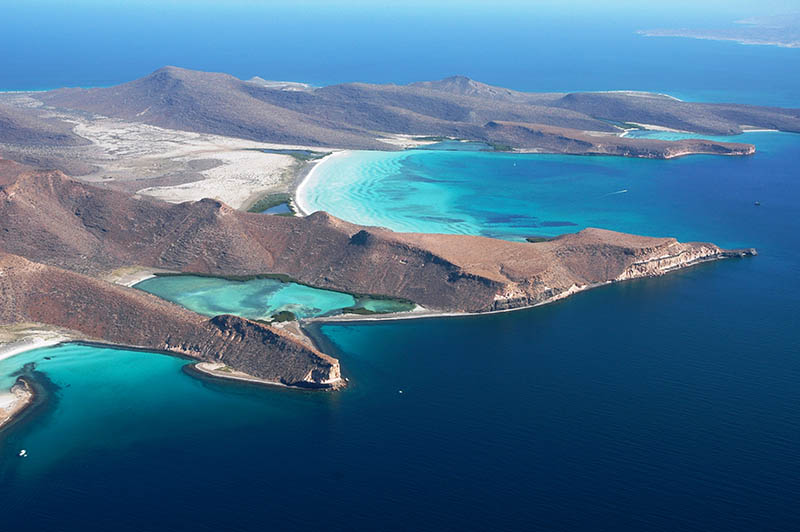
Espiritu Santo Island is without a doubt one of the most beautiful places on Earth. It has scenic mountain ranges reaching a maximum altitude of 1200m, extraordinary cliffs made from volcanic stone and pristine white sand beaches. The amazing water colors, ranging from green turquoise, to deep and transparent blue gives a feeling of tranquility to the soul.
It is a perfect place to experience snorkeling, freediving, scuba diving, hiking, kayaking, camping, stand-up paddle boarding and sailing.
Espiritu Santo Island is apart of the Archipelago of Espiritu Santo, which became a National Park in 2007. Espiritu Santo Island is located in the Gulf of California, North of La Paz, Baja California Sur. Furthermore, it became an UNESCO World Natural Heritage Site in 2005 along with 243 other islands, islets and coastal areas in the Gulf of California. These areas contain 39% of the world’s total number of species of marine mammals and a third of the world’s marine cetacean species.
In addition, the island contains many habitats, such as mangroves, sandy bottoms, rocky reefs, estuaries, beautiful isolated beaches and bays. It’s perfect for all kinds of people, from little kids who want to start exploring the underwater world, to experienced divers that would like to see why the Sea of Cortez is called the “aquarium of the world”.
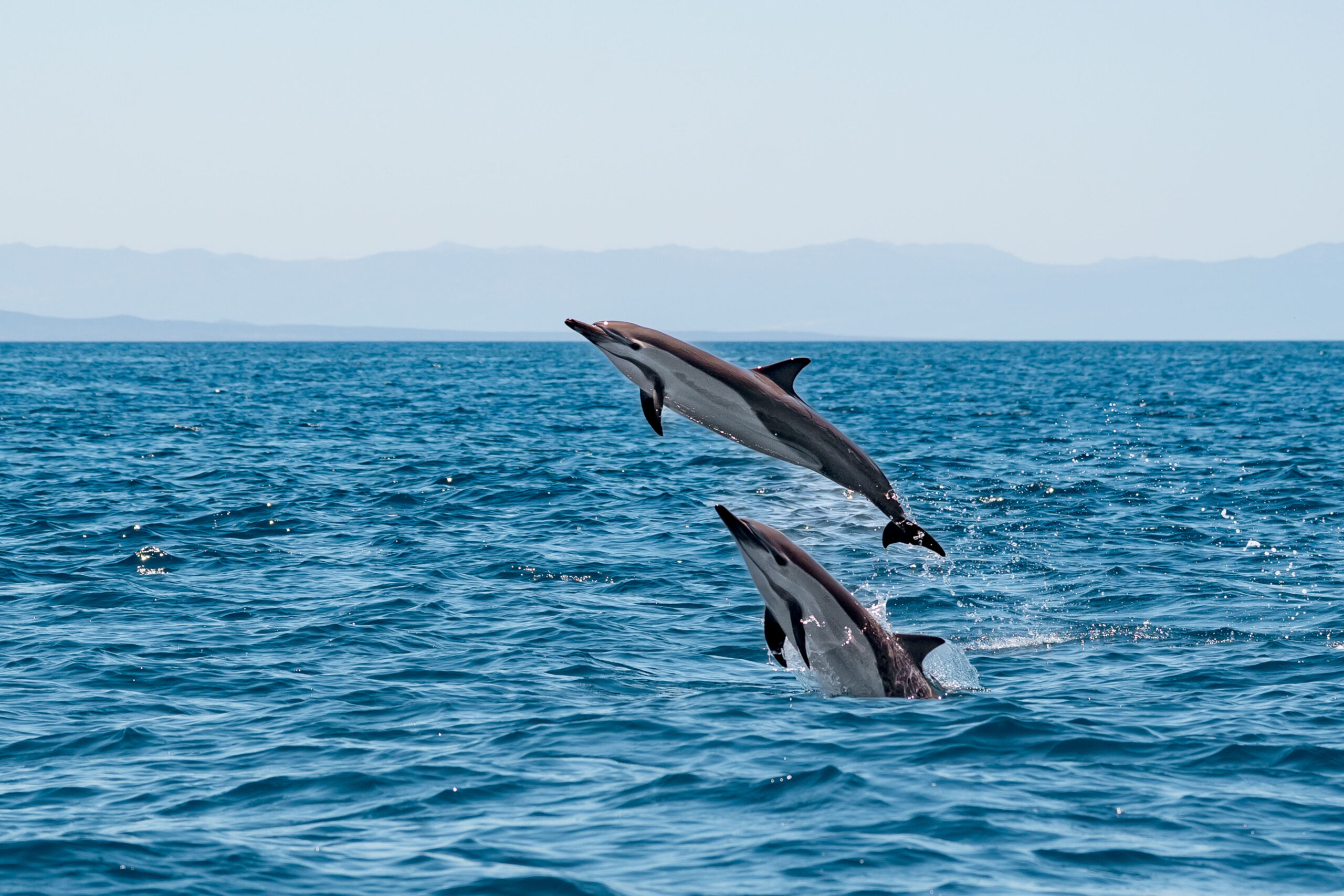
A group of common dolphins in BCS
The Flora and Fauna
Espiritu Santo Island has 38 species of plants and animals that are unique (or endemic) in the whole World. The juancito, the babisuri, the black hare and the sandy snake are examples. Furthermore, there are 200 species of plants and more than 70 species of animals (not counting the ones underwater).
As you submerge before the surface you can find at least 15 species of marine mammals, including dolphins, whales and the famous colony of sea lions. In addition, you can find more than 50 species of aquatic birds gracing the waters, airways and cliffs.
Sea Lions of Espiritu Santo Island
The Sea Lions that live in the islets called “Los Islotes” or “La Lobera” are a species scientifically called Zalophus californianus.
A big group of Sea Lions at “La Lobera”
As well as other marine mammals, sea lions are very curious. This attitude has to do with exploration and playing. The young ones are especially playful; they might even play with your fins or other “weird” equipment. Think about a cute little puppy, then put it underwater, let it evolve and you will have a beautiful playful sea lion.
These beautiful creatures are on the island all year around. Los Islotes contain about 500 sea lions every year. The reproduction season initiates with the birth of the pups at the end of May. Continuing with the breast-feeding and mating time around June, July and August.
Don’t miss the opportunity to swim or dive with these beautiful animals in Espiritu Santo Island. Check out our tours here.
Para brindar las mejores experiencias, utilizamos tecnologías como cookies para almacenar y/o acceder a la información del dispositivo. El consentimiento para estas tecnologías nos permitirá procesar datos como el comportamiento de navegación o identificaciones únicas en este sitio. No dar su consentimiento o retirarlo puede afectar negativamente a ciertas características y funciones.
Funcional
Siempre Activo
El almacenamiento o acceso técnico sea estrictamente necesario con el fin legítimo de posibilitar la utilización de un determinado servicio expresamente solicitado por el abonado o usuario, o con la única finalidad de efectuar la transmisión de una comunicación a través de una red de comunicaciones electrónicas.
Preferencias
El almacenamiento o acceso técnico es necesario con la finalidad legítima de almacenar preferencias no solicitadas por el suscriptor o usuario.
Estadísticas
El almacenamiento o acceso técnico que se utilice exclusivamente con fines estadísticos.El almacenamiento o acceso técnico que se utilice exclusivamente con fines estadísticos anónimos. Sin una citación, el cumplimiento voluntario por parte de su proveedor de servicios de Internet o registros adicionales de un tercero, la información almacenada o recuperada solo con este propósito generalmente no se puede usar para identificarlo.
Marketing
El almacenamiento técnico o el acceso son necesarios para crear perfiles de usuario para enviar publicidad o rastrear al usuario en un sitio web o en varios sitios web con fines de marketing similares.







 Español de México
 English