Posted on
What Is an Ocean Safari in Baja? When to Go, What to Expect, and Everything You Need to Know
BY: Valentina / 0 COMMENTS / CATEGORY: Baja, Ethical Tourism, Ocean Expeditions, Snorkeling, wildlife
What Is an Ocean Safari in Baja? When to Go, What to Expect, and Everything You Need to Know
By Valentina
What is an Ocean Safari? Think African Safari but in a boat instead of a car, and in the ocean instead of the savanna. You’re driving around looking for wild animals in one of the most biodiverse places on the planet. You don’t know exactly what you’ll find that day. The possibilities are vast, and that’s very exciting.
Every day is unique. Nothing is guaranteed, and every day is special in its own way.
Maybe you’ll see the classic sea lions and mobulas because you came during mobula ray migration. Maybe you’ll find a species you never knew even existed—a rare dolphin or a different ray species. Maybe you hit the jackpot and find a pod of sperm whales. It’s wild. It’s unpredictable. And that’s exactly the point.
Safari actually means something closer to “journey” in Swahili. The real meaning is this: you’re exploring a wild place with intention and respect.
A safari is an experience where the animal gets to stay wild, and you get to feel what it’s like to be truly present in their world.
What makes Baja special—and why this destination exists as an ocean safari hotspot—is that you’re in the Sea of Cortez, one of the most biodiverse marine regions on the planet. This is where a third of all cetacean species (whales and dolphins) live. It’s home to the world’s largest mobula ray migration. It’s where whales migrate through in winter, where resident sea lions have built their colonies, where dolphins play year-round. The megafauna variety and abundance here is extraordinary.
But here’s the thing: seeing that megafauna ethically matters. And choosing an operator who understands that difference changes everything about what you take home from the water.
This guide will walk you through what an ocean safari actually is, when to come to Baja to see specific animals, what a real day on the water looks like, and how to choose an operator who respects the ocean as much as you do.

The Honest Definition (Everything It Is, and Isn’t)
An ocean safari is a snorkel tour where we head out to sea and try to find as many animals as possible. We’ll swim with them whenever the ocean allows it = whenever regulations permit, the animal isn’t stressed, and conditions are actually safe.
Here’s what makes it different from what you probably think it is.
It’s NOT scuba diving. No tanks, no certification required, no sitting on the bottom looking at fish. You’re on the surface, in the water, moving, breathing normally. You just need to be comfortable snorkelling without seeing the bottom and be independent.
It’s NOT a freediving tour. I know, I know. People think they need to be certified to come on a safari with us. Nope. Freediving is a bonus skill, not a requirement. If you’re freediving certified and the situation allows, you may freedive with animals always following what the guide says.
It’s NOT (necessarily) whale watching. This is a big one. Yes, sometimes we see whales and we watch them. But the same day you might see whales, you could be swimming with dolphins, spotting rays, watching sea lions play. It’s not a one-species experience. It’s an everything experience.
It’s NOT a performance show. I can’t stress this enough. The animals aren’t there to pose for your Instagram shot. They’re living their lives. We are incredibly privileged to watch, admire, and absolutely not disturb them. It’s nature. And sometimes nature decides to ignore us completely—and that’s actually the goal because it means we’re not interfering.
It’s NOT mass tourism. We run maximum 8 people per trip (usually 6 though). Why? Because you can’t have a real, educational, ethical experience when you’re crammed on a boat with 15 strangers. Small groups mean you actually hear the guide, you actually learn, and you don’t crowd the animals.
It’s NOT guaranteed. If someone promises you’ll see whales, see orcas, or see anything, don’t book with them. Trust me on this. We operate in the ocean, not a aquarium. Animals show up when they show up. Some days you search for hours. Some days you see five species in two hours. Both are valid ocean days.
At our core—and honestly, our differentiator—is this: a real ocean safari must have a safe, knowledgeable guide. Someone with proper certifications and formal marine biology training. That’s not typical in this industry. Most operators hire anyone who can swim. We hire marine biologists who have training, experience and certifications to keep you safe and educated.
Why? Because you’re not here just for the picture. You’re here for an incredibly educational experience. A tour with meaning. With purpose. You’re gonna learn why you’re seeing what you’re seeing, not just gawk at it.
That’s an ocean safari for us.
What You Actually Experience (The Day, the Animals, the Reality)
A Real Day on Safari
Your day usually starts between 7 or 8am, depending on the season. You’ll meet your guide at the famous boat ramp in La Ventana.
Once the group’s complete, everyone loads onto the panga. The captain and guide introduce themselves. Then we do a quick gear check if anyone rented equipment, make sure everything fits: snorkel masks, fins, wetsuits—whatever you need.
When everyone’s ready, your guide gives the safety briefing and intro talk. This is where they explain what we’re actually doing today, what to expect, and safety rules.
Then… off we go!
Finding animals is… an art, honestly. Sometimes we spot them in minutes. Sometimes it takes hours.
Here’s how it works once we find something: first we slow down. The guide watches the animal: their behavior, their mood, whether they’re relaxed or stressed. Based on what they’re seeing and the species, they decide: can we get in the water or not?
If yes? They explain exactly how to interact with this specific animal to keep it safe and keep you safe. Every species is different. A dolphin pod needs different approach than a mobula. The guide tells you the guidelines. Then they and the captain give the signal, and boom…you’re in.
How long you stay in depends on the animal. Could be 30 seconds. Could be two hours. Depends on their behavior, the conditions, and basically… them.
While you’re on the boat between encounters, there’s drinks (no alcohol), a light lunch (usually burritos or ceviche) and snacks like fruit or bars. Sometimes we eat on the island, jump off to stretch and rest. Sometimes we eat in the boat. Depends on the rhythm of the day and the group’s energy.
We repeat this until time’s up. The whole tour is 6 hours, though sometimes it extends if we’ve got an incredible encounter happening. Sometimes it’s shorter if weather gets ugly and we need to head back early for safety.
At the end of the day, we return to the same boat ramp where we started. Your guide passes you all the videos and photos from the day and you head home with memories that are actually gonna stay with you.
The Animals You Might Encounter (By Season)
First things first: everything I’m about to tell you applies to La Ventana specifically. Baja is huge, and different spots have different seasons. For example, gray whales migrate to other parts of Baja, but they basically almost never show up here.
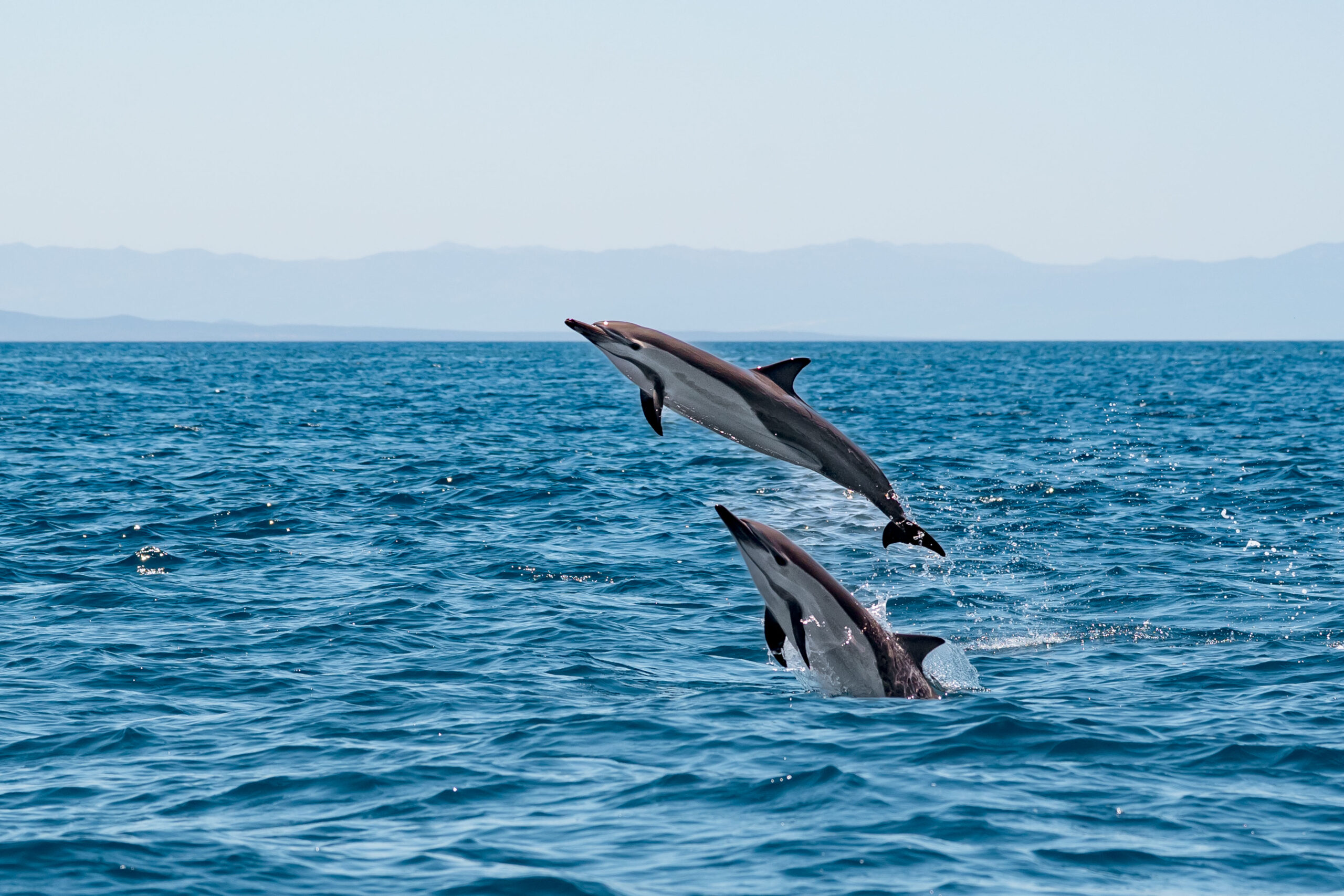
On any given day of the year, no matter the season, it’s common to see resident bottlenose dolphins, sea lions (they’ve got their colonies here permanently), sea turtles near reefs or in open water, and rocky reefs with corals, fish, and invertebrates.
If you come in winter (roughly November through April), the possibilities expand. Humpback whales migrate through during this entire window. Blue whales show up more commonly February through April. These are bucket-list moments, and they happen here.
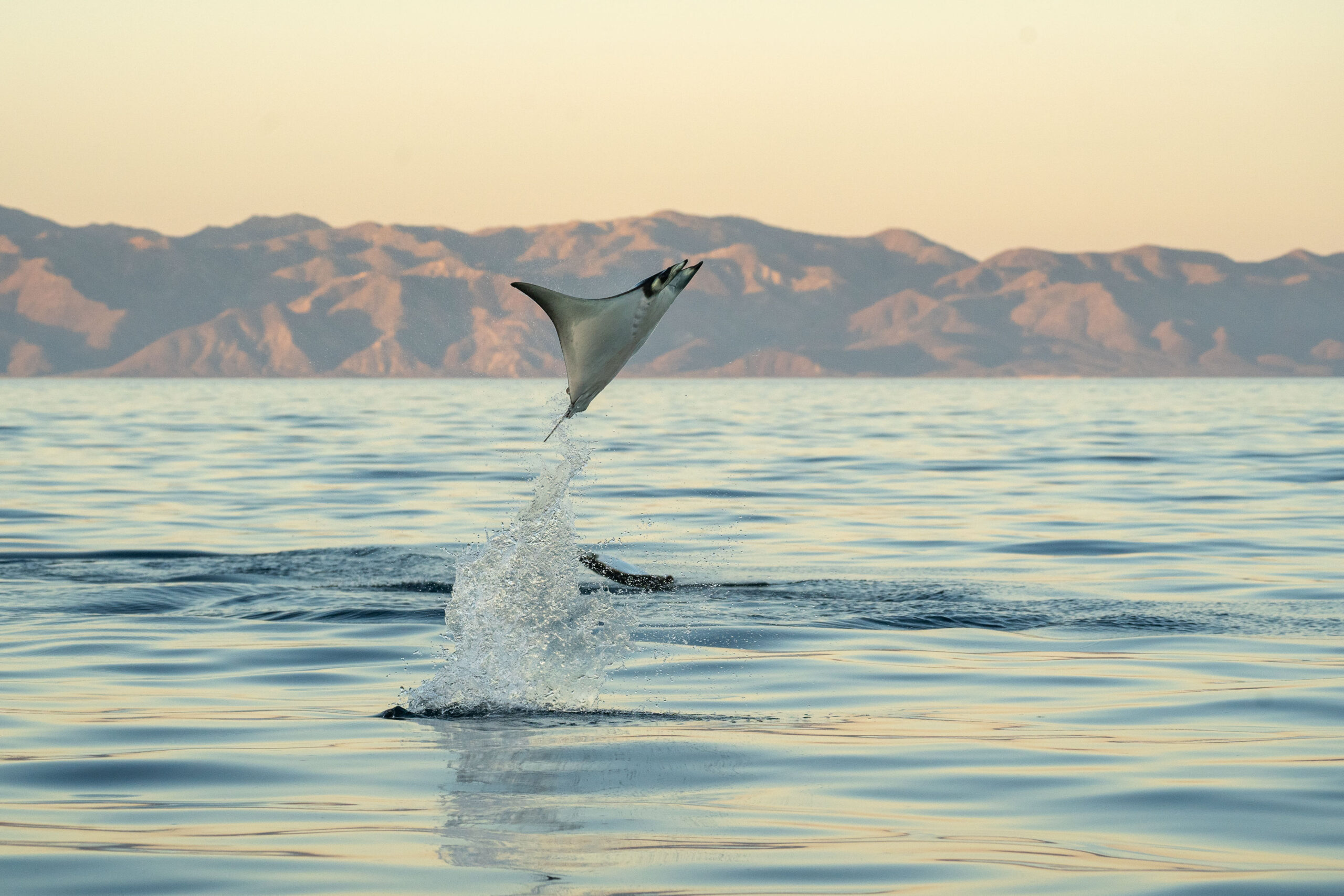
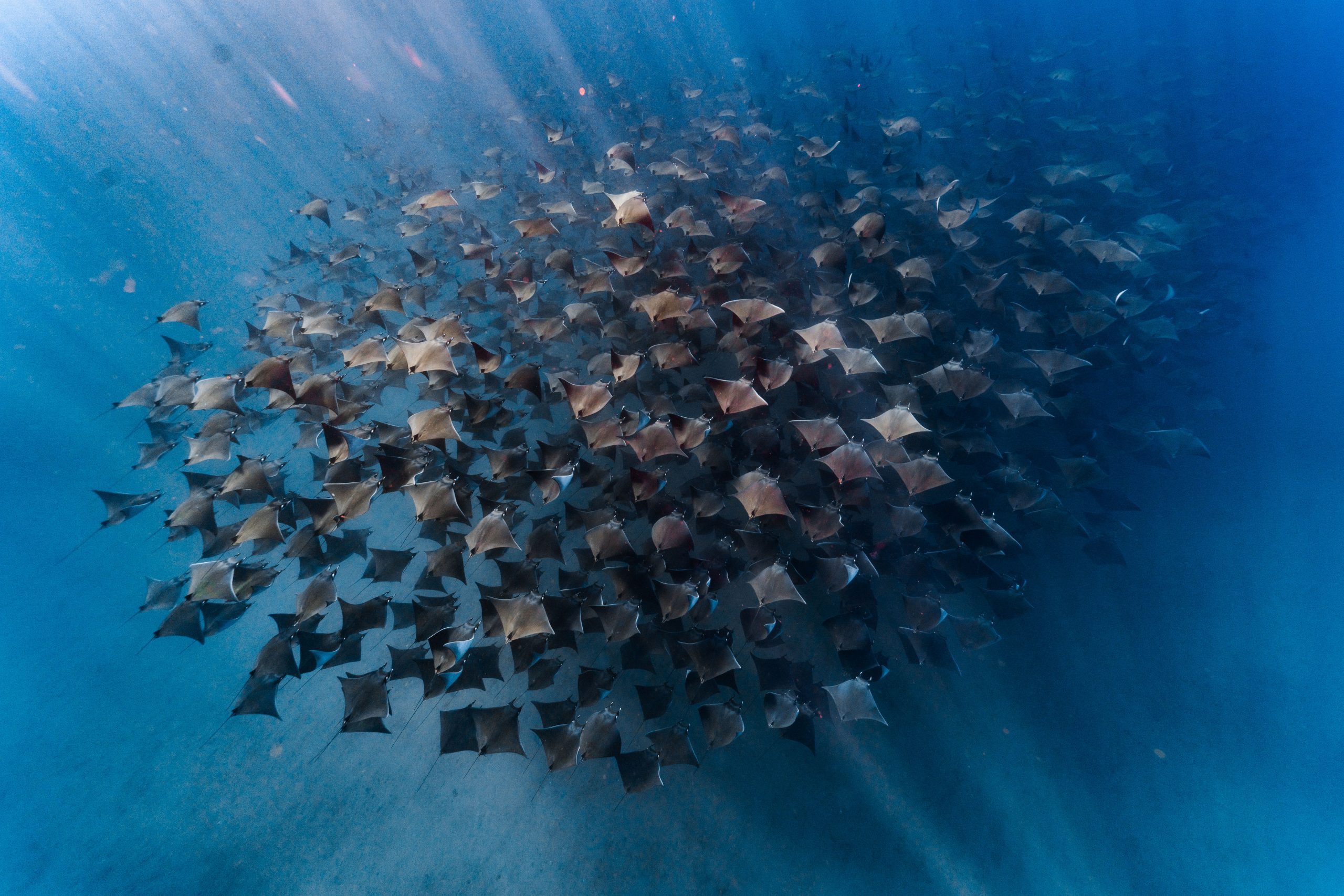
If you come in spring (roughly April through July), you’re timing the mobula ray migration. We’re talking about hundreds or thousands of them. Peaks are usually May and early June, if you want to see the huge fevers, those are your months.
Then there are the species that could show up any day of the year but won’t show up every day. This is where the ocean gets wild. We’re talking about massive cetacean diversity: Bryde’s whales, sperm whales; tons of dolphin species like common dolphins, Risso’s dolphins, pantropical spotted dolphins; larger cetaceans like orcas, pilot whales, false orcas; and the rarest ones: beaked whales, dwarf sperm whales (you probably didn’t even know they existed).
Beyond whales and dolphins, there are five species of mobulas (including giant mantas), whale sharks, silky sharks, hammerheads, makos, and more.
The ocean in La Ventana is genuinely biodiverse. But—and this is important—you don’t see everything in one day.
What Nobody Tells You
Everyone talks about orcas and mobulas and the “incredible diversity” of Baja. What nobody mentions is that you don’t see these things every day. Orcas are possible. They’re special. But they’re rare. If you come expecting to swim with orcas, you’re setting yourself up for disappointment. Mobulas are much more common, but even in peak season they’re not guaranteed.
Animals don’t always want to interact either. Sometimes they’re passing through. Sometimes they’re busy hunting or resting and they couldn’t care less about us. And that’s fine. That’s actually the point: they get to be undisturbed.
Mobulas can be pretty shy, and freediving usually spooks them. If you follow what the guide says (no freediving, no splashing) and the fever is relaxed, you can get really long swims (even hours!), but most fevers will swim away as fast as possible from a freediver.
You cannot swim with (baleen) whales in Mexico. It’s not allowed. So if you see whales, you watch from the boat. Orcas, dolphins, and pilot whales are not baleen whales, and we can swim with them following regulations.
This is why many people choose our expeditions instead of day trips. Four longer days gives you way more chances to see diverse species and have those bucket-list encounters.
Climate & Water Conditions (This Matters More Than You Think)
Baja’s weather changes dramatically by season, and so does the ocean. This is actually why we have so much marine life.
In January through March/April, the water is cold and green. Visibility can be low, maybe even 5 meters (16 feet). Water temperature can drop to 20°C (68°F) or below. Not exactly tropical. And we have very windy days, which means sometimes we have to come back early or cancel the tour.
By late April/early May, the water starts shifting. It gets bluer. It gets warmer. By late May, it’s usually blue, clear, and around 26°C (79°F).
This stays pretty consistent through September and October, when the water hits its warmest (just over 30°C / 86°F) and clearest (30+ meters / 100+ feet visibility). We are closed during September due to storm and hurricane season.
Then November rolls around and the northern winds start kicking up. The water cools again, turns greener. And the cycle repeats.
Every year varies a bit, but that’s the rhythm. And every season brings different animals because the ocean conditions change everything about what thrives here.
Ethical Encounters Are a Must
Here’s the thing: ethical encounters aren’t optional for us. They’re essential. And I’m gonna tell you why—because an ethical encounter gives you a quality experience.
People tend to see our behavior guidelines as limitations. But after almost a decade of interacting with these animals, we’ve learned a lot. We understand their behavior. We know what bothers them. When we give you rules for how to swim with an animal, it’s because we’ve learned the hard way what works and what doesn’t.
When you follow those guidelines, three things can happen:
1. They keep doing what they’re doing. This is great. It means we didn’t stress them, and you get to see a wild animal being itself. How awesome is that?
2. They come closer. They get curious. They come check you out. Lucky you.
3. They leave. Sometimes it happens even to the most experienced. If that happens, we don’t keep pressuring. We respect it and move on.
“The best encounters are ethical encounters.”
Let me give you an example. Sometimes we get a rebel who doesn’t follow the rules. Let’s call this rebel person Jack.
Jack is a freediver and he saw a video on Instagram of a person freediving with mobula rays, so he wants to replicate this. The guide tells the group that freediving is not allowed because these mobulas are going a bit fast and if we dive we will spook them. Everyone gets ready, jumps in, and watches the mesmerizing mobulas glide by. Two minutes later, Jack decides he’ll just do a shallow dive. He thinks to himself: it’s okay, it’s very shallow, they won’t mind. Jack proceeds to freedive 3 meters deep, spooks the whole fever of mobulas away, and the whole group is mad at him because what could’ve been a 20-minute swim ended up short at only 2 minutes.
Please don’t be like Jack.
Mobulas are actually not regulated by law—we make the rules to prioritize the best possible encounter for everyone. Trust us.
Orcas in Baja: The Reality Behind Social Media
I wanted to create a special section for this one because we get this request more than anything. “I want the orca tour in La Ventana.” And every time I hear that, it gives me the creeps.
I’m not gonna apologize for that. There’s a lot of emotions with this topic. In fact, I wrote an entire blog specifically about orca encounters in La Ventana because this question deserves real answers, not Instagram fantasy. Read the full blog here.
But I get it: orcas are incredibly beautiful and powerful animals. Seeing one is everyone’s dream. So I’m gonna tell you how to maximize your chances of seeing them. No bullshit.
There Is No Orca Season (And Anyone Who Says There Is, Is Bullshitting You)
Let me be clear. Orcas don’t have a season. They’re apex predators that can move more than 100 kilometers in a single day. There are very few of them (they’re apex predators). They’re completely unpredictable. They can show up any day of the year and what happened last year may not predict what will happen next year.
That said, we do see them more in certain months. Historically, that’s been April through August. But here’s the thing: I genuinely believe this has less to do with orca movement patterns and more to do with the fact that there are way more boats out there looking for them during those months, and they’re also windy months so the search can be limited. More boats = more search = more chances of finding them.
The Tricky Part
Even when orcas show up, the quality of your encounter depends on different factors. If you’re among the first boat(s) to find them you’ll have a real experience. If you find them later… it might be a different story.
May and June are peak season for tourists, which means peak season for boats. More boats = more chaos. So if you actually want a decent chance at seeing orcas and having a quality experience, here’s my advice:
Come in July.
July is golden for orca sightings. Mobula season is almost over (so we don’t see them as often), which means fewer tourists. The water is warm and blue. And the orca sightings have been pretty consistent over the past few years. But (and I need you to hear this) even in our best orca month, the chance is still low. And it’s still not guaranteed.
The Real Talk
Don’t come here expecting orcas. Seriously. Come for everything an ocean safari has to offer you: the dolphins, the mobulas, the whales, the sea lions, the diversity, the education, the raw ocean experience. Come for that.
If you see orcas? That’s the cherry on top.

Is an Ocean Safari Right for You? (Simple Decision Framework)
An ocean safari isn’t for everyone. And that’s okay. Let me be honest about who thrives on these trips and who probably shouldn’t book.
You’ll Thrive If…
You love marine life. You’re curious about why animals behave the way they do, and you actually want to learn.
You’re okay with uncertainty. Every day is different. Sometimes you see five species in two hours. Sometimes you search for hours until you find something. You understand that both are valid ocean days, and you trust that no matter what we find, it’s gonna be a great day.
You understand that nature is nature. You can’t control it. The ocean doesn’t perform on schedule. Animals don’t care about your bucket list. And you’re genuinely okay with that.
You love being in the water and in nature. You’re a good snorkeler. You don’t panic if you can’t see the bottom. You’re comfortable being in open water.
You can handle being on a boat for several hours without constant action. There are moments of searching, moments of waiting, and moments of intensity. You’re patient enough for all of it.
You come for the experience, not the photo. (Though you’ll get amazing photos. That’s just a bonus.)
This Might NOT Be for You If…
You don’t feel confident in the water or tend to panic. This is a dealbreaker. We need you to be a snorkeler who’s comfortable in open ocean conditions. If you’re not there yet, get some swim lessons first.
You need guaranteed sightings. That’s not how this works. If you come on a safari expecting to see specific animals, you may end up disappointed. We can’t promise that.
You have back problems or are pregnant. Talk to your doctor first.
You’re looking for luxury. This is adventure, not a cruise ship.
You only care about the photo. We’re here to witness nature, not to stage it for Instagram.
How to Choose an Ethical Ocean Safari Operator (Red Flags & Green Flags)
Here’s the uncomfortable truth: a lot of operators out there call themselves ethical. Most aren’t. They just know the language.
So before you book, here’s how to actually tell the difference between someone who walks the walk and someone who just talks the talk.
Green Flags (What to Look For)
✅ Legally registered with trained guides and proper certifications. You’d think this should be standard, right? It’s not. In La Ventana especially. So ask: Are they local? How long have they been operating? Are they actually trained? A lot of operators running tours right now have zero training for your safety and zero knowledge about animal welfare. Don’t assume. Ask.
✅ Small groups (maximum 6-8 people). There are operators who will try to maximize profit by cramming 10+ people onto a small boat. Don’t let them. For your safety and for the quality of your encounter, small groups are non-negotiable.
✅ Transparency. They won’t guarantee sightings. They clearly spell out what’s included and what’s not. They’re upfront about group size, timing, conditions, everything. No surprises.
✅ Gives back to conservation. Do they partner with local organizations? Do they donate a percentage? Do they involve guests in citizen science? Conservation commitment matters. It’s not just a marketing angle—it should be built into how they operate.
✅ Educational focus. The guide explains why you’re seeing what you’re seeing, not just “there’s a whale, take a photo.” We pride ourselves in having 100% marine biologist guides. You’ll leave not just with a photo, but with an incredible understanding of the species and the ecosystem.
✅ Reviews mention guide quality AND animal welfare. Read past reviews carefully. Do people rave about the guide’s knowledge? Do they mention that animals were treated respectfully? Both matter equally.
✅ Clear behavior guidelines for animals. And here’s the important part: they have the guts to take action if someone doesn’t follow the rules. (They need to be able to handle a Jack.)
Red Flags (What to Avoid)
❌ “Guaranteed sightings” promises. Run. Seriously. Anyone promising you’ll see specific animals doesn’t understand the ocean.
❌ No guide credentials or wildlife education background. If they can’t send you a photo of their NOM09 guide certification or Orca Permit, or if they can’t tell you about animals beyond “cool, right?”—pass.
❌ They’re just influencers. Look, I’m not against influencers. We actually work with some incredible ones (photographers, trip leaders). But there are some unexperienced ones who want to capitalize on their fame. Their viral mobula video from that one visit to La Ventana gets a million comments: “Take me there!” So they hire a random captain and play “guide” with zero knowledge about local regulations and animal behavior. If you’re booking with a foreign company, they should be partnering with a local operator who has a trained local captain/guide team. If they’re not, that’s a problem.
❌ The tour is suspiciously cheap. Cheap usually means one (or all) of these: they’re not a legal company, so they don’t have proper first aid training or safety credentials; they’re hiring boats that aren’t properly maintained or safe; they have fuel limits that prevent real searching (so they stick to close spots); or their guides work for tips, which creates pressure on animals to deliver encounters. None of that is good.
❌ No website or reviews. If you can’t find them online or read what past clients said, there’s a reason.
❌ Their social media is 90% orca encounters. Sorry, but they’re selling you something that isn’t real. That’s false advertising.
❌ No clear cancellation policy. Bad weather happens. Emergencies happen. A legit operator has a clear policy for cancellations and rescheduling. If they’re vague about it, move on.
Ready to Join Us?
So here’s the bottom line: an ocean safari is an adventure where you’ll get to experience the ocean on its terms, with people who actually care about what they’re doing.
If you’ve made it this far and think yeah, that’s exactly what I want—then you’re our person.
If this resonates with you, come explore our ocean safaris. And if you want to take it even further, check out our mobula expeditions for more time in the water and better chances at those rare encounters.
The ocean’s waiting.
See you underwater. — Valentina, Freefall Academy
 English
  Español de México